“We have to do more” – this was the consensus of the public forum held to discuss Hong Kong’s first Biodiversity and Strategy and Action Plan (BSAP) on 19 March 2016.
In a lecture hall at the University of Hong Kong, the conservation community gathered to discuss the consultation document prepared by the Agriculture, Fisheries and Conservation Department (AFCD).
Most in the room agreed that the document, about which the government ceases to receive comments from 7 April, was a step in the right direction, but fails to paint an accurate picture of Hong Kong’s worsening biodiversity.
The BSAP is based on the 1992 UN Convention on Biological Diversity, which China joined in 1993 and was extended to Hong Kong in 2011.
After more than two years of preparation, the AFCD has proposed four major areas of action: “conservation”, “mainstreaming”, “knowledge” and “community involvement”, to protect the variety of life in our ecosystems.
Almost half of the 54-page consultation document focuses on the success of Hong Kong’s existing measures to protect our environment.
However, the document does not mention the threats to biodiversity, such as the destruction of natural habitats on private land, the enclaves in country parks, and the controversial Small House Policy, said Michael Lau, Assistant Director of Conservation at the World Wildlife Fund Hong Kong.
According to Lau, many of the proposed actions, such as the creation of the Soko Islands Marine Park (索罟群島海岸公園)and the Brothers Marine Park (大小磨刀海岸公園), are not new. Rather, they have focused on maintaining the existing measures.
Prior to developing the proposal, the AFCD had set up a three-tier organization comprising a steering committee, 3 working groups and 12 focus groups. Among those appointed to the body are biodiversity experts, academics and representatives from NGOs, professional bodies, public and private sectors.
These groups published extensive papers on biodiversity, which culminated in 33 recommended key actions, most of which have “vanished without a trace”, said Professor David Dudgeon, Director of the School of Biological Sciences at HKU.
While it is tempting to shrug and say “do nothing” at the disappointment, he said, the best thing to do now is to be “cautiously optimistic and endorse” the BSAP. “The vision and the mission are new, and if we can just get the vision and mission inserted into government policy, that’s a win. It’s a small win, but it’s a win,” said Dudgeon.
According to the consultation document, the mission of the BSAP is to “value, conserve and restore the rich biodiversity in Hong Kong” and promotes the “mainstreaming of biodiversity issues” with “social and economic aspects duly considered and balanced”.
Professor Dudgeon pointed out his concern for the conflict of interests between conservation and economic sectors as the government would give more priority and importance to the latter.
He cited the example of the Chinese white dolphins, which were “balanced” when the Hong Kong International Airport was built in 1990s, and set to be “rebalanced” with the construction of the third runway and the Zhuhai Bridge.
Paul Zimmerman, the Founder and CEO of Designing Hong Kong said, “We have to have a direct discussion between the government and conservationists. We need to get development and conservation in one room.”
“We need the ecosystem, not less than we need housing and jobs.” He added “the ecosystem is part of people’s needs and you cannot pit people’s needs versus the ecosystem’s needs.”
____________________________________________________________
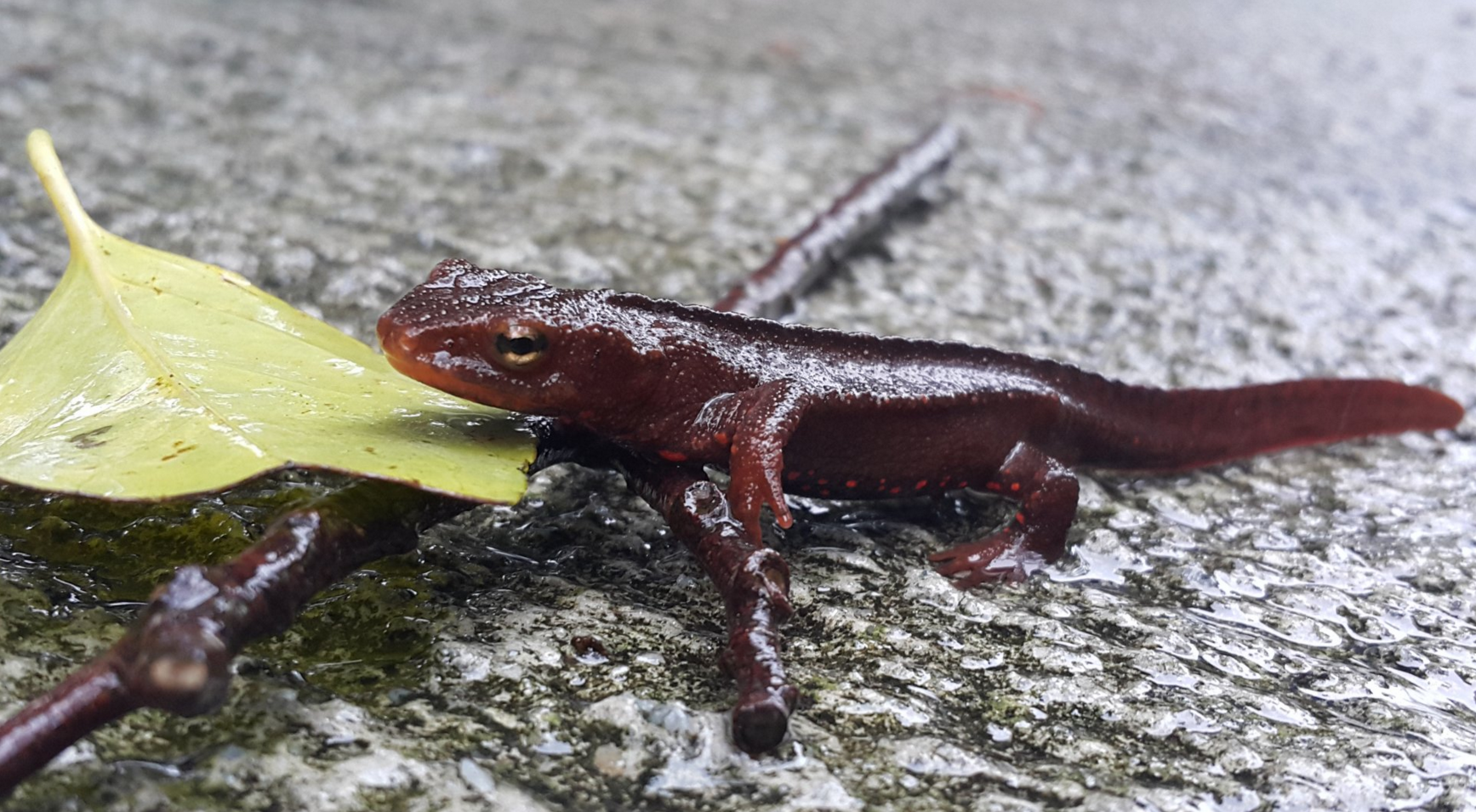
Although Hong Kong is often regarded as an urban hub, its environment is unique in that abundant nature lies a short travel distance away from the city. Hong Kong is home to more species of birds, bats, butterflies, reptiles, mammals, and flowering plants than the United Kingdom, which is 225 times larger than us.
You can help protect biodiversity by submitting your views to AFCD by 7 April 2016. Email: [email protected]