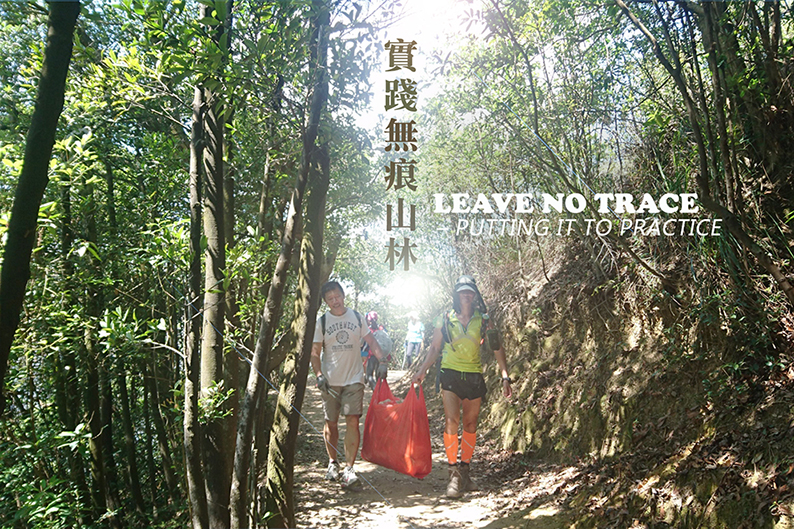
What do you enjoy most in a hike? Panoramic view without high-rise buildings in sight, being surrounded by trees, or the challenge of hiking one mountain after another? Some hikers, however, meet up on weekly basis and take joy in cleaning up trails while hiking.
Number of visitors to country parks has increased over the years. Unfortunately, quite a few have not changed their urban disposable habits while in the nature, bringing about problems of trash in the countryside. Agriculture, Fisheries and Conservation Department (AFCD) launched the programme “Take Your Litter Home” years ago and officially removed all litter bins from Hong Kong’s hiking trails in last December as a means to encourage citizens to acquire good habits regarding trash disposal while hiking.
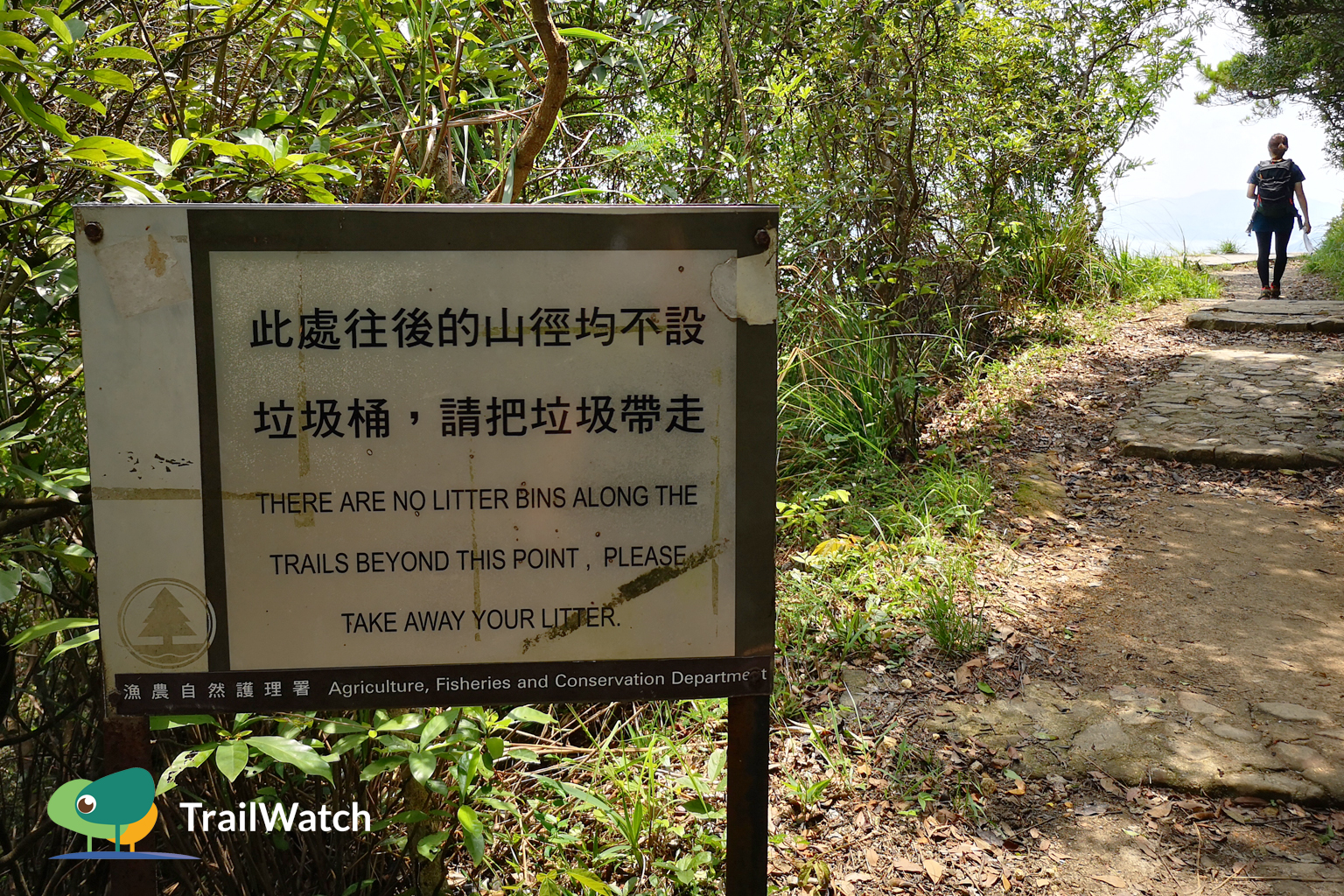
AFCD removed all litter bins from hiking trails in December 2017
Plogging with “Trail Sweepers”
Hanging over their backpacks were some eye-catching florescent-coloured covered with a slogan in Chinese that says, “Trail cleanup volunteers; Let’s take your litter home”. Geared up with tongs, big plastic rubbish bags, sun hats and gloves, these “Trail Sweepers” would be ready to clean up a different trail in Hong Kong every Tuesday. Most of the participants were retirees, although this action was purely voluntary, they could be assured of the safety aspects as tools and insurance were arranged for and that they were thoroughly briefed prior to each action.
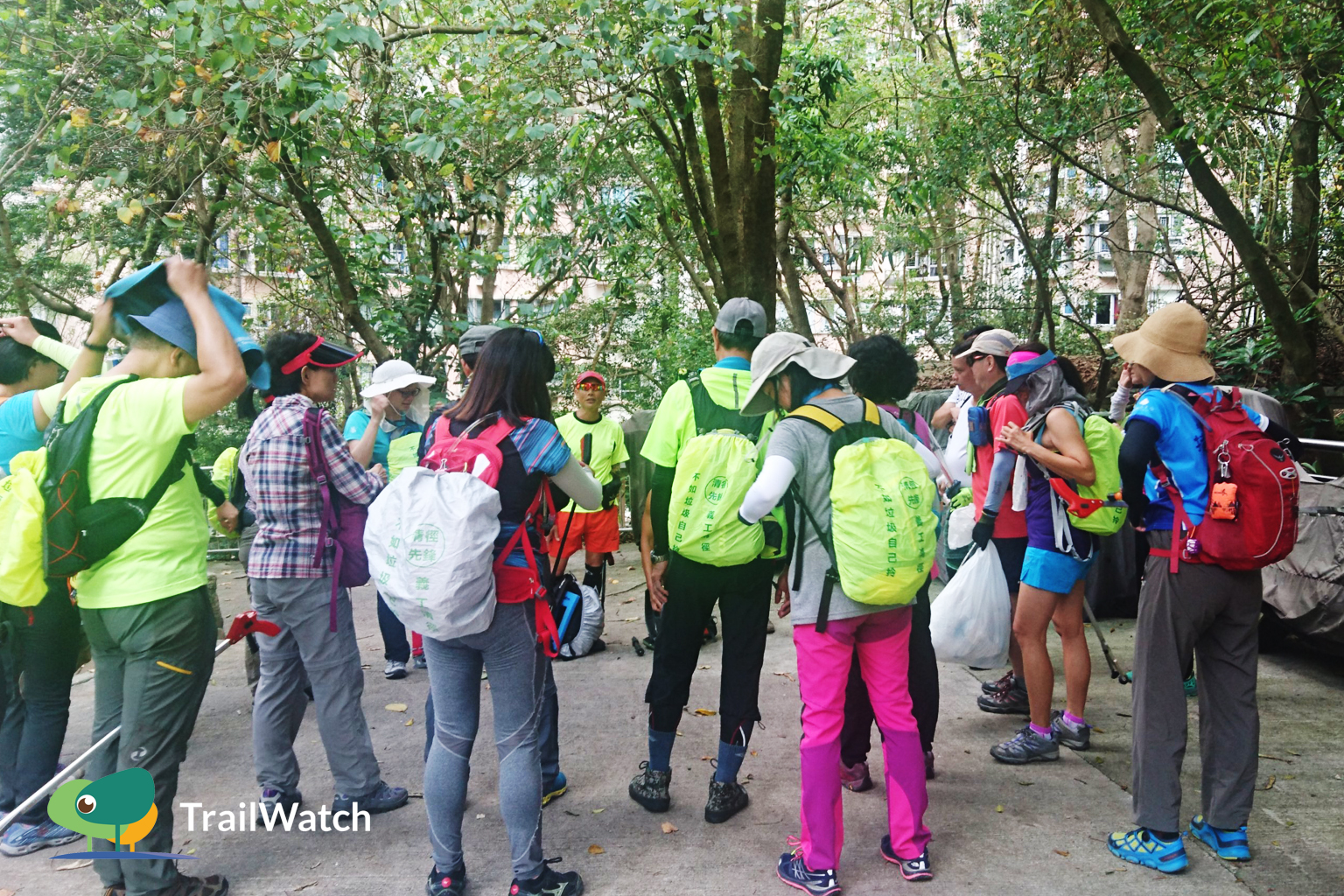
The leader gave a final briefing on the hiking route and highlighted points to note before distributing tools.
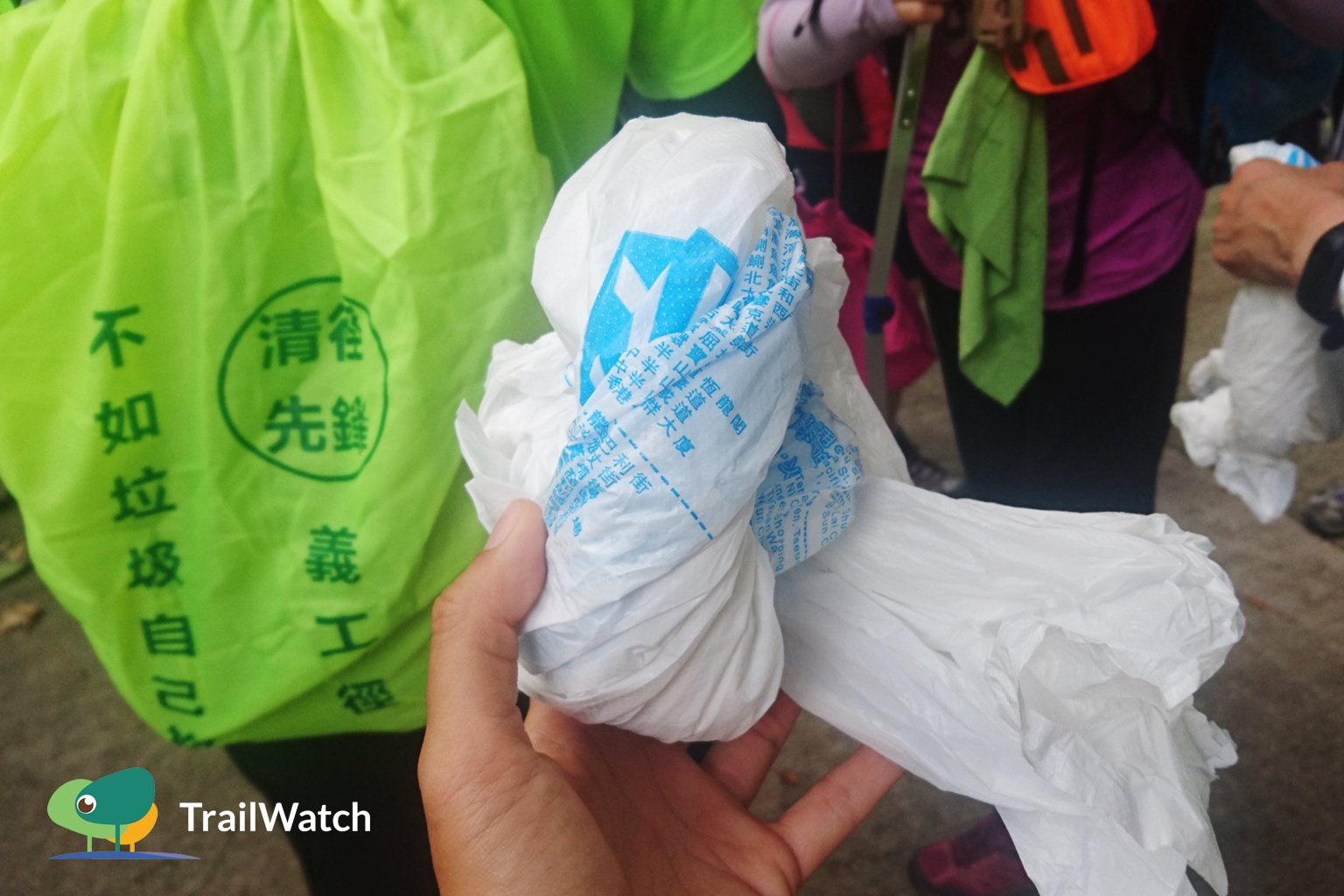
To reduce waste at source, second-hand plastic bags collected from a laundry shop were used as rubbish bags.
Before starting, volunteers had no idea how much trash they would end up collecting. Total weight is quite variable each time, it could be as light as 10kg-ish or well over 100kg. For trash that were inside bushes off the path or hard to reach, they would be picked by volunteers who were more experienced after feasibility was assessed. Depending on everyone’s capabilities, the work was shared accordingly, and their level of enthusiasm often attracted attention of those passing by, who curiously wanted to find out what they were doing and why.
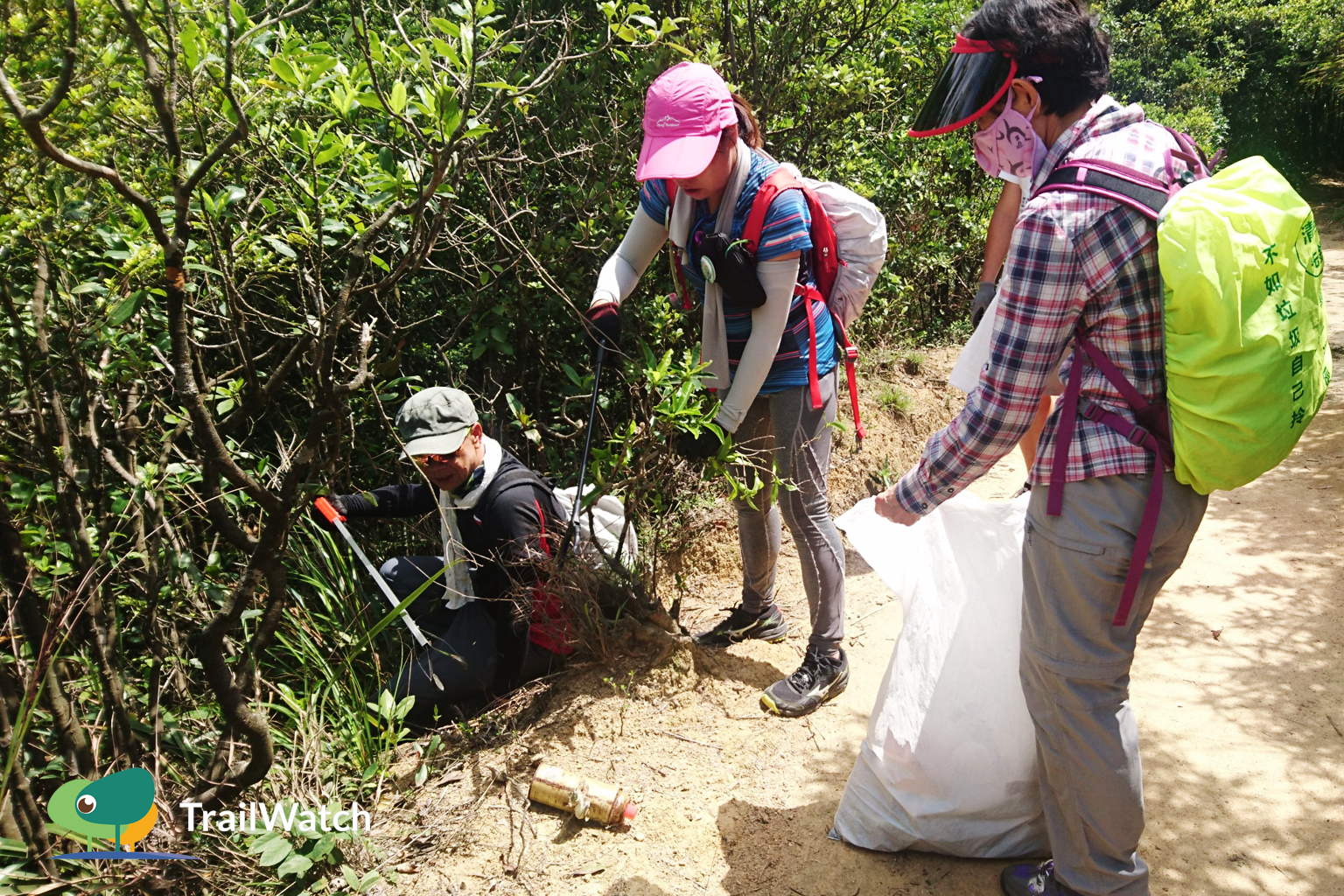
A more experienced volunteer attempting to remove trash from the bushes
Volunteers of “Trail Sweepers” approached trash problems with a positive attitude and inspire other hikers to do the same. Their selflessness and perseverance were truly admirable. In fact, if every hiker can ditch their urban disposable habits while in countryside and do their parts by taking their litter home, there will be less trash in nature. Meanwhile, we must rethink how to reduce waste in our daily lives and build up an environmentally-responsible attitude.
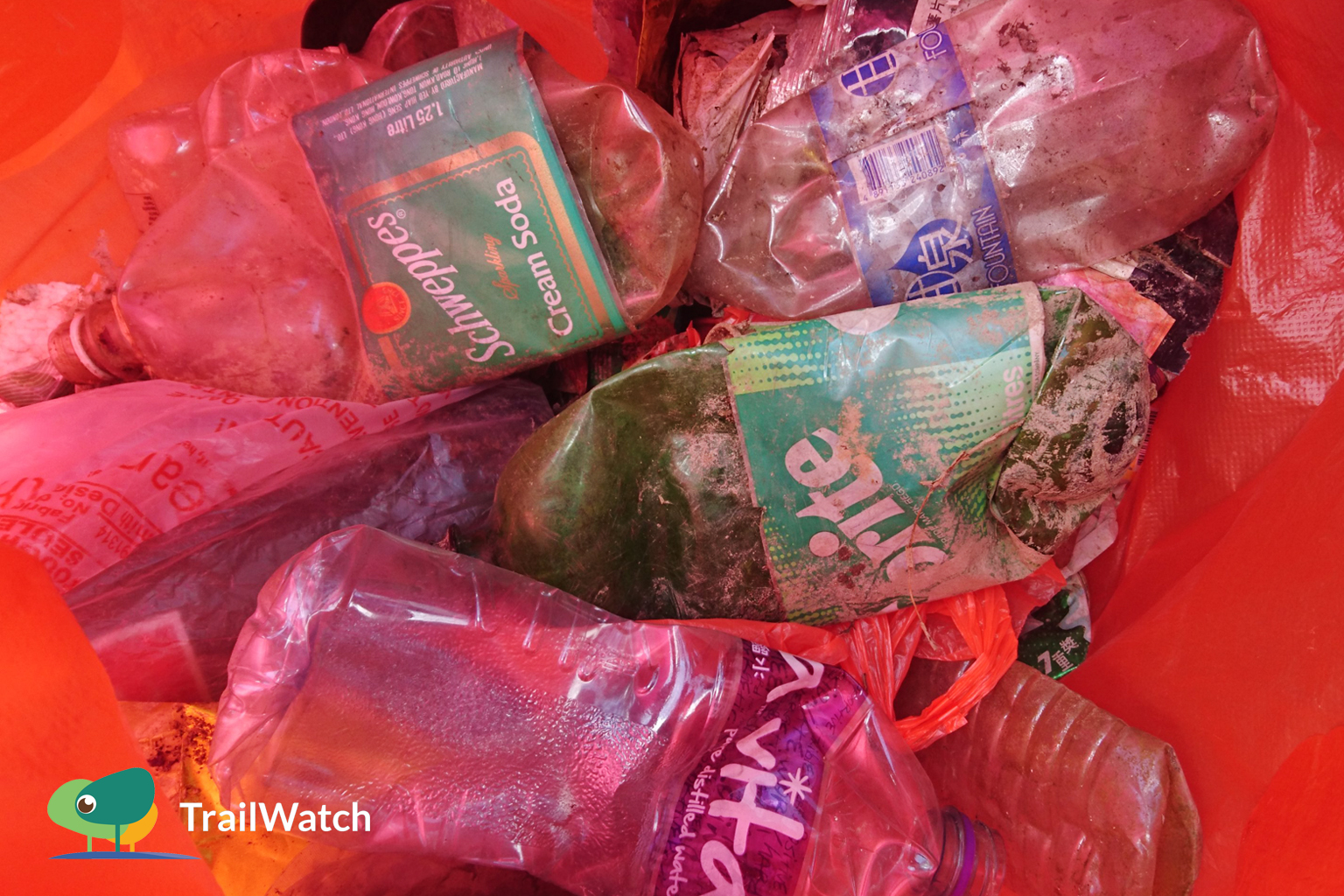
Plastic bottles are the most common type of waste found in each cleanup
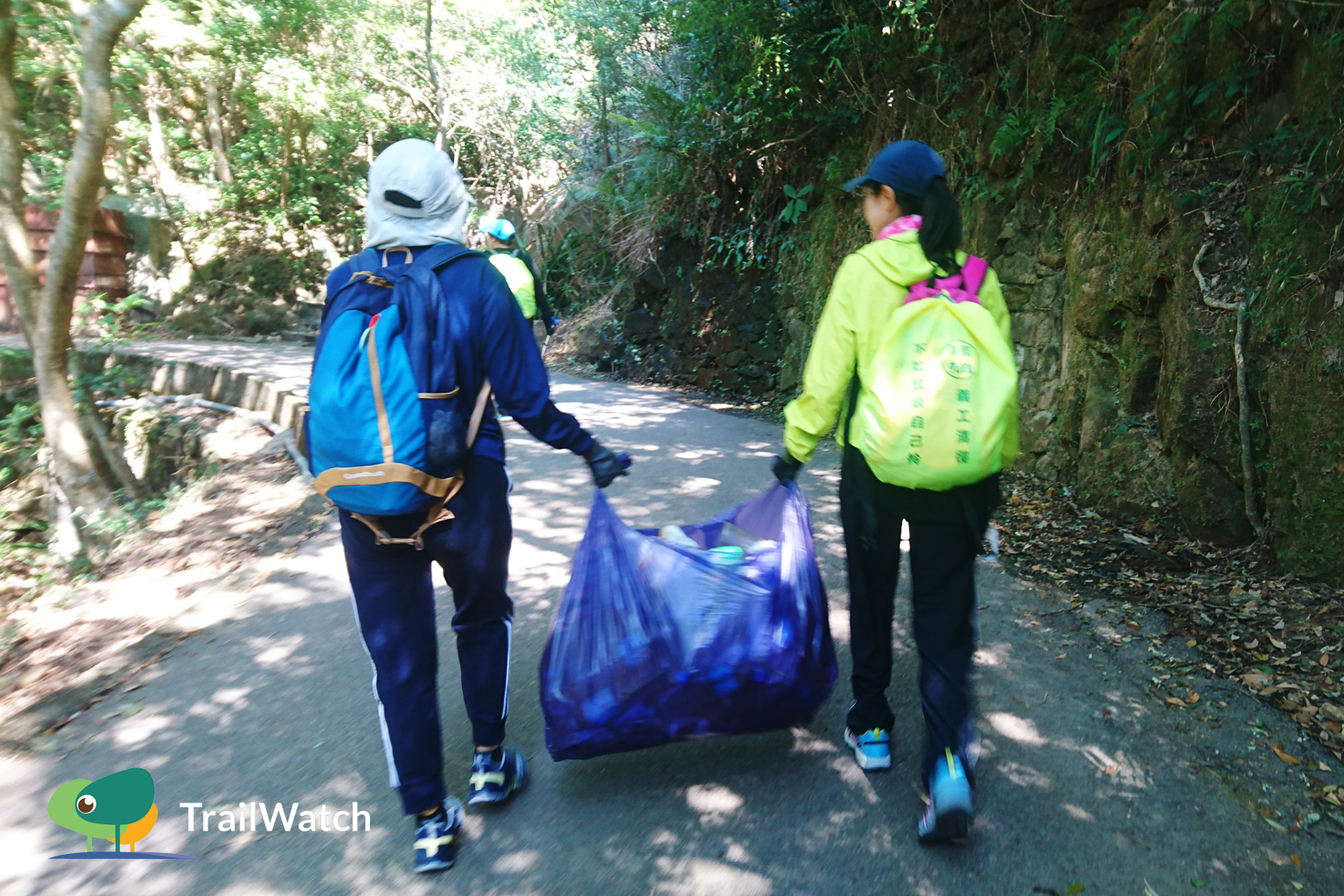
Volunteers removing trash from countryside
Cleanup in time
Previously a photo of a bird nest made of twigs, dried leaves and a plastic bag was circulated online. Some might think certain trash could biodegrade in nature and that leftovers such as fruit scraps are good for the environment. However, the time they take to biodegrade depends on multiple environmental factors. Such leftovers might impact ecology of the habitat and most trash are often blown over to valleys where they accumulate and become even harder to remove. Some trash might enter river streams and/or are mistakenly ingested by wildlife which cause their death. What is worse is that plastics will endure in our environment for generations, they will slowly fragment into microplastics and have far-reaching impacts.
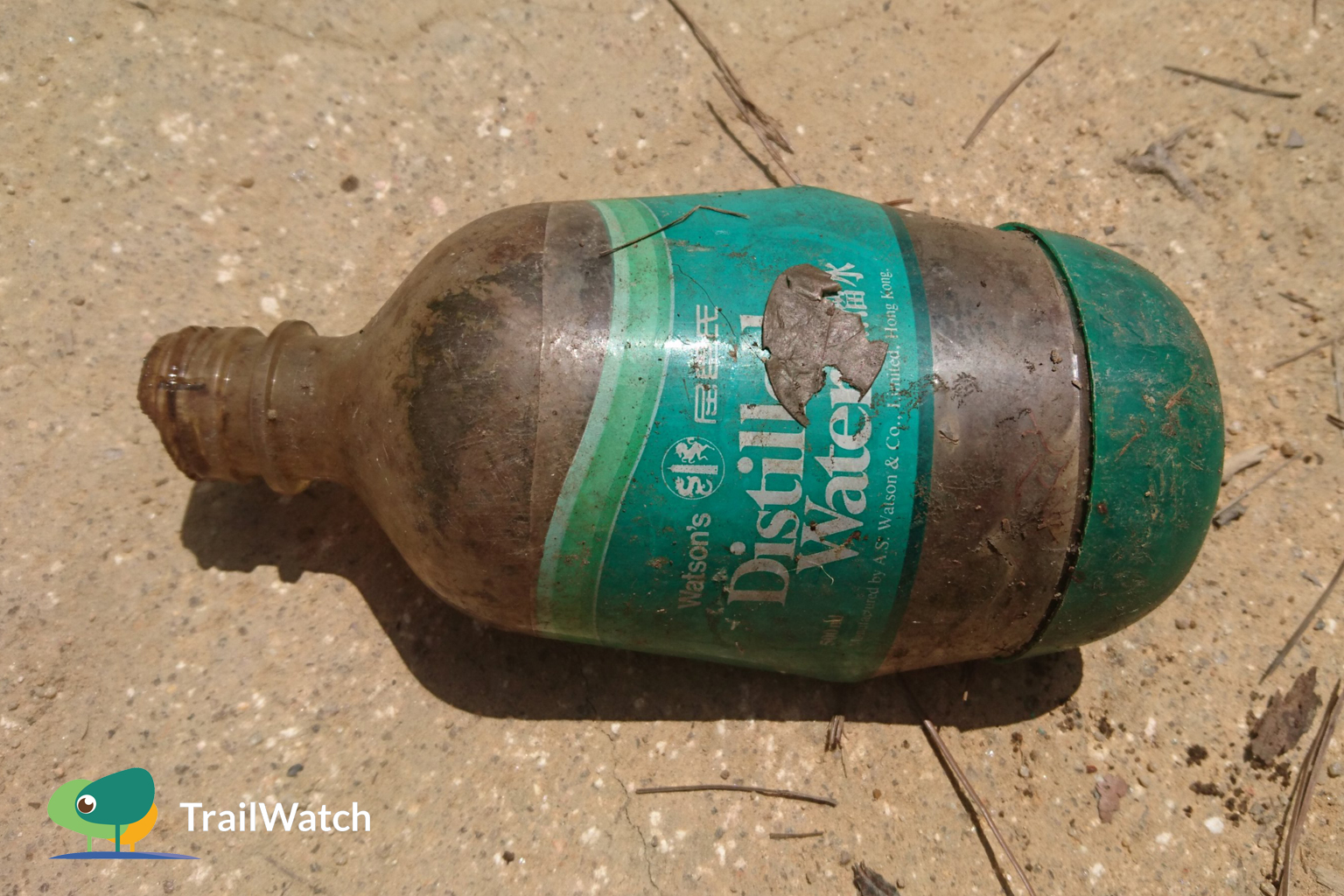
Trash of “considerable age” is found in almost each cleanup
Report trash incidents with smartphone app
An average of 31 incidents were reported per month last year through TrailWatch’s “incident reporting” function. Waste dumping ranked first by category, with an average of one incident reported every two days. We highly encourage hikers to promptly report incidents through our TrailWatch app if large amount of trash is spotted and cannot be removed by hikers themselves. Once incidents are reported, the actual location will be logged by GPS in real-time, which allows TrailWatch to follow up with relevant departments on cleanup arrangements. Let’s report any trash black spots while hiking and help monitor and preserve Hong Kong’s countryside!
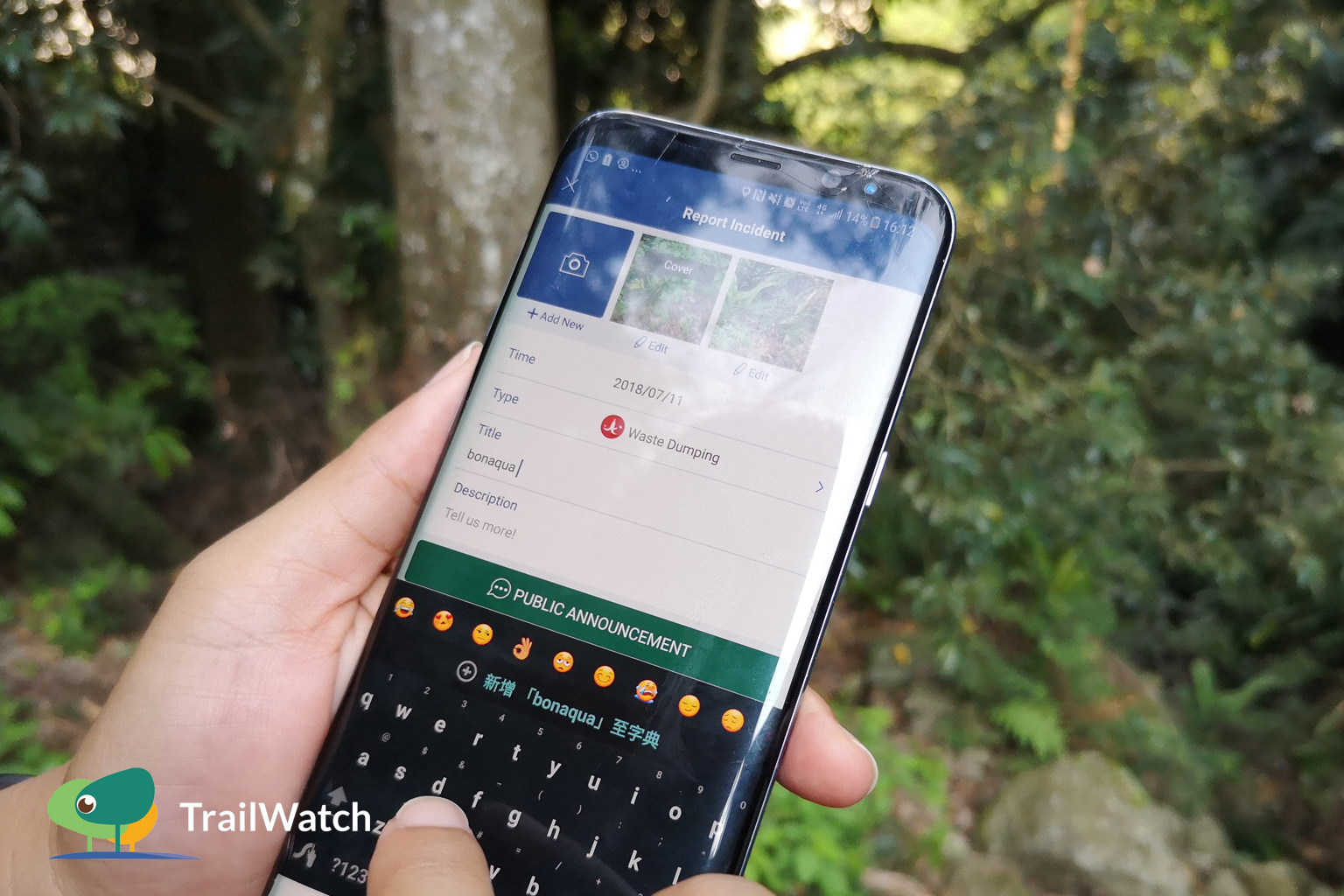
Using the “report incident” function to report waste dumping
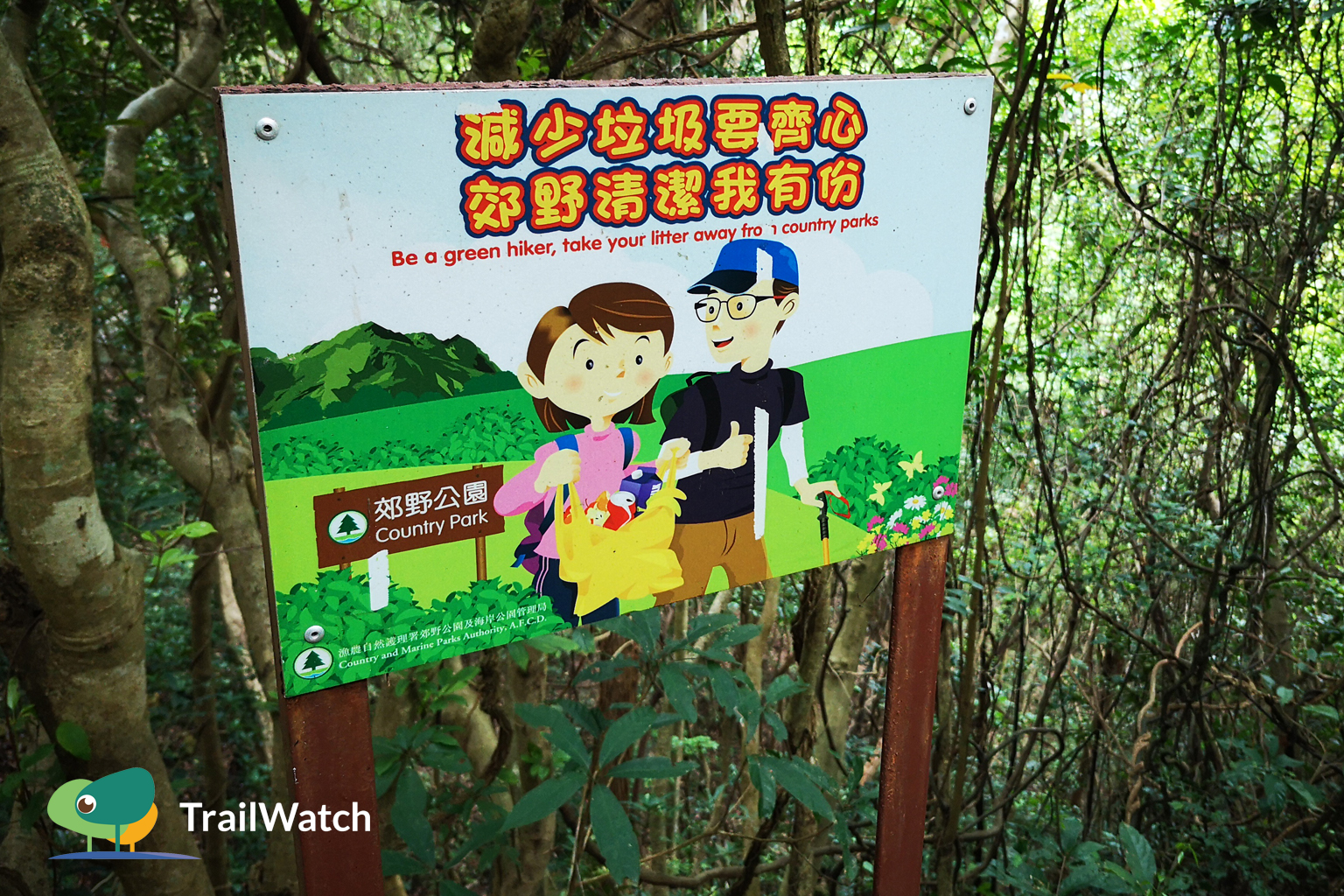
Do not forget the four “Leave no Trace” essentials:
- Phone – record images but take nothing that belongs to nature
- Reusable water bottle – avoid creating plastic bottles waste
- Towel – reduce tissue waste
- Food container – reduce disposable food containers and packages
Further reading:
“Trail Sweeper” Facebook Page: https://www.facebook.com/trailsweeper
“Take Your Litter Home” – Country Parks Public Education Programme: https://www.natureintouch.gov.hk/outdoor/activity/nit_2011/0/754
Some statistics on country parks: http://www.afcd.gov.hk/english/country/cou_lea/cou_lea_use/cou_lea_use.html
Incidents reported to TrailWatch: https://www.trailwatch.hk/?t=incidents