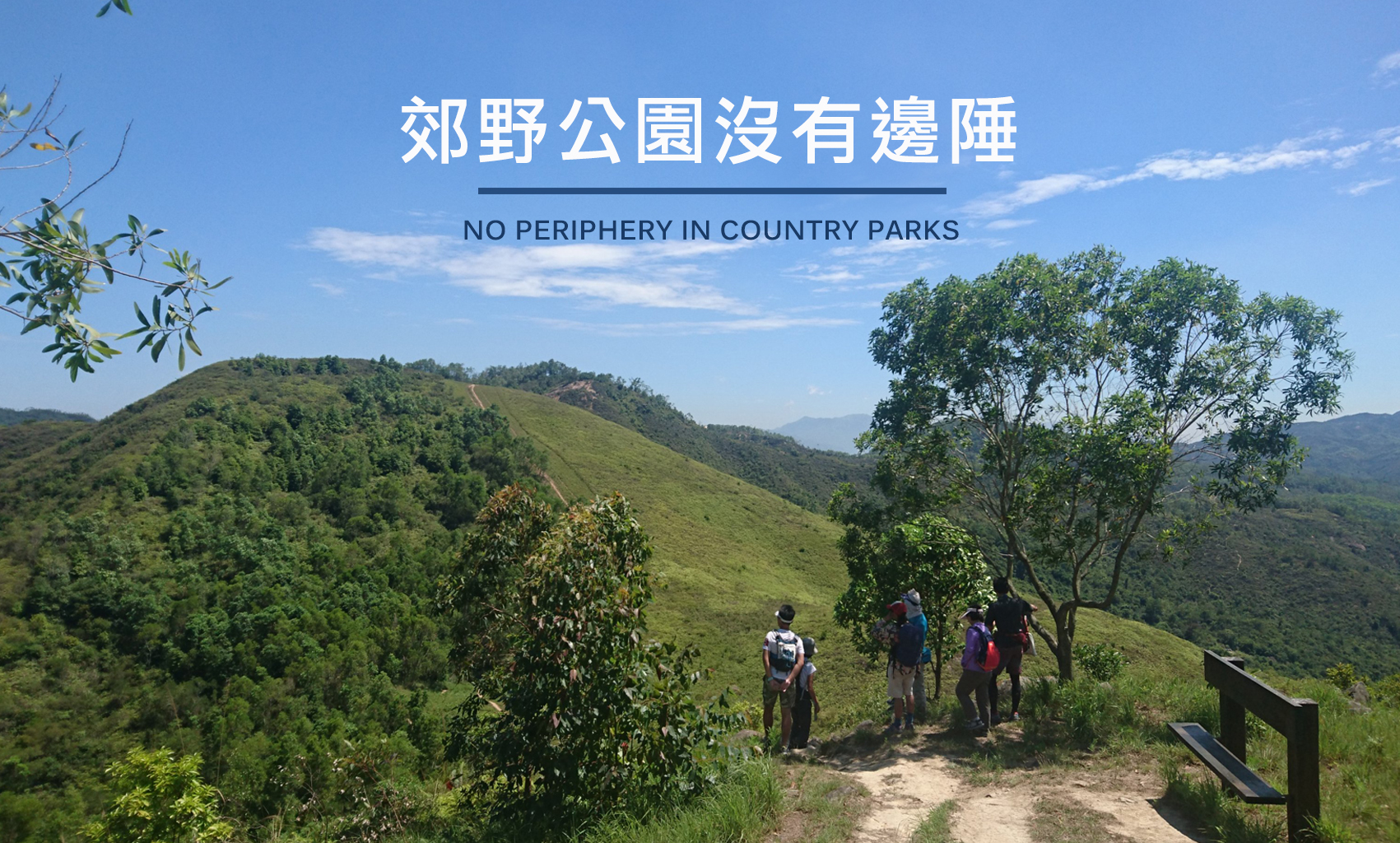
Task force on Land Supply has officially started public consultation regarding land supply, information on online survey and public engagement exercises have been disclosed in June. One of the conceptual land supply options laid out by the task force is to develop “two pilot areas on the periphery of country parks”. As early as 2017, the government has already invited the Hong Kong Housing Society (HKHS hereafter) to conduct ecological and technical research at the periphery of country parks to assess the feasibility for development. The recent public consultation document states that Hong Kong is expected to face at least 1,200 hectares of land shortage between now and 2046, which is equivalent to over 60 times the area of Victoria Park. However, where exactly is the “periphery of country parks”? Must we develop country parks for land development?
Deciphering the notion of “periphery” during hiking tour
TrailWatch and the Conservancy Association co-hosted 2 hiking events called “no periphery in country parks” in May and June of this year. The objective is to walk with public participants on country park area that the government is eyeing for development (so-called “country park periphery” by the government), discuss the notion of periphery and set it right. Our response to the public consultation is that country park has no periphery!
The myth of “periphery”
- The “periphery” is not within the country park?
- The “periphery” has low ecological value?
- The “periphery” is a linear border?
- Is development of the “periphery” the only option?
- As many as three land supply options are related to country park and its “periphery”, is there any inclination and predisposition?
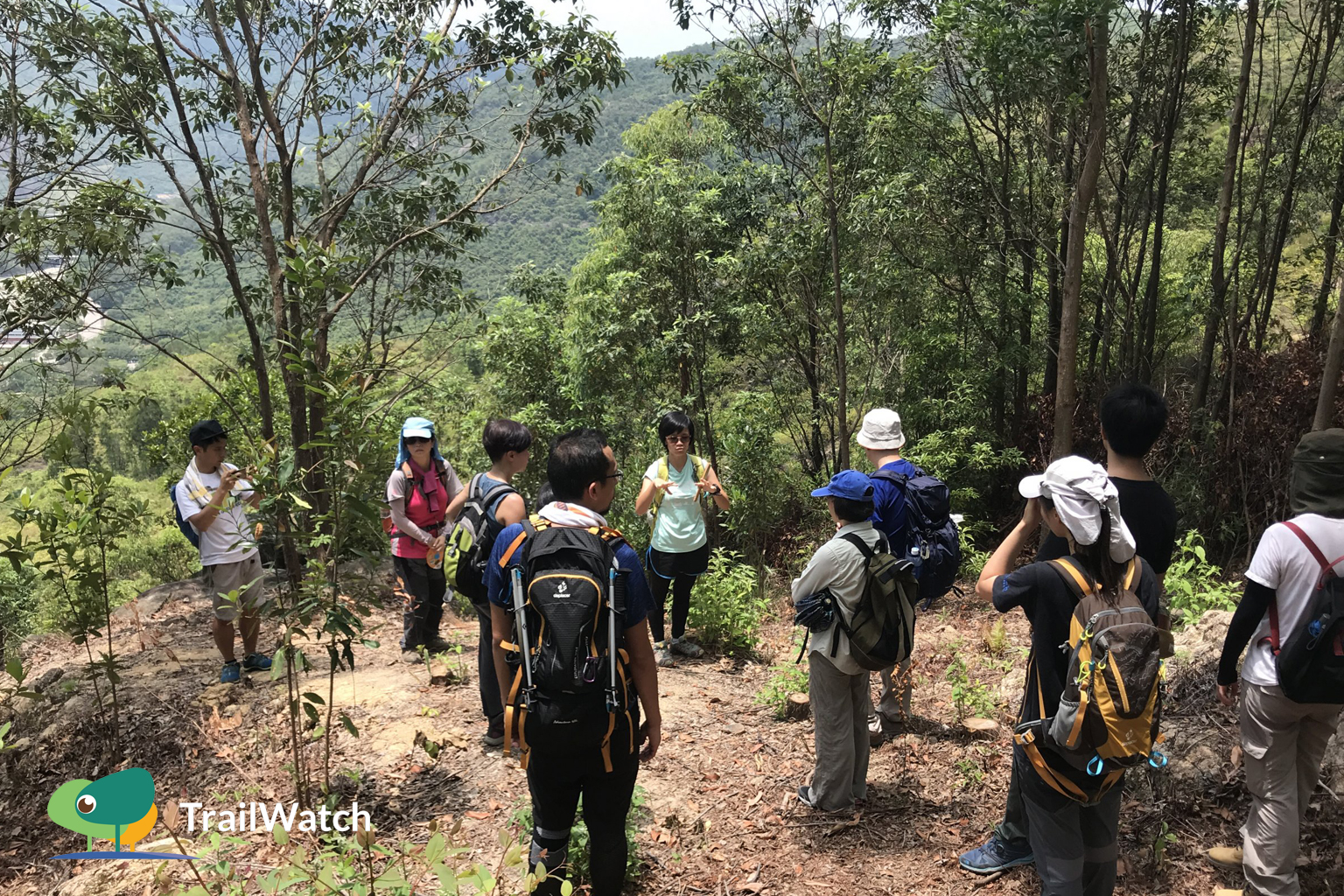
“Periphery” is within the country park area
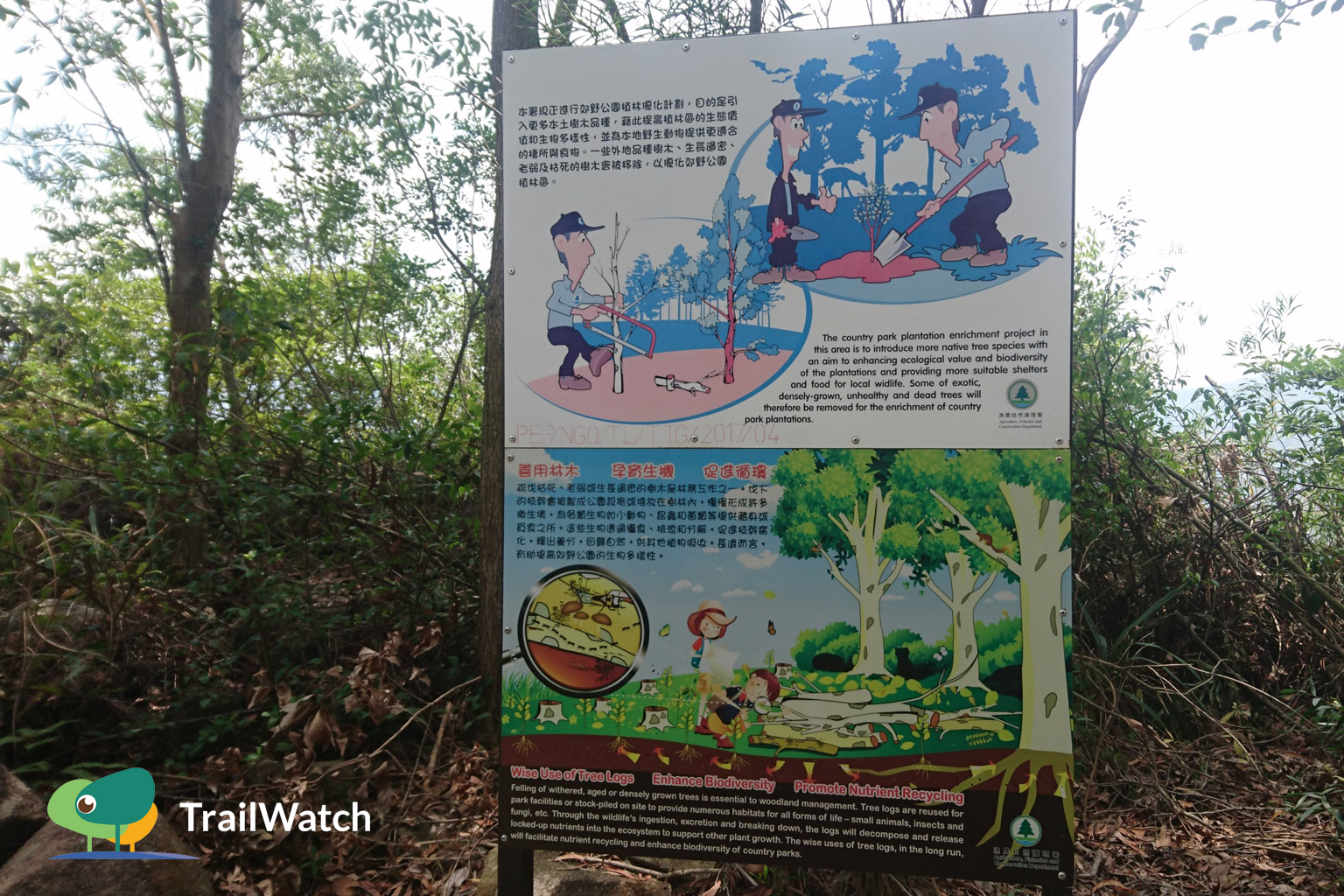
Located to the west of Tai Lam Tunnel toll plaza in Yuen Long and covering an area of over 20 hectares, this section of Tai Lam Country Park is one of the two pilot areas in which HKHS is conducting ecological and technical studies on development of country park periphery. During this guided hike we discussed history and importance of country parks, the Country Park Ordinance, plantation enrichment projects, biodiversity, threats of hill fires etc.. We also visited the site where the Conservancy Association has been carrying out plantation enrichment program for more than a decade.
According to the Country Park Ordinance, there are 24 country parks in Hong Kong. All country parks have their own designated boundary, and altogether, cover about 40% of Hong Kong’s total area. During the tour, we found out most participants have been to Tai Lam Country Park but were not aware that a section of it has been put down as pilot study site. Some have mistaken the so-called “periphery” as a linear border, while some assumed it was outside the country park. Meanwhile, on multiple occasions of interviews and seminars, the former Assistant Director (Country and Marine Parks) of the Agriculture, Fisheries and Conservation Department Wong Fook-Yee, has time and again pointed out the following: Country Parks Ordinance clearly states that the designated areas are protected permanently, and there is no such thing as “periphery of country park”; country parks should be regarded as one whole unity, rather than being divided into parts with differentiating ecological importance.
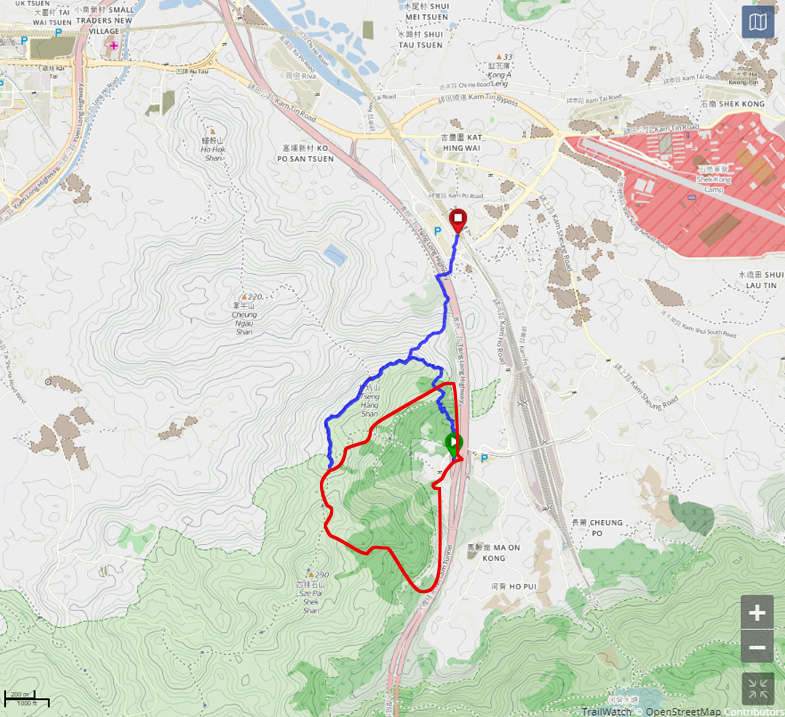
Red boundary indicates area within the country park that would undergo development and ecological assessment conducted by HKHS.
How to define ecological values?
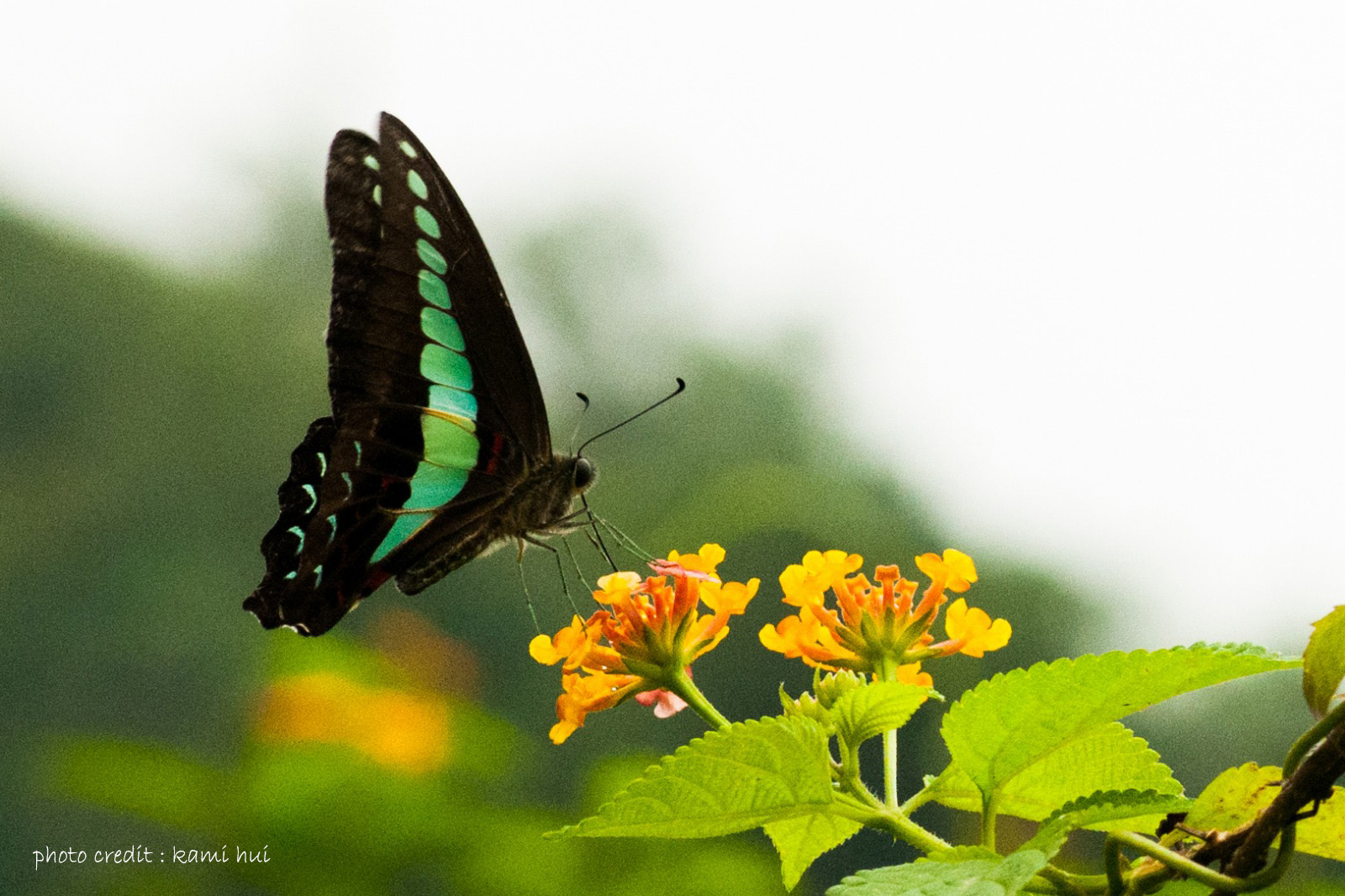
In his 2017 Policy Address, the Chief Executive expressed that “we should also consider allocating a small proportion of land on the periphery of country parks with relatively low ecological and public enjoyment value for purposes other than real estate development, such as public housing and non-profit-making elderly homes”. We have discussed with participants how ecological values of that area should be evaluated. According to the Conservancy Association, “this area should not be divided into sections with relatively high and low ecological values; the concept of clear-cut border cannot be imposed on flora and fauna; plus some rare species are also found within the research area”. Imagine a section of the area currently viewed and labelled as “ecologically less important”, would this later be used as a standard bench line, and eventually an excuse to make further changes to land use in the country parks? In response to assessment being conducted by HKHS, Green Power carried out a survey on butterflies in Tai Lam Country Park instantly. 127 species of butterflies have been recorded, which represent almost half of all butterfly species found in Hong Kong. Among them includes 9 “very rare species”, 14 “rare species” and 4 other species that are not yet classified, indicating the site is very rich in butterflies. It seems that certain ecological value was found in the butterfly survey only, then what are the criteria for the government to judge what is valuable or not?
Former Hong Kong Observatory director Lam Chiu-Ying remarked that days of sweltering heat we experienced in May this year is caused by global warming and it has hit us much earlier than usual. Most of you should have felt the unusual extreme weather and noticed its impact on flowering periods of plants. Plantation enrichment programme by the Conservancy Association restores the country park, brings back secondary forests, reduces soil erosion, conserves native tree species, helps regulate climate as well as conserves biodiversity. Supposing this area is classified as having low ecological value and is subject to development, years of afforestation work would be affected. While some in the society are dedicated to environmental conservation, some seek to develop at the expense of nature. Green Power also pointed out that even though the ecological value of country park peripheries may be lower than that of the core area, the peripheries serve an important function as a buffer zone to protect the core area. It doubted about the government has never announced the distribution and amount of brownfields in Hong Kong, but finding land for housing development necessitates sacrificing our country parks. According to Liber Research Community, 723 hectares of brownfields are not even included in any development projects. One would certainly wonder, why the government does not develop these brownfields first, but instead, makes out a “periphery” in the country park and attempts to exploit it?
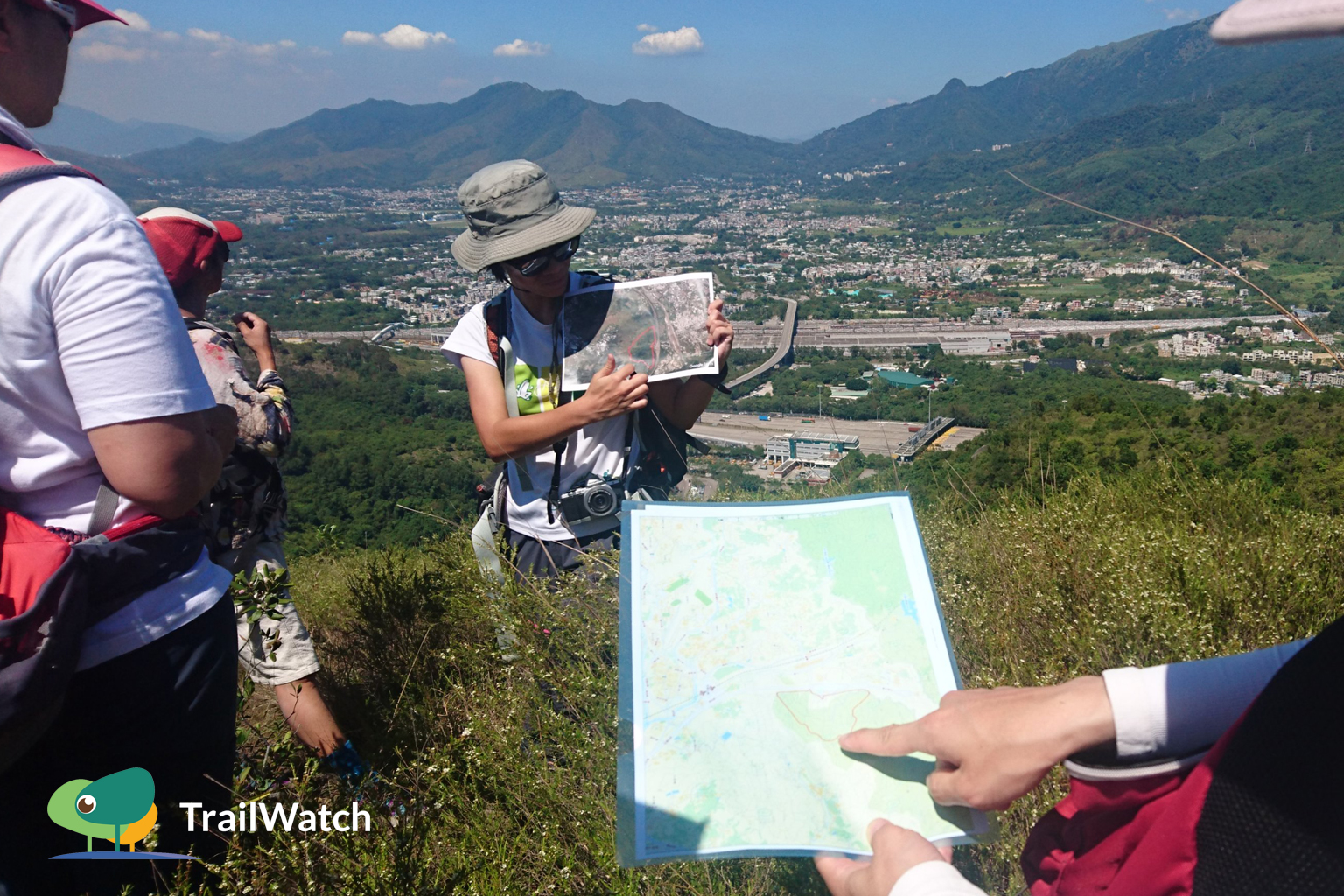
Kami Hui, Conservation Manager of the Conservancy Association, explained there was no such thing as periphery of country parks.
The devil is in the details
During the tour, we examined pitfalls of land supply options and revealed that the devil is indeed in the details. 18 land supply options were laid out by the task force. Developing periphery of country parks are listed under “medium-to-long term options” and “conceptual option”, while the latter category also includes reclamation of part of Plover Cove Reservoir. Note the area within Plover Cove Reservoir proposed for potential reclamation lies within Plover Cove Country Park, meaning there are 3 options in total that involves development of country parks. Is there a bias in such option arrangement?
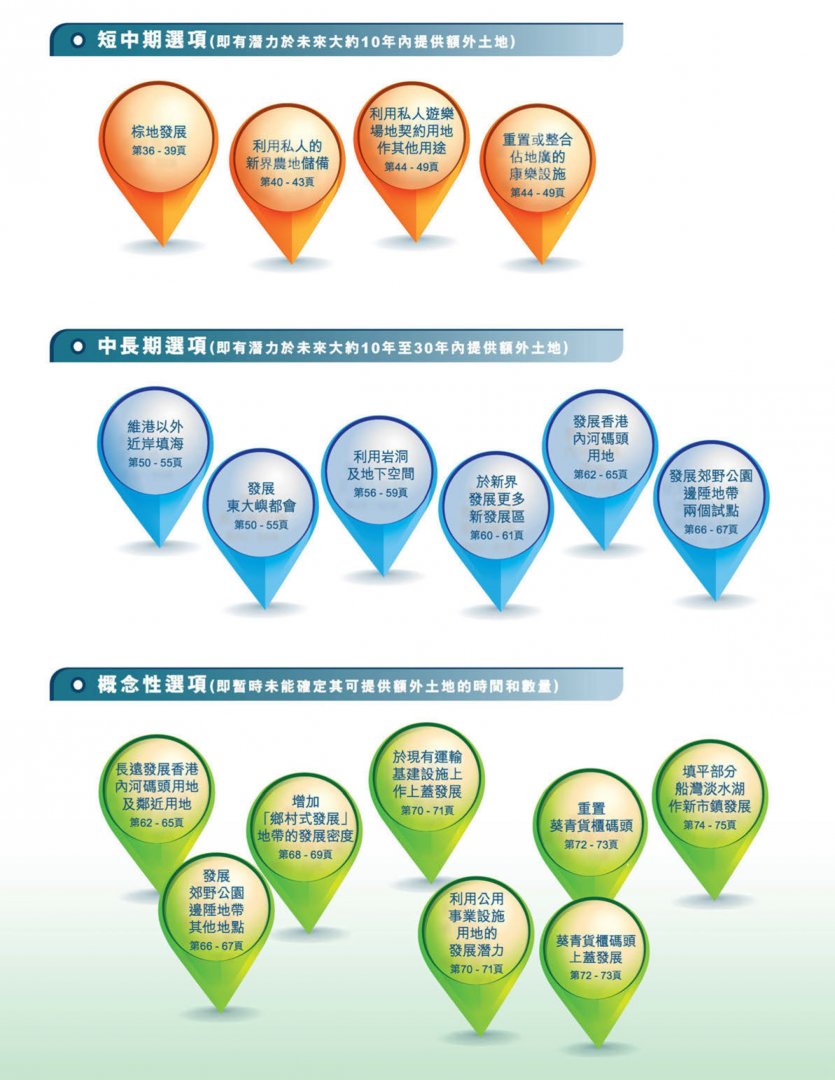
Task Force on Land Supply Public Engagement Activities – Consultation Document
Lastly, we hope everyone would be more concerned about land use and development issues in Hong Kong. Increasing development intensity of “Village Type Development” zone and near-shore reclamation would both cause irreversible damage to agriculture and marine ecology. We want public consultation to be held in a fair and open manner, government should provide details of environmental cost which is currently missing, as well as other adequate and comprehensive information so as to facilitate public dialogue. During public consultation, we suggest you read materials released by a diverse group of organisations, learn about adverse consequences of country park development, actively participate in discussion forum and express your opinions in the survey. Let’s protect Hong Kong’s precious nature together.
 Route of “No periphery in country parks” hiking tour:https://www.trailwatch.hk/?t=activities&aid=207518
Feedbacks from staff and participants
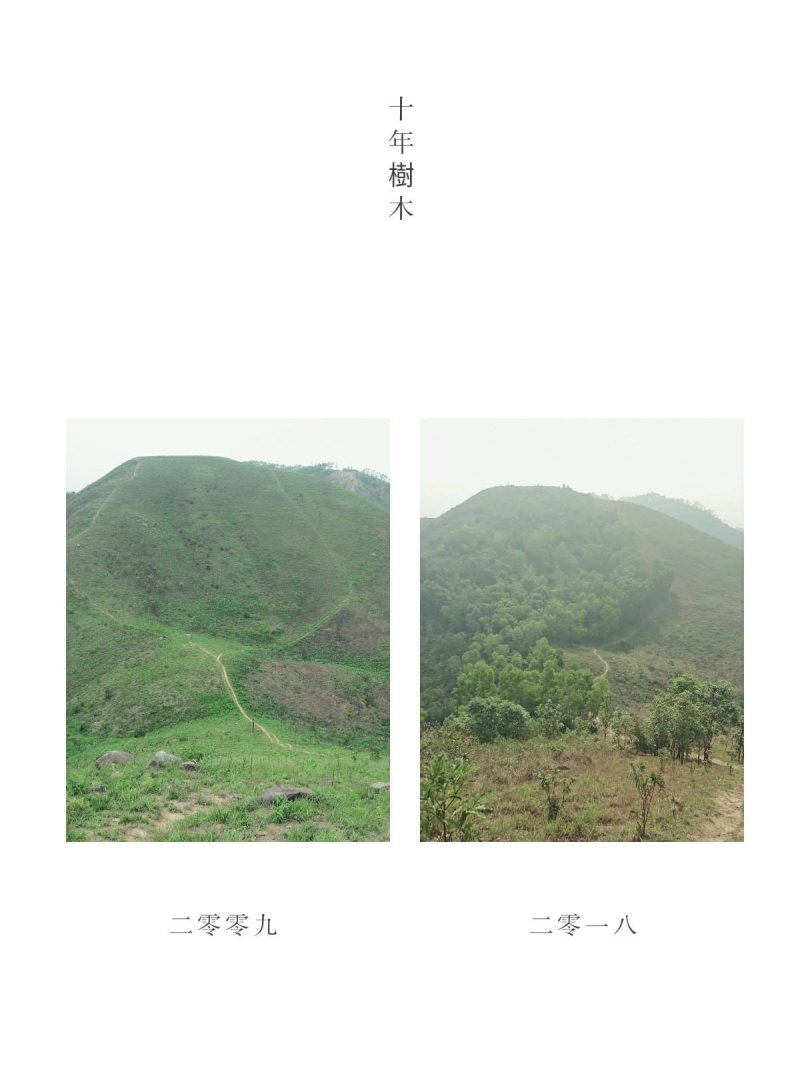
“Returning to hills in Tai Lam and revisiting the tree planted 10 years ago brings back memories of hard work under the blazing sun – colleagues and volunteers measured tree seedlings that were merely 30cm tall and gave them codes. It is really touching now the trees are several times taller than I am and have formed a small forest. Sending my best wishes to all those fighting for nature conservation and those who might have to self-sacrifice in doing so.”
– Kami Hui, Conservation Manager from the Conservancy Association
“Through this hiking tour, I revisited the so-called periphery of Tai Lam Country Park and have a better understanding of its past and present. At the time of public consultation regarding land supply, the government of the last term has already appointed HKHS to conduct research on feasibility to develop periphery of Tai Lam and Shui Chuen O Country Park. There are signs that the government has made up their mind ahead of time in terms where to develop. After all, the land supply debate is a mere show for the public, full of misleading information and blind spots. When the show is over, it seems inevitable that public-private partnership in developing farmland and country park development will go ahead. Would housing problems (pricy, tiny, cramped) be resolved simply by increasing land supply? Will Hong Kong become more livable? Ultimately who will benefit the most?”
– Ambrose Poon, participant
“Government’s social policy, population problems, community facilities are all big topics closely related to land supply, meanwhile country parks are singled-out as the primary option for development. “Values” are defined and imposed by a small group of people, who opine that country parks have low ecological values and therefore decide “it is okay” for development. Country parks have a hundred years of history, trees and our well-being are closely related, human and nature should co-exist.
The price to pay for country park development is irreversible consequences that represent an inmeasurable “value”. Under current circumstances where no long-term population and housing policies are laid out, country parks development are subsumed under the development blueprint. According to the development plan, only 19% of land will be used for housing. By comparison, idle government buildings, land reserve, golf course and brownfields are all land options that can be developed more rapidly, easily and efficiently. Why opt for the difficult choices instead of easier ones? Hopefully everyone will learn more about it, voice out for country parks and object country parks development”.
– Ebee Lam, participant
Extension Reading (Chinese only):
-
“A consultation survey full of pitfalls”. https://goo.gl/wqDVN3
-
Urban Planning research Tang Wing Shing – land supply shortage is a false proposition. https://goo.gl/SpHtUu
-
Hong Kong Connection: land supply debate. https://goo.gl/GUjEk8
-
Tai Lam Country Park ranks first for butterfly species and rare butterfly species, NGO urges against development (press release). https://goo.gl/YkznMY
-
Hong Kong Baptist University scholar discovered endemic gecko primarily distributed in country park periphery: https://goo.gl/whX1pW