As hiking in hot weather is more physically demanding, many hikers turn to stream hiking during the summertime. Even if you are skilled in hiking, stream hiking requires completely different techniques. It is important to be aware of various natural factors before your departure, always be prepared, be flexible and pay extra attention to yours and your peers' physical conditions.
We look back to some fatal accidents that have occured in the past three years and summarise a few key safe stream hiking tips – going home safely is the key to a happy hike.
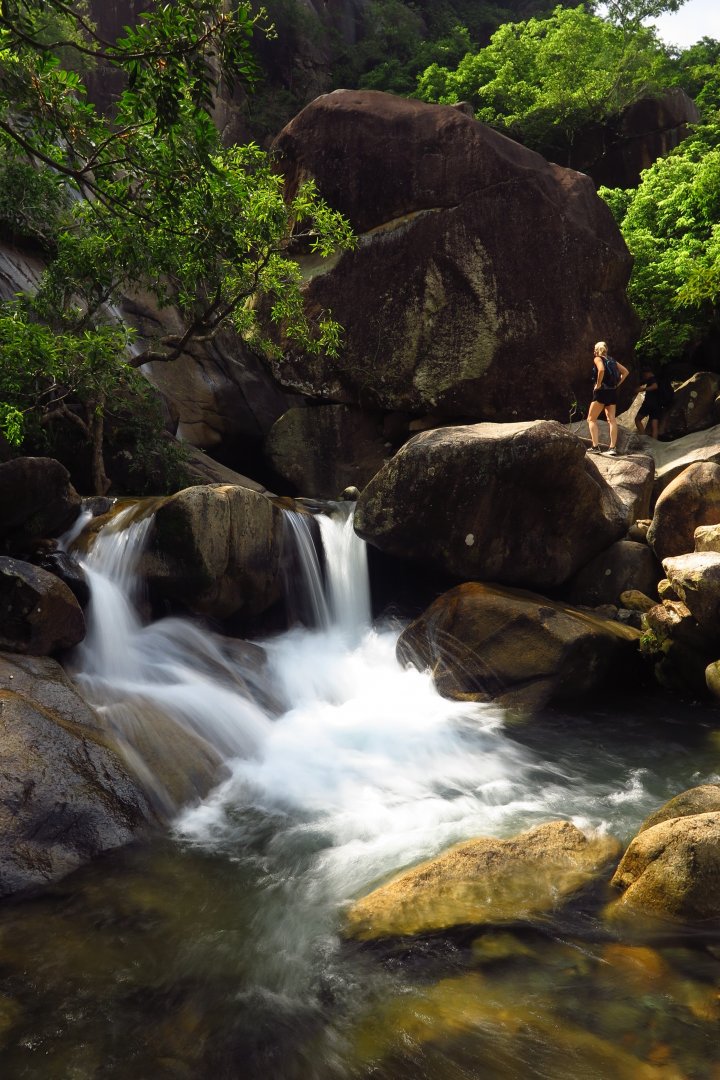
Water flowing between rocks – Ma Dai Stream in Tai Shui Hang, Ma On Shan (Photo provided by Daniel-C)
1. Quit When It Rains
Since the 1950s, there have been many flash flood incidents in country parks that have caused loss of human life. The most well-known accident was in Tsung Tsai Yuen, Tai Po Kau in August 1955. Even after heavy rain that day, some people remained swimming in the pool, resulting in the deaths of 28 people from a sudden flash flood.
In 2019, a group of people visited the Wong Lung Stream during an amber rainstorm signal in 2019 — six were trapped in the cliffs and rescued by helicopter. And in 2020 at Ping Nam Stream, a mother and her two sons encountered heavy rain during their visit, the three of them were trapped between the Stream. Luckily, the rescue team rushed to the scene and they were rescued. That same year, when Typhoon Higos hit Hong Kong, a young man lost his life at Ma Dai Stream as he fell into the fast-flowing stream.
Taking into account weather for stream hiking is a necessity. It might seem sunny that day but earlier rains, even from a few days ago, are still possible to cause certain degrees of flooding, or rapid water flow. It is recommended to stop the trip immediately if it suddenly rains, and to find a safe exit point or retrace your steps along the original route.
2. Not Being Prepared Enough
Stream hiking requires more preparation than trail hiking. Hiking in streams or falls is not like in the mountain as there are no obvious trails or signs. If you are not familiar with the location, it is challenging to know the way forward or the direction. In addition, many places that pass through streams do not have strong GPS signals, which makes it even more difficult to locate people. It is better to study the route and bring along a paper map for reference.
Never walk alone or leave the team during stream hiking. The landscape of streams is entirely different to trails and it makes the search and rescue more challenging. In the summer of 2019, a woman left the group in the middle of the Sunset Dragon Stream (Tung Lung Stream), it took the rescuers multiple efforts to find her. Fortunately, she was found the next day in the mountain.
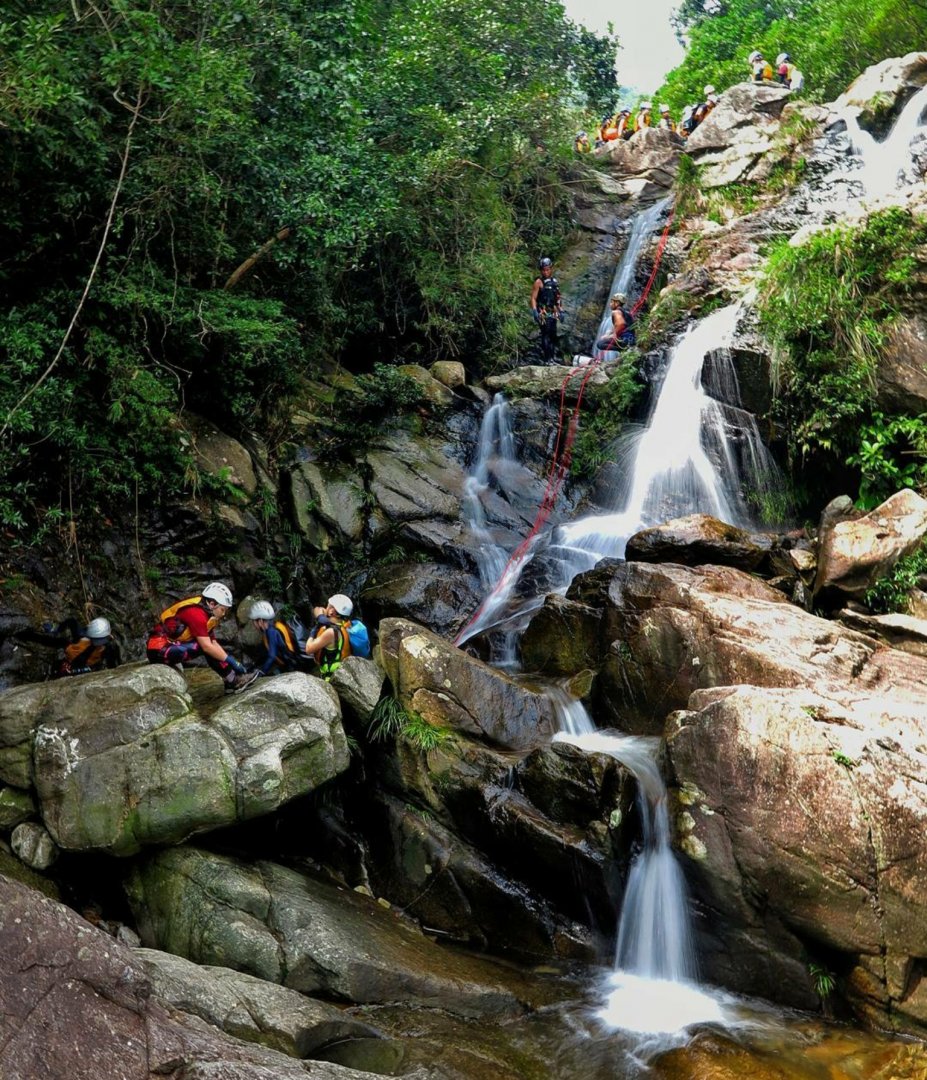
Stream tracing involves techniques of rock climbing, swimming and mountaineering.
3. Marching in the Stream
Moving forward in streams requires certain techniques and a proper pair of shoes. It involves physical effort to walk across dry rocks and just a little carelessness while on rocks covered in slippery moss can cause a fatal risk. As we move forward with every step of stream hiking, we must first test if the rock that we are about to stand on is stable enough. Shoes for stream hiking are also different from trekking shoes. The grip of hiking shoes is often considered as one of the most important features but when shoe soles are wet, they may not perform the same. Pay attention when selecting shoes for stream hiking.
Early this year, a man was injured from slipping into the Wong Lung Stream in Lantau Island. As recently as the beginning of this July, a woman fell into the bottom of a cliff in Tsing Tai Stream and got lost in the pool. After a two hours search, the rescuers found her corpse.
In summary, from our review of accidents in the past three years, the main causes of stream hiking accidents are flash floods, leaving the group alone and slipping. If you do go stream hiking, please make sure you are aware of the above factors. Going home safely is always the biggest win.