Text & Photos: Daniel-C
Hong Kong does not have real alps, which makes it difficult for us to feel the grandeur of the mountains. Thanks to the subtropical weather, summer rains here are abundant and therefore streams can be found almost everywhere on the hillsides. When Hong Kong people speak of “hiking”, it is not only hiking on the hills but also along the streams. Splashing and cooling under the falls in summer or walking on the dried stream bed in winter are alternatives for many hikers.
Stream trekking requires certain skills and experience. In my early stages of participating in mountaineering expeditions, I did not dare to roam around. I yearned to visit the waterfalls in person when I saw one swishing down from a distant valley. “One day I will go under the fall, to appreciate the elegant drizzling and to feel the cool up close”.
There are hidden streams in Lam Tsuen Valley and rugged routes along the Ng Tung Ravine. Ascending cliffs-after-cliffs could be challenging if people explore the falls by stream trekking. However, there is a built path that wanders through the valley and goes along the stream, which happens to bypass all the steep and dangerous locations. Following the path to a higher point to view the waterfall is in fact the safest way to enjoy the scenery of this steep valley. The path travels through to the mid-stream, from the the top of the Main Fall to the Scatter Fall. Yet, the essence of this route cannot be fully experienced from just a single visit. This is the first stream that I thoroughly explored, and it has always been my favourite stream in Hong Kong.
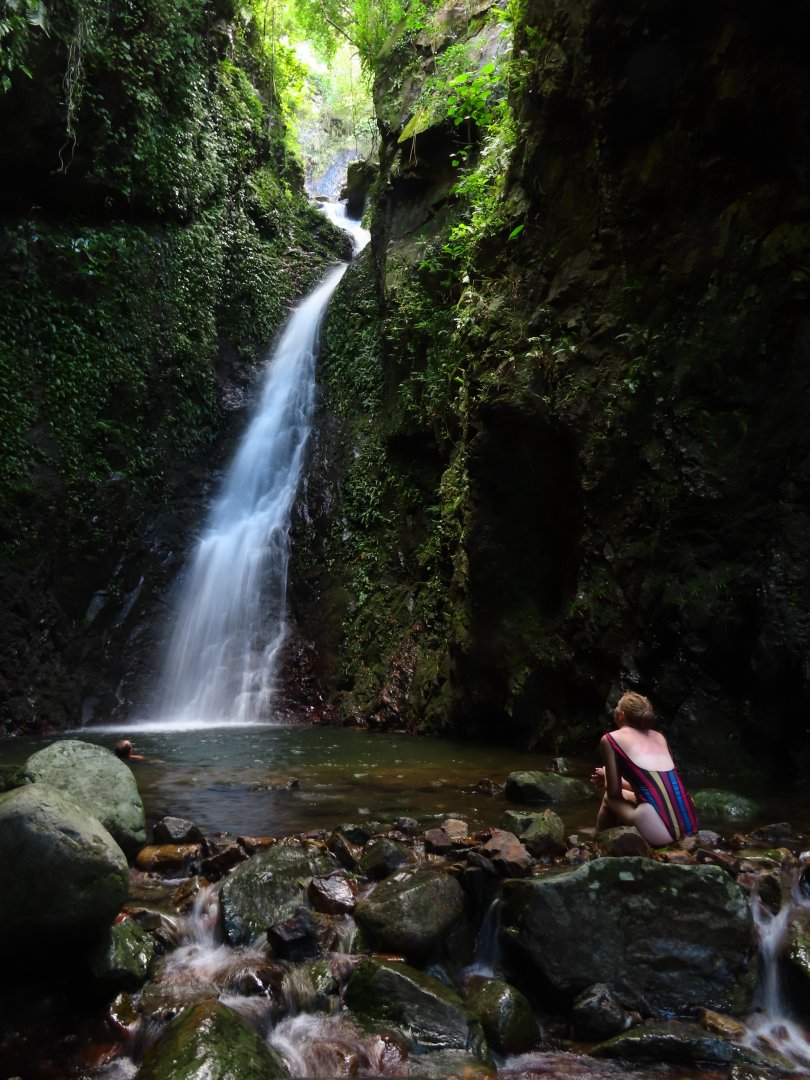
The Bottom Fall of the Ng Tung Stream, Tai Po (Photo provided by Daniel-C)
Stream trekking is a well-developed and systematic outdoor activity in Japan and Taiwan. Many rivers and streams have detailed and accurate “river tracing map” to record various topographical features and serve as a guide for visitors. There was little information about stream trekking in the old days of Hong Kong. Three publications (《暢遊香港九大石澗》,《縱橫香港奇山異水》and《香港山澗叢集》) written by the experienced author Mahler Ka (祁麟峯) are almost like the bible for stream trekking. My earliest stream trekking experience was mainly through participation in group events. I returned to Lam Tsuen Valley the following year to trace the whole Ng Tung Stream, which brought me many memorable experiences. It was not only my first time to trace an entire stream, to the source Sze Fong Shan Au and visited the legendary Maiden (Yuk Nui) Fall, but ever since then, I have become inseparable from streams and waterfalls.
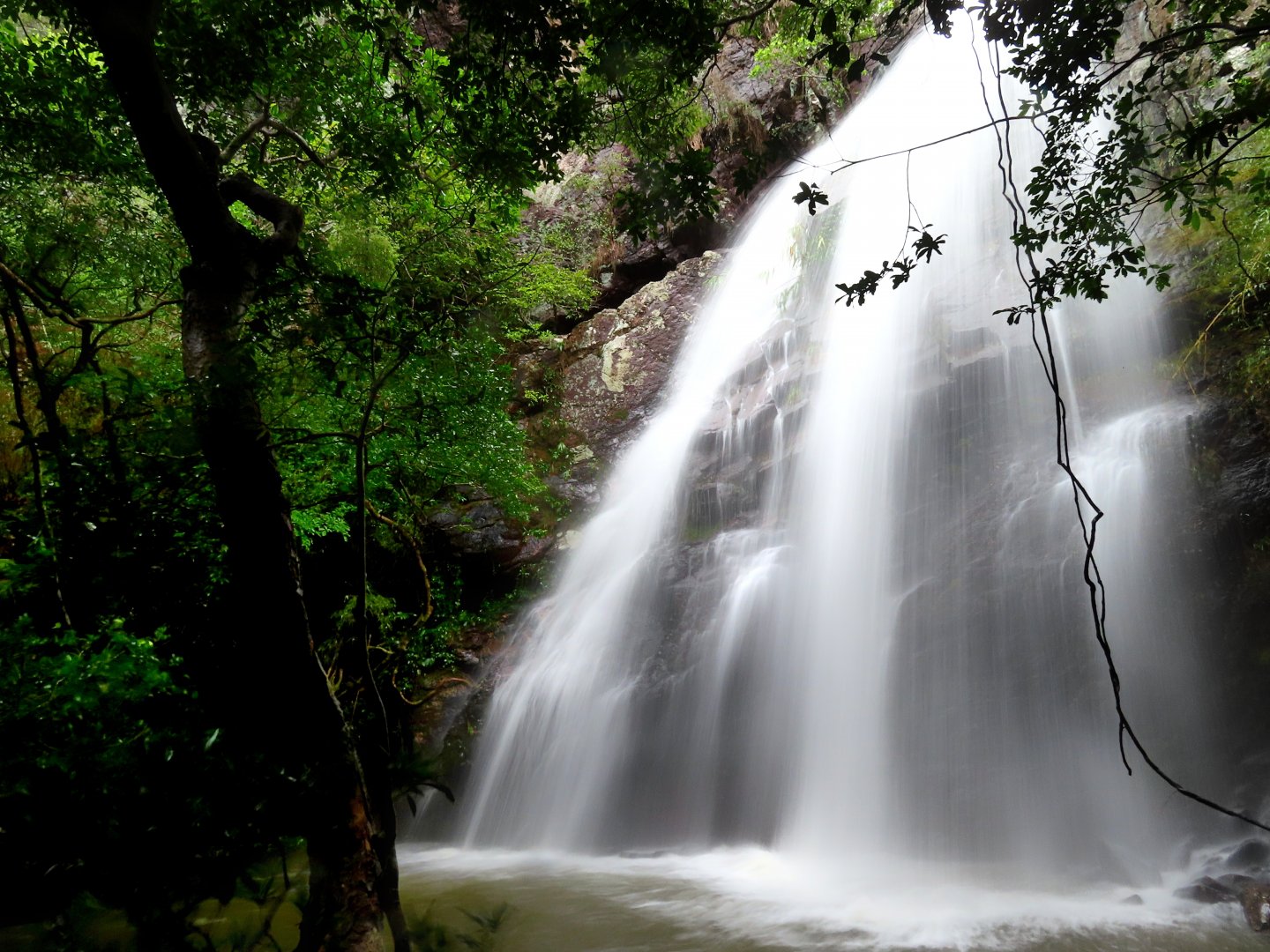
Shek Shui Kan, Wu Kau Tang (Photo provided by Daniel-C)
Stream trekking has always been regarded as an adventure activity. Some say, those who are passionate about outdoor activities are born with an innate desire to look for new routes. After completing the official trails or abandoned paths, people always want to look for other hidden trails. When hiking on dry mountain trails is no longer satisfying, one then turns to the wet passages. I consider myself a prudent person: stream trekking for me is not about seeking excitement, certainly not something to cheer about just because I successfully overcome some challenging stream sections.
So why am I in love with stream trekking?
There are many reasons. Water is the source of all life, the running streams nurture vitality, and are also rich in ecology. No doubt that stream trekking requires multiple skills – rock climbing, swimming, mountaineering, rope knots and other sorts of technique. It rewards you by building up your confidence in the process of overcoming obstacles. “Stream trekking can be dangerous, but the danger taught us more survival skills”, said a famous stream trekking professional, Li Jia Shan (李佳珊) from Taiwan. As long as there is sufficient preparation and training, stream trekking does not only change our perception of danger, it also allows us to see scenery not available from the main trails.
“Be Water”, Bruce Lee’s famous philosophical saying came across my mind when I was relaxing under the fall. Flowing water is not bound by any form, it is soft yet strong. It can adapt to everything, and can join together as a powerful force. When stream water is blocked by boulders or fallen trees, it waits quietly; accumulating in a pool until the opportunity comes. Once the obstacle disappears, the water rapidly flows through the ravine without hesitation. Just remember this when facing obstacles, “Water, always relax but well-prepared, and then it becomes unstoppable (「水,永遠都是放鬆卻做好準備」,然後「一發不可收拾」)”, said Bruce Lee. Water flows down, and seems to be dominated by irresistible forces. When water falls, it hits rocks and scatters but it soon gathers again. Streams become rivers, rivers become ocean, then steam soars under the sun and floats freely again in the sky.
Perhaps, this is why I am so fascinated by the mountain streams.
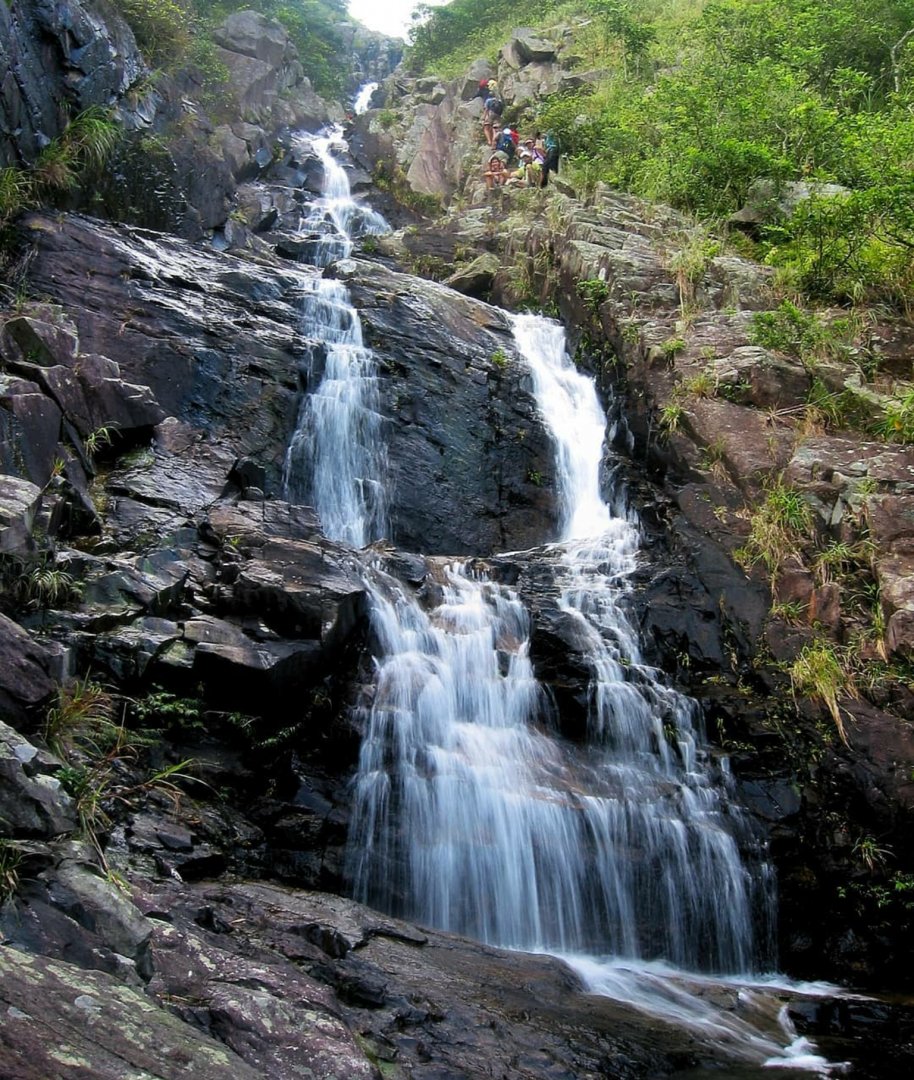
The upper stream of the Double Dragon Stream in Yi Tung Shan, Lantau Island (Photo provided by Daniel-C)