Concern Group on Concretization of Hong Kong Natural Trails
Have you noticed the paths under your feet are undergoing changes while you walk on them to enjoy the scenic views or to capture the abundant ecology in the woods? You might not realise this, but the hiking trails bear different pressures and impact every second. The condition of the trail reveals the problems it faces, and their scars tell of its past.
Soil Erosion
The word “bumpy” is often associated with hiking trails; however, the bumpiness of the trail is not only about going up and down the mountain, but is the result of soil erosion. Deep trenching, where the tread wears down creating a trench or a rill, is the most typical example. This condition is worsened by the high-use of the trail, especially of steep trails. The exposed tree roots and stabilisation facilities or the sunk roadbeds show different levels of damage. The “bumpy” road could be a sign of the soil erosion.
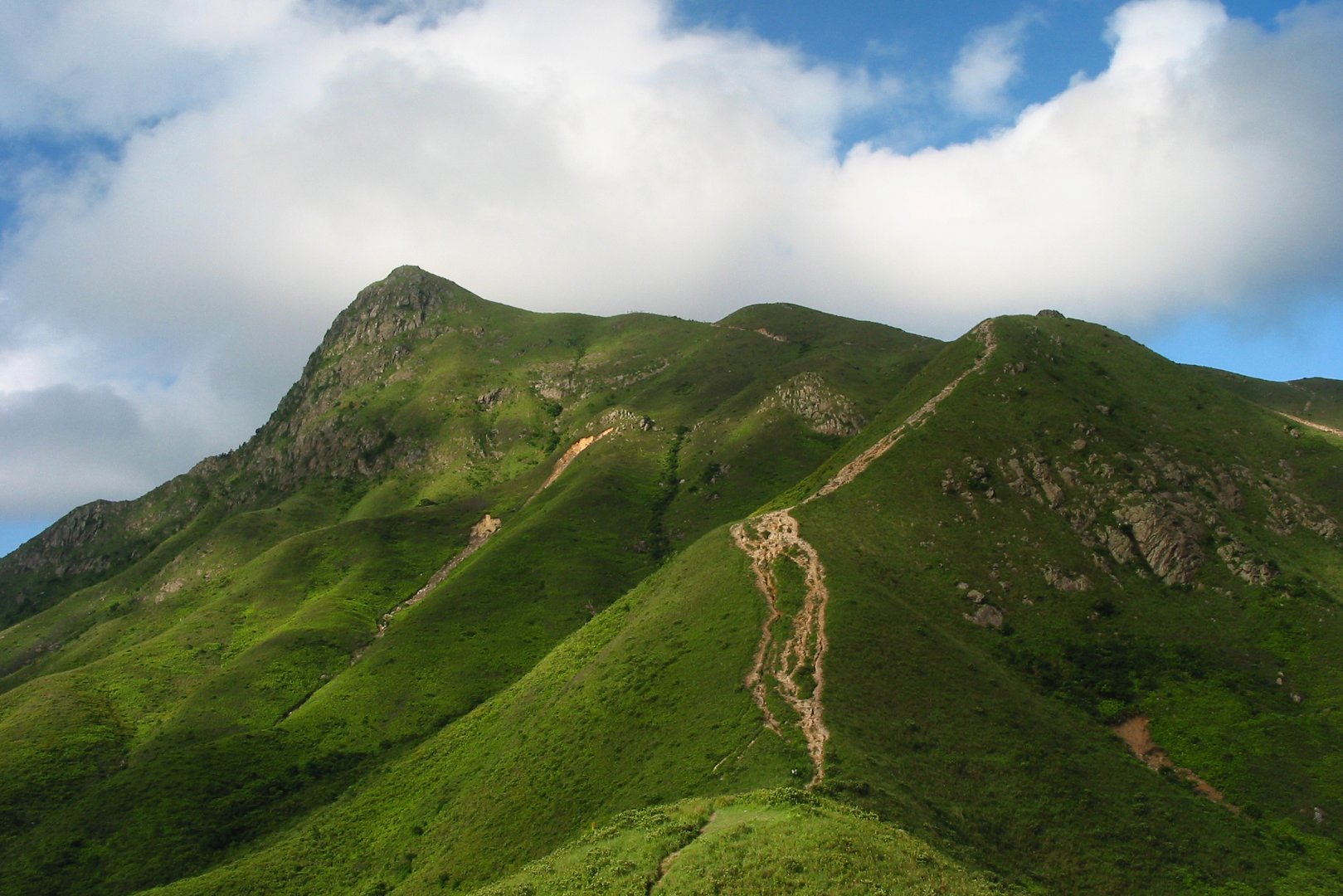
Trail degradation at Sharp Peak.
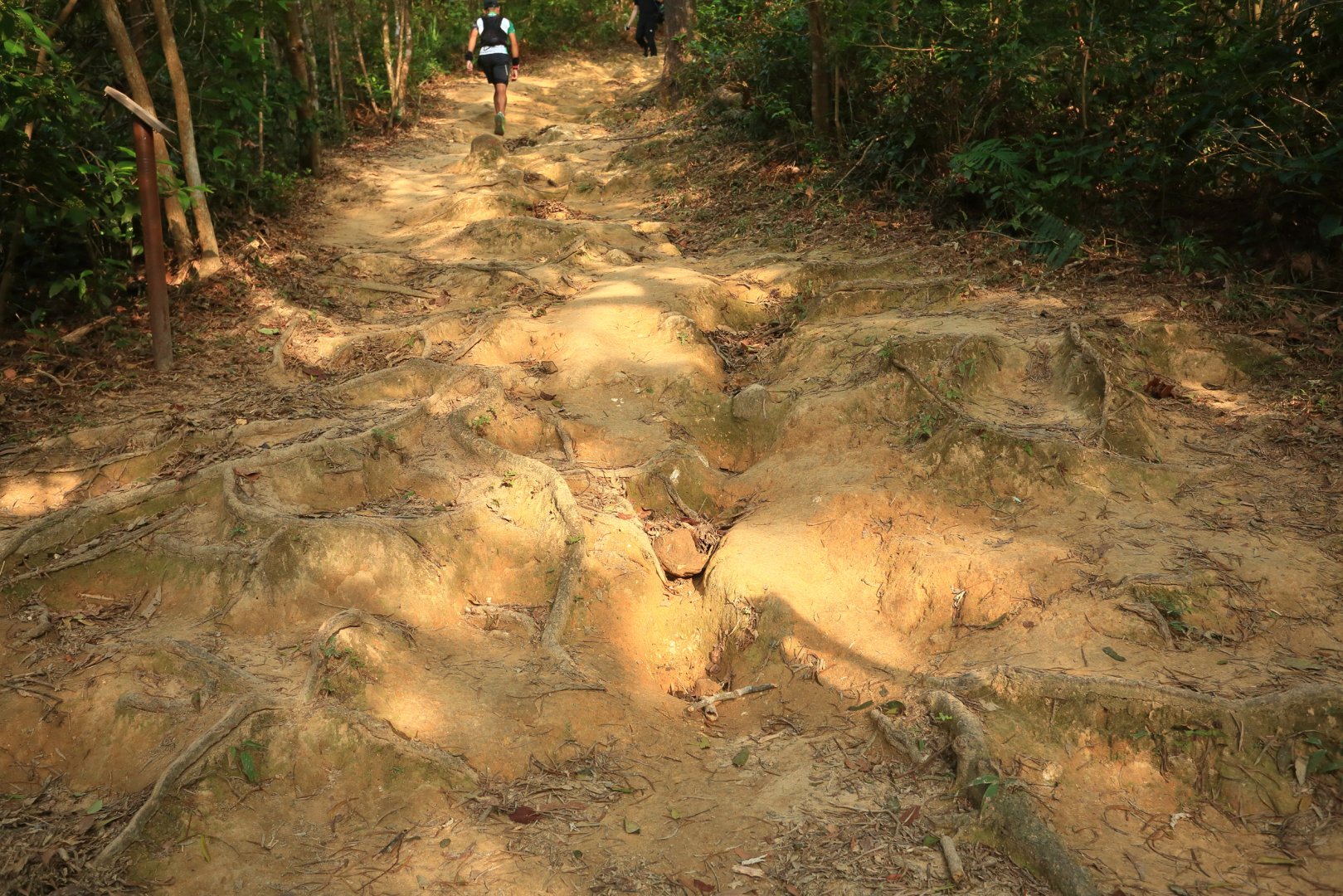
Soil erosion at MacLehose Trail Section 3.
Trail Expansion
For a multitude of reasons, hikers often take off-the-beaten trails, which is problematic to the environment. Some high-use trails have widened, causing vegetation loss; multiple trails and shortcuts are created in the same area — simply for hiking convenience. While this phenomena may be related to unpleasant trail conditions, such as rills or muddy patches, it is the hiking attitudes of humans that exacerbate this problem.
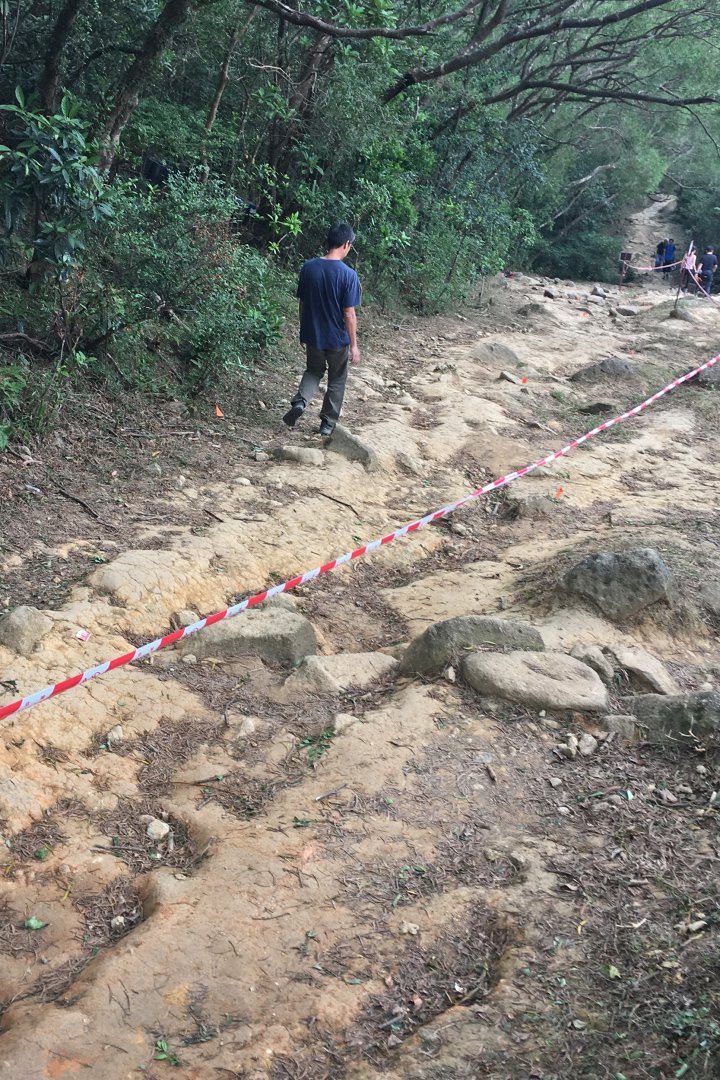
A section of trail at Ngong Ping, Sai Kung is being expanded.
Inappropriate Maintenance
Would you choose the soil path that is next to the concrete path to prevent knee pain? Have you ever slipped on the smoothly paved trails after it has rained? Without a doubt, hiking trails would gradually degrade due to increased usage or other environmental reasons; however, the management authority always uses unsuitable materials such as concrete that is low in permeability, or granite blocks to standardise and “conserve” all types of trails. They rarely consider the geography or pay attention to the water source for appropriate dredging. In the long term, this kind of management would speed up soil erosion and lead to a vicious cycle which would worsen the hiking experience or encourage visitors to exploit new paths. Although natural materials such as wooden logs and large rocks have recently been used to pave trails, there is no single maintenance method for all cases. Research is required for different locations to avoid deficiencies in design, unnecessary touch ups or inappropriate maintenance that could in fact harm the natural environment.
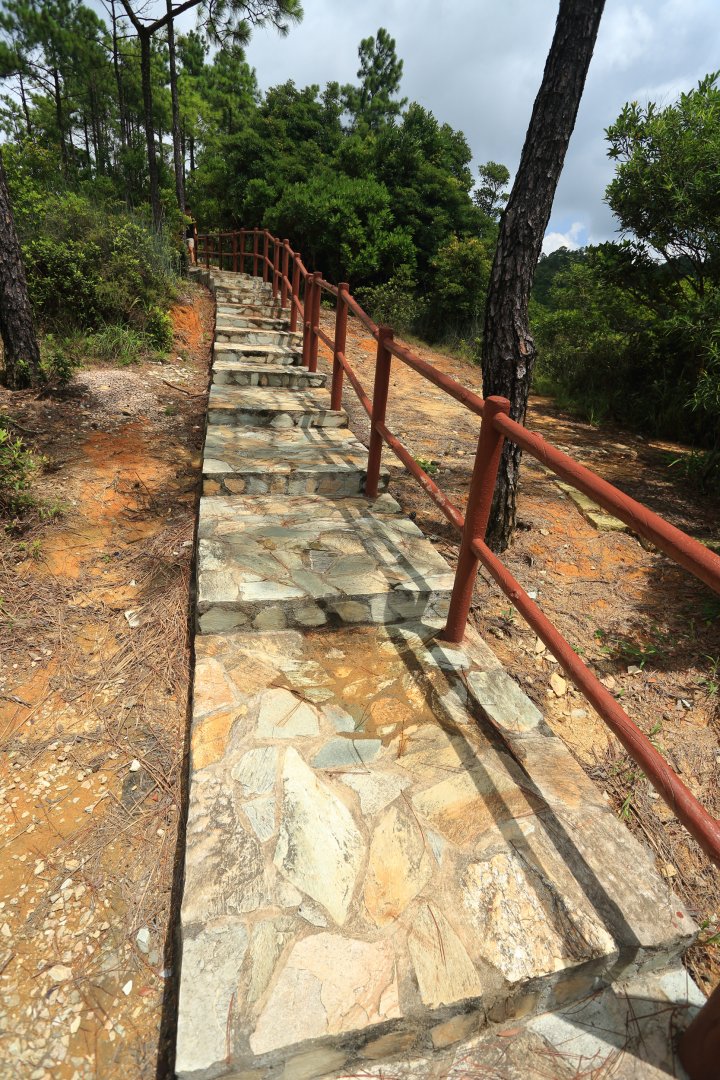
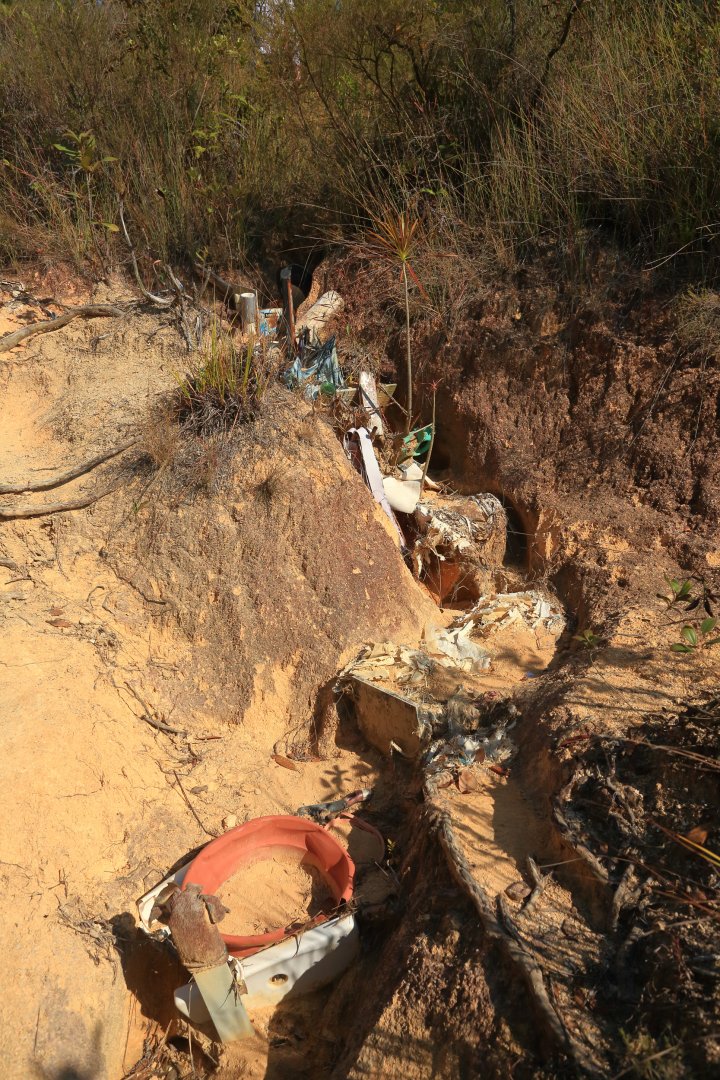
Hikers used sundries to build or stabilise the trails, which raise safety concerns, and such objects might release harmful substances.
That hiking trails will wear and tear is a fact, but trail maintenance is not only about the environment and ecology, but the needs and benefits of various stakeholders should also take into consideration. For example, safety expectations from the general public, the request of challenging trails from trail runners, the daily life of villagers, everyone’s right to experience nature, maintenance costs, as well as the conservation of our history and culture. Trail conservation is a topic that requires joint management.
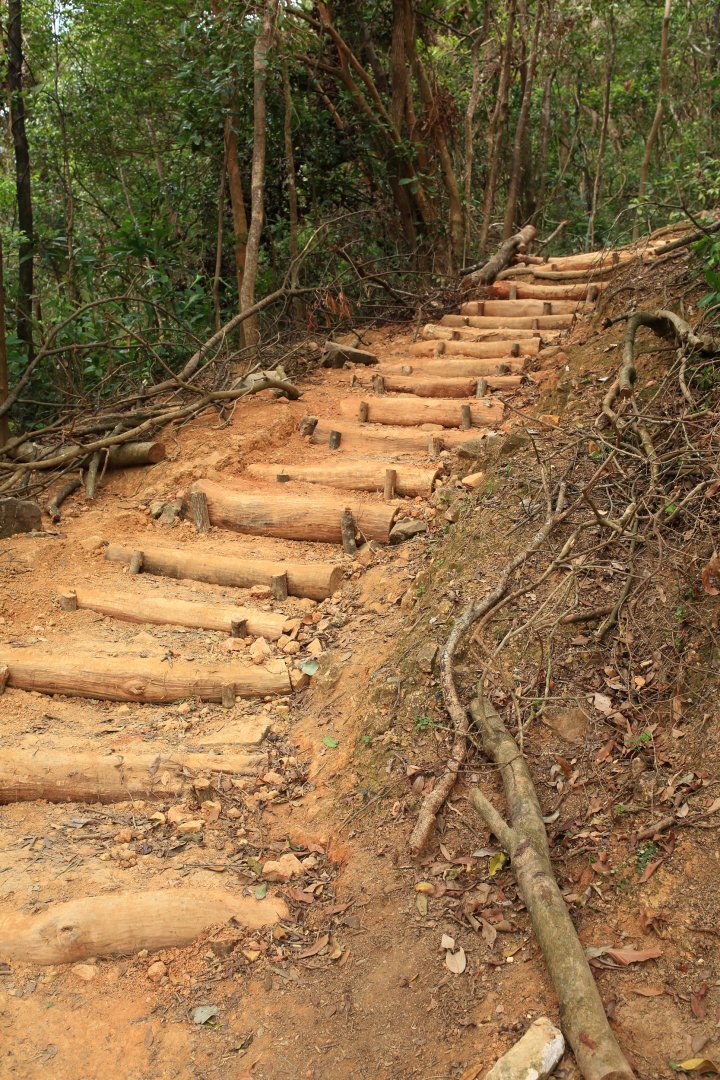
In recent years, the eco-trails concept advocates handling drainage problems from the source, using both environmental friendly methods, and local materials to conserve the trails.
So, next time you go hiking, how will you notice the pain of the trails?
Reference:
(1) National Park Service: “Assessing and Understanding Trail Degradation: Results from Big South Fork National River and Recreational Area”, 2006
(2) 台灣千里步道協會:《手作步道》。果力文化。2016 (Chinese Only)
(3) 徐銘謙:《我在阿帕拉契山徑 – 一趟向山學習思考的旅程》。行人文化實驗室。2015 (Chinese Only)