Kami Hui, The Conservancy Association
1. Incense Tree (Aquilaris sinensis)
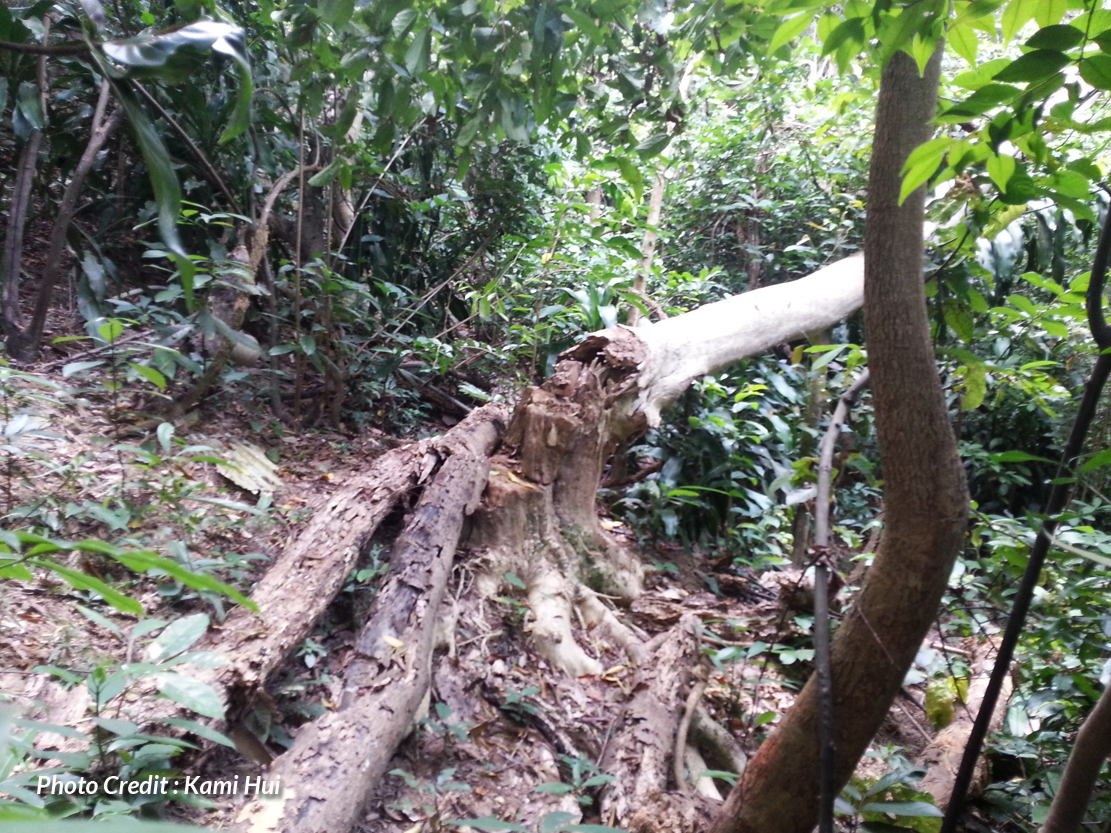
Incense Tree, aka. A sinensis, is definitely the no.1 vulnerable tree on the list. Once it reacts with fungal infection, it produces a dark aromatic resin at wounds. These resinous woods are not simply a kind of valuable Chinese herbs, it is also an aromatizer that has high market value due to the fragrance it produces when burnt. Wild Incense Tree was once widely distributed in South China, and it was easily found in places like Fung Shui Woods in Hong Kong. However, they have been illegally logged massively in early years due to its high market value. Not only the grown trees, even the saplings were cut down for sales, which severely threatened the growth and reproduction of Incense Trees in Hong Kong. A. sinensis is categorised as “vulnerable” in the International Union for Conservation of Nature (IUCN)’s Red List of Threatened Plants (1). Products of Incense Trees are not necessities in our daily lives. Fewer purchases will help to conserve this species, which is an action that we can take to protect Incense Trees.
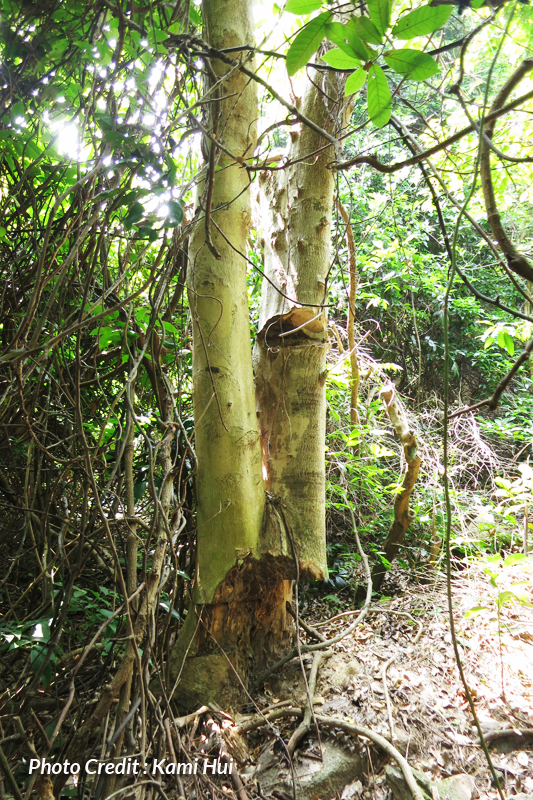
Incense Trees that are logged down in the woods
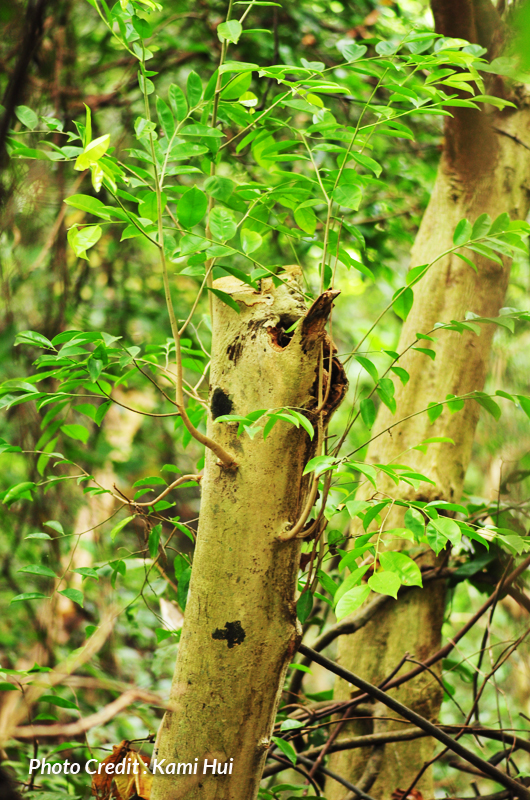
Even the saplings were cut down for sales, which severely threatened the growth and reproduction of Incense Trees in Hong Kong
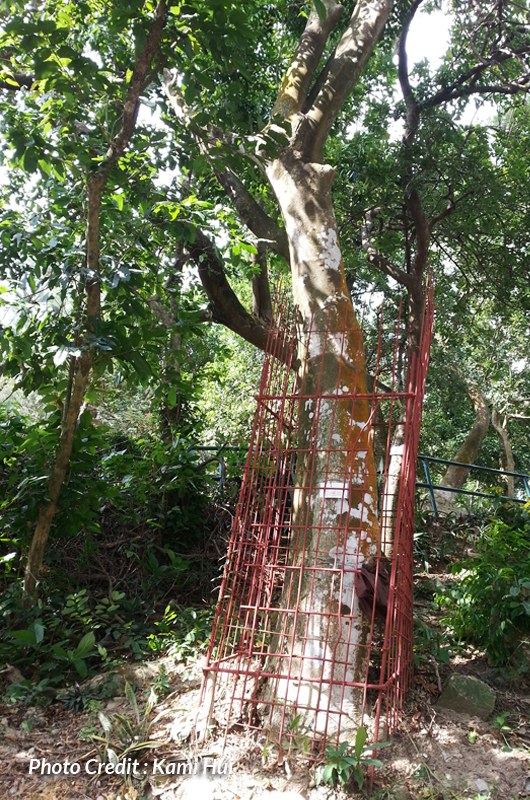
To refrain from illegal logging, related government department set up fences for protecting Incense Tree
2.Ivy Tree (Schefflera heptaphylla)
Ivy Tree normally forms by 6-8 compound leaves, and its Chinese common name indicates the resemblance of its leaves to goose (or duck) webs. Ivy Tree is a native evergreen tree in Hong Kong, so why is it vulnerable in Hong Kong? It is because its tree trunks have the similar light color as Incense Trees. Some predators mistakenly identify them as the valuable Incense Tree and hence cut them down. Blossoming in winter, Ivy Tree is an important nectar source for insects including bees and butterflies. During the flowering period, you can hear frequent bees buzzing under the Ivy Trees.
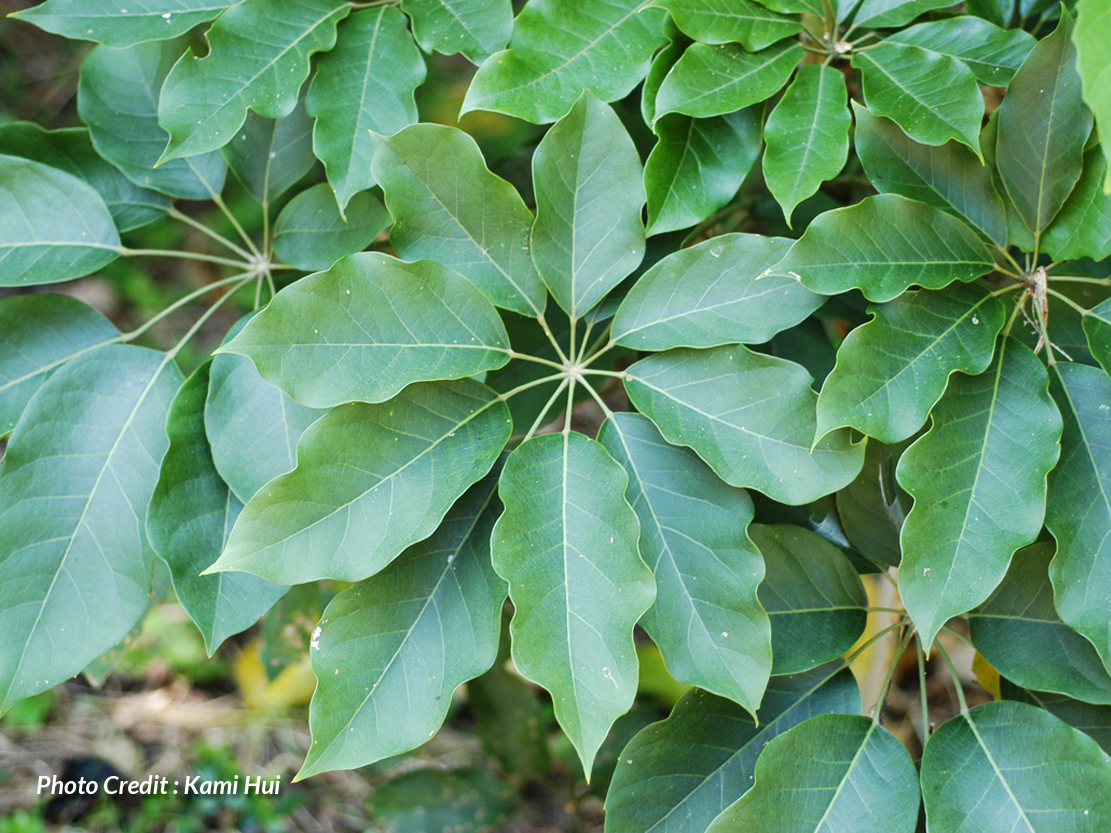
Ivy Tree leaves look like duck webs
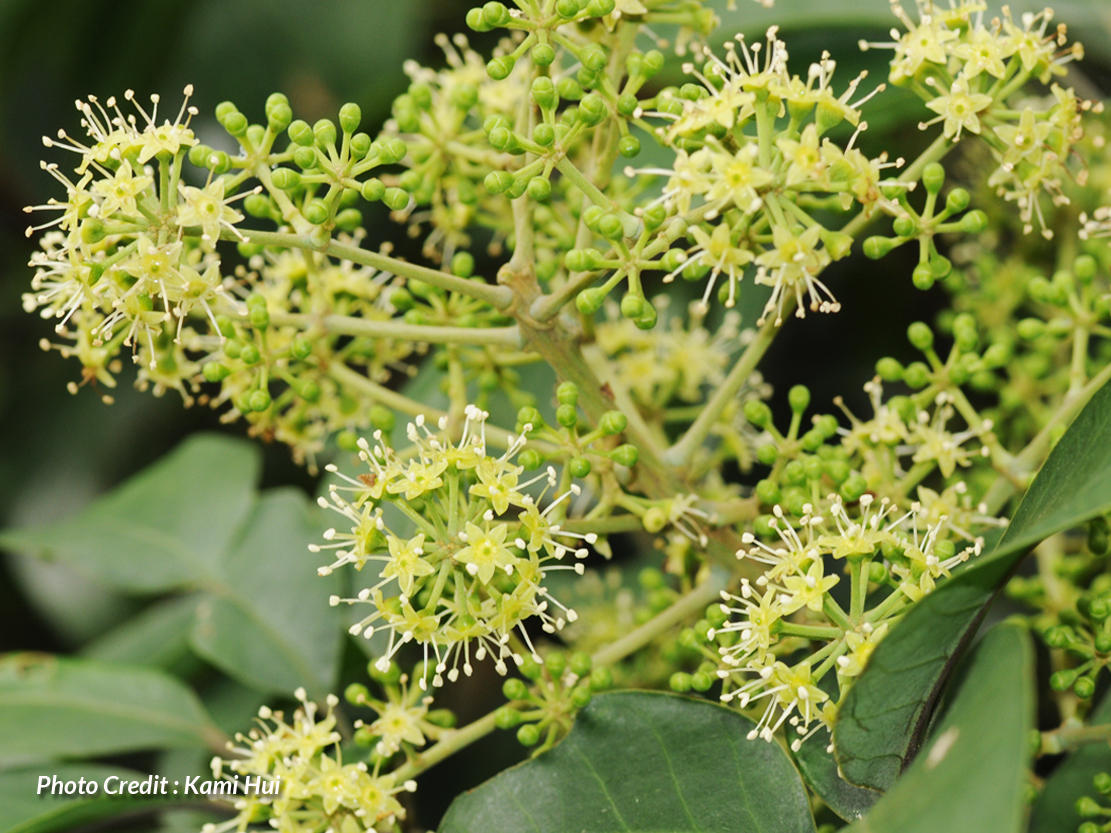
Very few trees blossoms in winter, therefore, Ivy Tree becomes an important nectar source for insects
3. Cuban Bast (Hibiscus tiliaceus)
Every year after the typhoon season, countless trees are destroyed and fallen in both the city and countryside. In 2017, we did some research into which species were destroyed the most after typhoons Hato and Pakhar. It turns out that Cuban Bast were the most vulnerable trees in these two typhoons (2). They are easily found along the coast, beaches and also popular in the urban areas. It has dense branches and leaves which form nice shades for people. However, environmental limitations in urban areas directly affected the woods’ health and structure, which worsened their ability to stand in the storms. According to the research, of the 890 fallen trees, 54 were Cuban Basts. Although there are many reasons that cause their destruction, regardless of their own structure or the growing environment, all we hope is that the trees can grow healthily and sustainably for a long period of time in order to “serve” the earth. After all, their roles on earth are irreplaceable. To protect our trees, we should always start from ourselves, like practicing “Leave No Trace”, take our litter home, contacting 1823 to inform the related department when witnessing some illegal logging issues, or report incidents to TrailWatch for follow up.
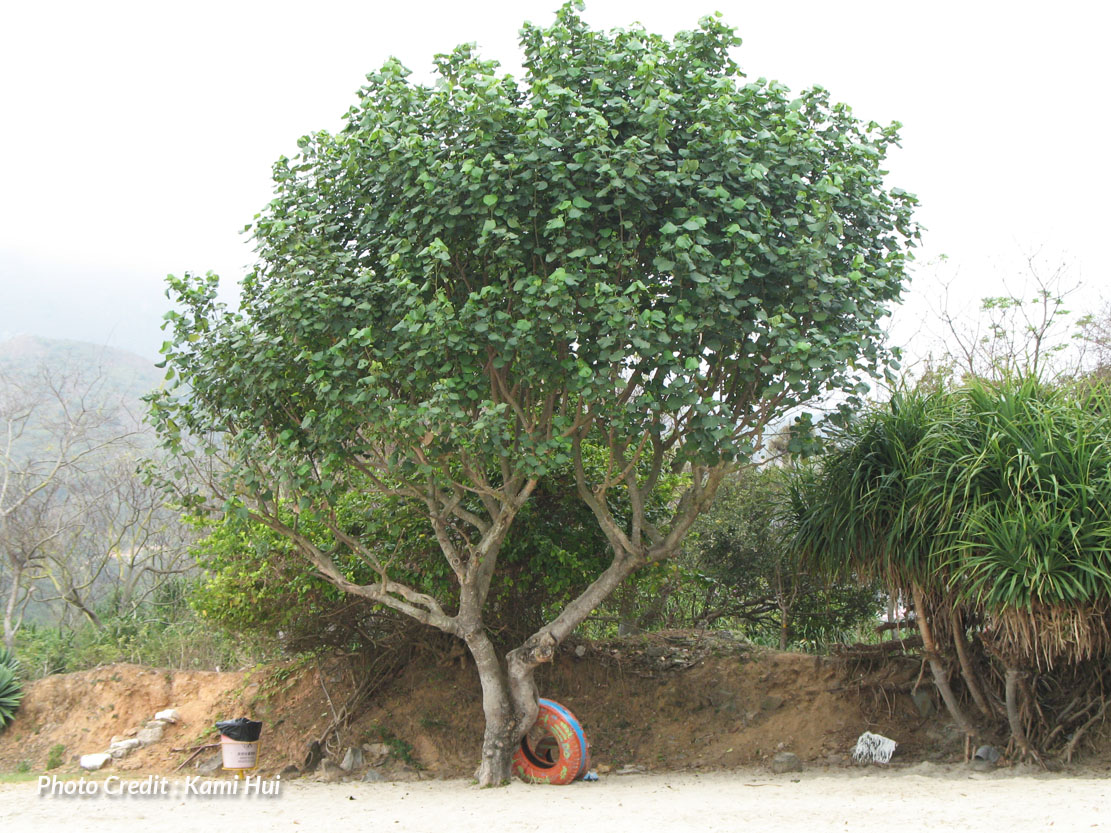
Cuban Bast on the beach
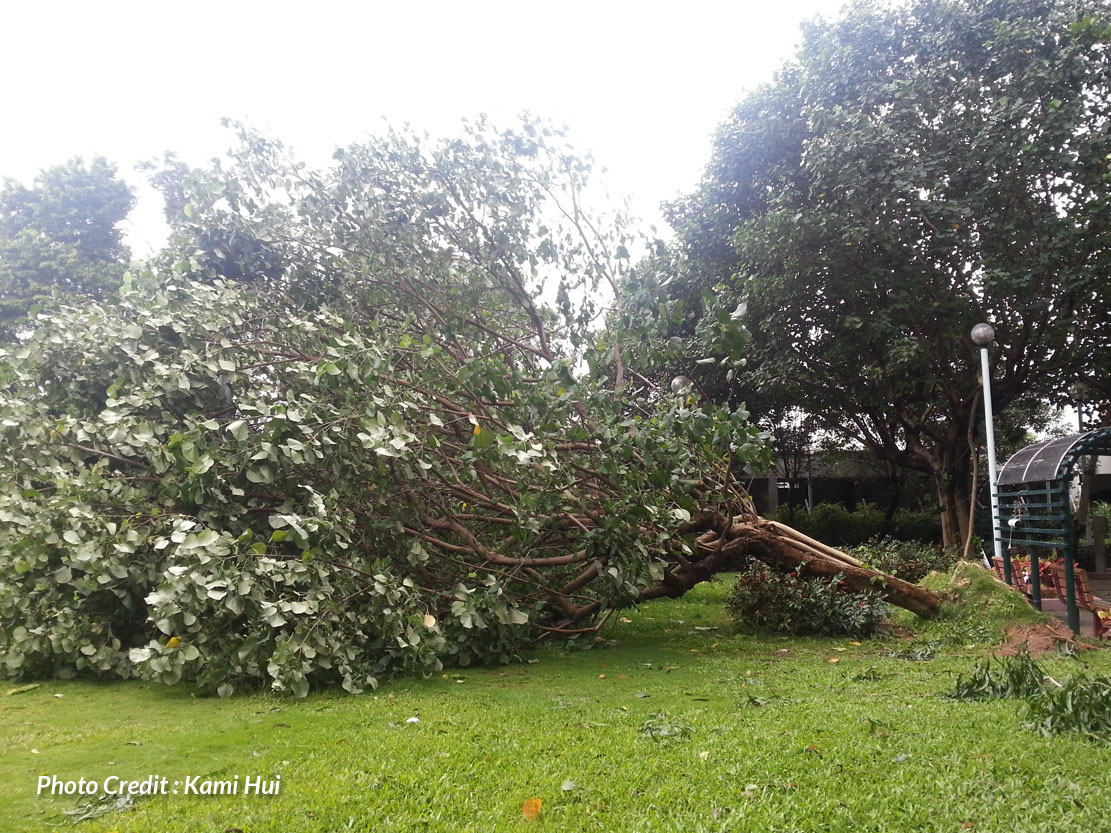
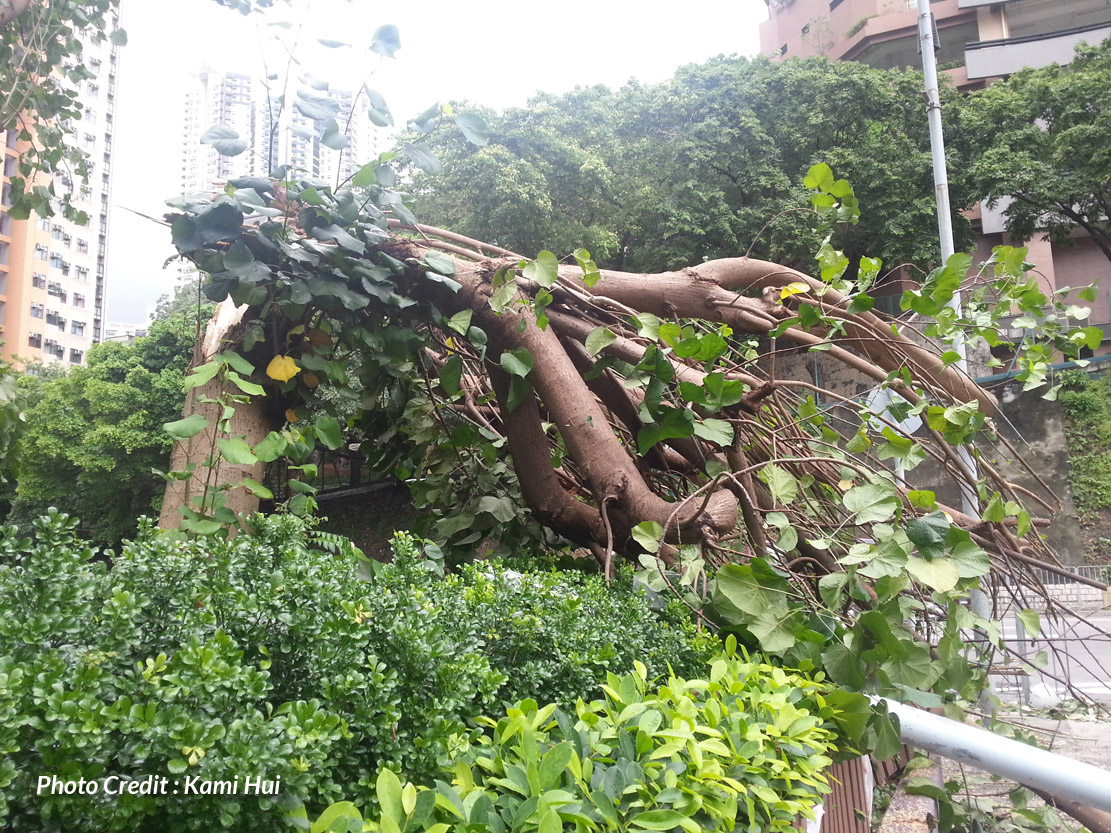
Fallen Cuban Bast after typhoon
Reference:
(1) Harvey-Brown, Y. 2018. Aquilaria sinensis. The IUCN Red List of Threatened Species 2018: e.T32382A2817115.
https://dx.doi.org/10.2305/IUCN.UK.2018-2.RLTS.T32382A2817115.en. (Downloaded on 11 April 2020)
(2) The summary of the trees damage inspection in the urban areas after typhoons, by The Conservancy Association (Chinese only)
https://www.facebook.com/media/set/?set=a.10158065624091164&type=3
The analysis of the trees damage inspection in the urban areas after typhoons, by The Conservancy Association (Chinese only)
https://www.facebook.com/pg/cahk1968/photos/?tab=album&album_id=10158093047051164