Recently there has been news about forest fires in every corner of the world, from our own Ma On Shan to Thailand and Australia. Over the last weekend, there was a hill fire in Tai Lam Country Park that burned for nearly 40 hours. Such fires devastate the ecology and our hearts, seeing pictures of forests covered in brown smoke and burnt animals, many of which have died.
Experiencing the desolation in Hong Kong
At the end of February 2020, a wildfire lasting for nearly 20 hours ripped through Mui Tsz Lam and Luk Chau Shan near Ma On Shan. Over 80 hectares of land were burnt, including 55 hectares of country parks areas. TrailWatch team visited the site a few days after the incident to record the situation of the affected areas.
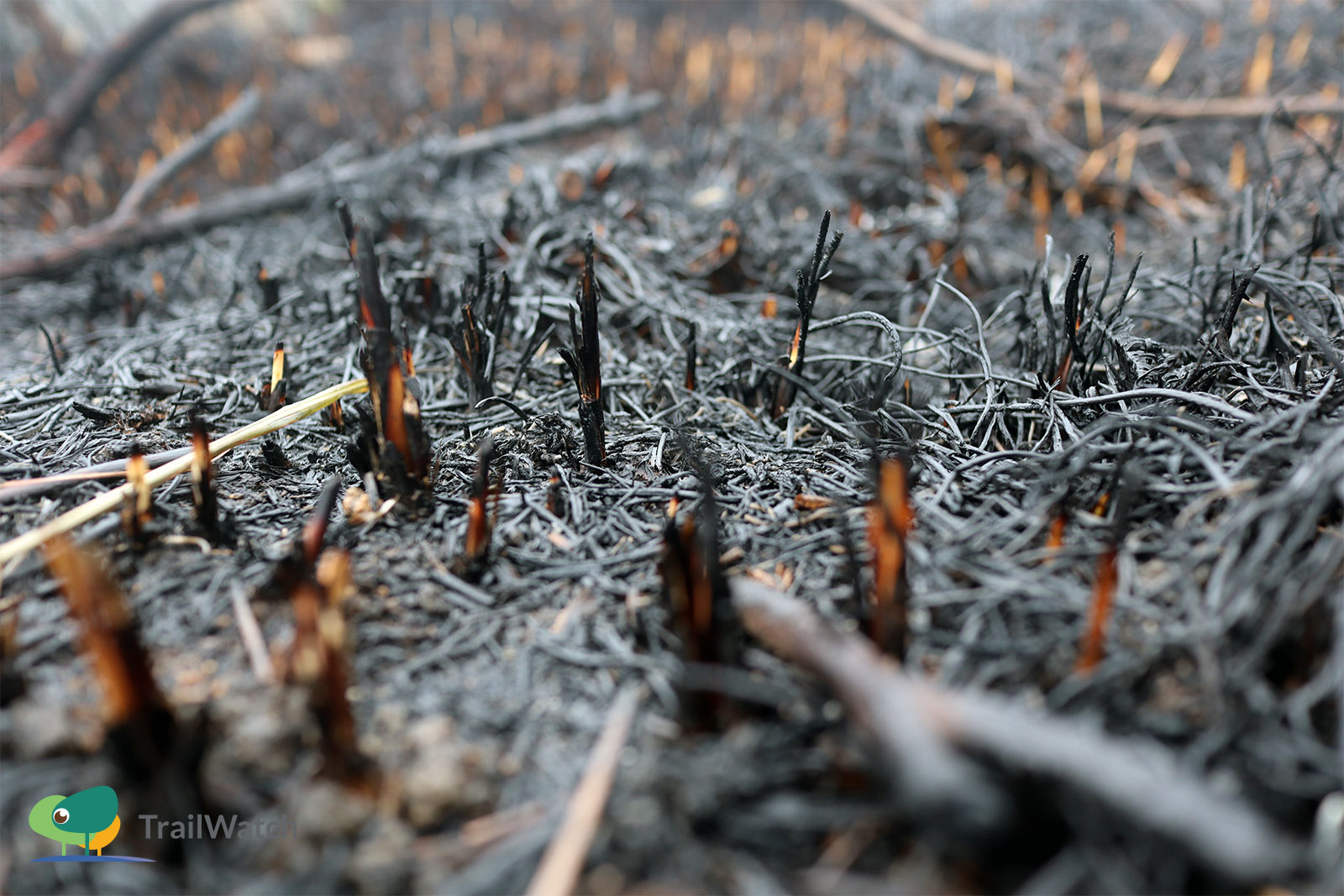
Some of the trails at Luk Chau Shan after the devastating hill fire.
Beginning from the trail behind Ma On Shan Village, nothing is the same. The trail was covered in ashes, yet moist, probably caused by the water bombs dropped by aerial firefighting. The lush vegetation was brownish-dark in colour due to oxygen deficiency. The once-was gentle path became difficult to walk on because of the lack of plants to block the heavy wind blowing towards us. It was an uneasy experience for us to revisit the site but after hearing the story from Kami Hui, the Conservation Manager of The Conservancy Association (CA), the weight was taken off our minds.
When you see trees you'll see forests. How forests are grown from scratch.
Kami first visited a trees planting site at Sze Pai Shek Shan in Tai Lam Country Park in 2007, where there was sandy soil which made the path slippery. The mountain was bare, making it difficult to find trees. Kami was new to CA, responsible for the corporate tree plantation programme to plant over 20,000 trees (including Taiwan Acacia and Sweet Gum) together with the staff of JUSCO. Since then, Kami has visited the site 2-3 times a year to observe and record the growth of the trees, their survival rates and pest information in the area.
In this past decade, the seedlings have grown from 30 cm in height to 10 metre tall trees and formed an expanse of forest that provides an enjoyable resting area for hikers. The tree plantation programme not only teaches the participants about different tree species, but also provides a driver for the organiser to improve its tree planting experience. From planting fast growing exotic species like Brisbane Box and Taiwan Acacia, to planting local species such as Herbarium, Small-fruited Holly and Small-leaved Holly, every seed chosen to be planted now is done from learnt experience.
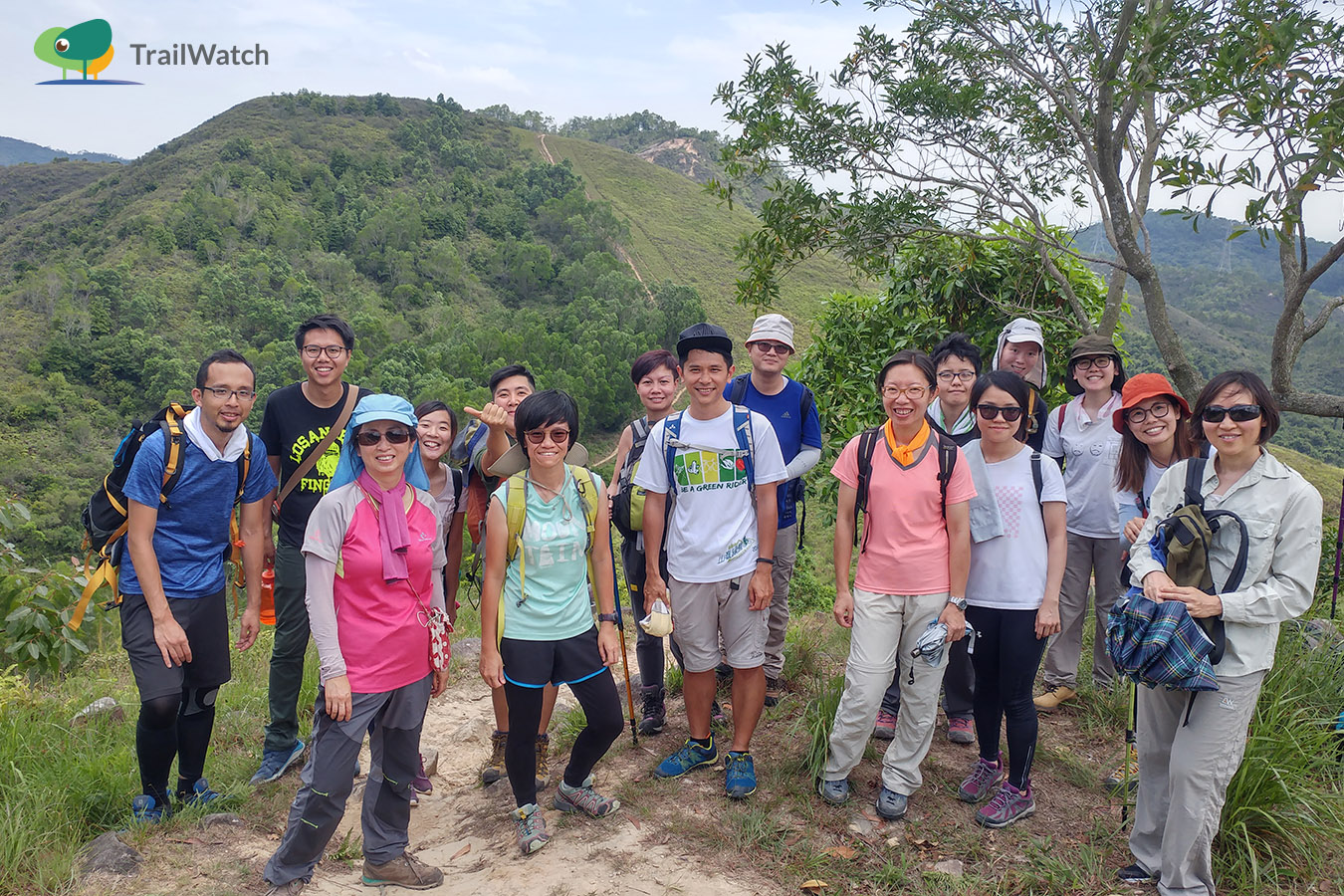
Kami, in the green top, when TrailWatch and CA co-organised the guided tours about the periphery of country parks in May 2018. The background is the tree planting site in Sze Pai Shek Shan.
Until 2018, approximately 20 hectares of land on the periphery of Tai Lam Country Park close to the Tai Lam Tunnel toll plaza was proposed by the Task Force on Land Supply for housing development. TrailWatch and CA organised two guided tours to view the areas included in discussion, “Developing More Areas on the Periphery of Country Parks”. Kami and her colleagues were invited to lead participants into so-called “low ecological value” areas. During these tours, we encountered Incense Trees and rare butterfly species which demonstrated the high ecological value of the area without saying too much. Since then, the government hasn’t further discussed the development of this area. We may think this forest can grow steadily for a while without being disturbed, but the threat of fire always looms.
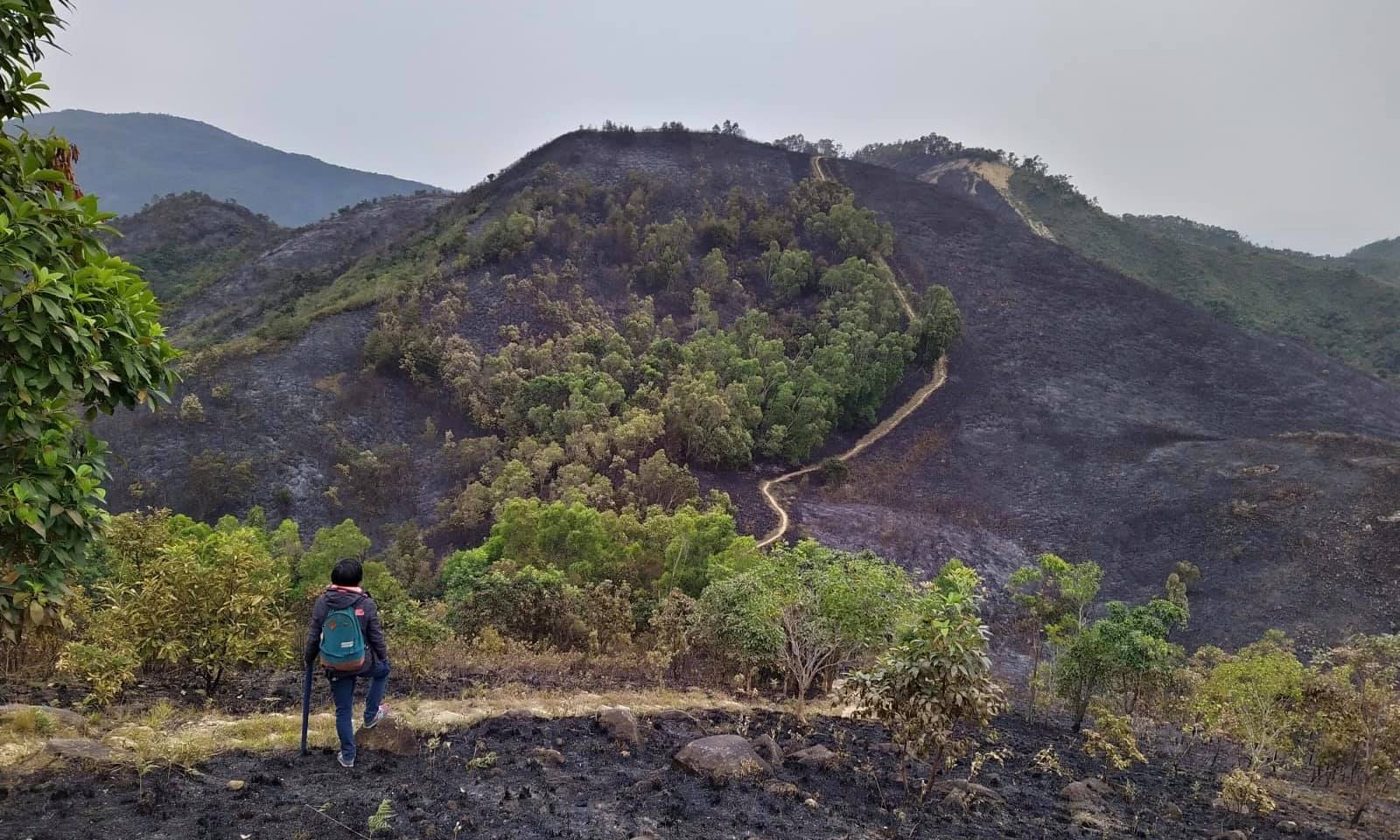
The tree planting site in Sze Pai Shek Shan after the conflagration (Photo provided by CA).
10 Years of tree-planting gives us hope that biodiversity can overcome destruction — if properly conserved.
It is nothing new to hear about hill fires around Pat Heung. In early December 2019, sparks were seen around Sung Shan New Village and not long after, a tree-planting site in the area was engulfed in flames. This site suffered huge damages, not only to the trees themselves, but also as a habitat for civets and leopard cats. When we worryingly asked Kami about this situation, she assured us, “hill fires happen every year and there is nothing we can do, we don’t even know the source of the fire. But we have recorded many animals during the years of planting trees and even had barking deers eat the seedlings!”
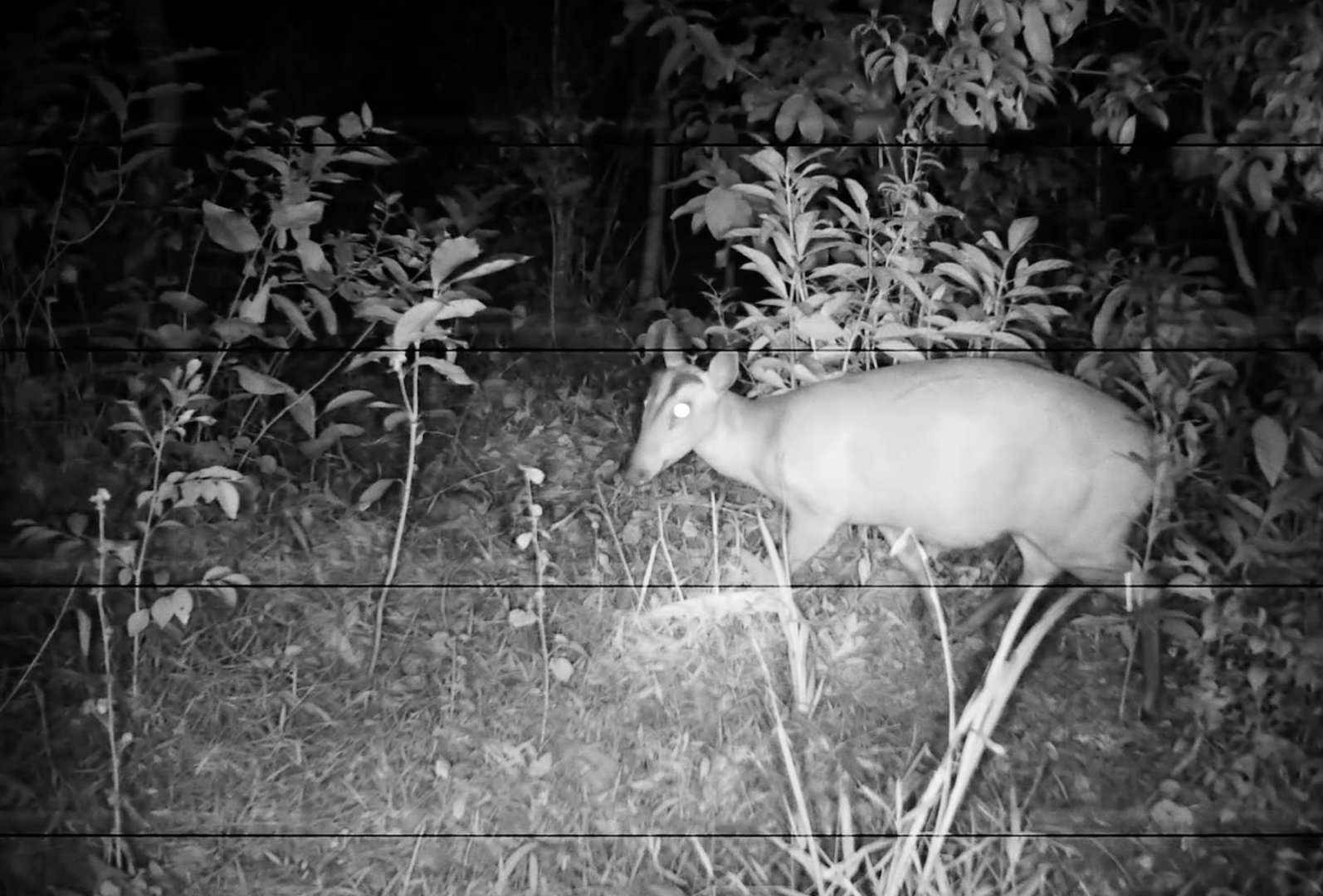
A Barking Deer caught eating the seedlings at the tree planting site (photo provided by CA).
Reflecting on our experience to visit the destroyed site behind Ma On Shan Village, it was frustrating if we just looked at the burnt soil in front of us, but Kami reminded us that ecology is never the same everyday, even without the hill fires. As long as these sites are still within the conservation areas and left undeveloped, and together with everyone’s efforts, we can still bring it back to be rich in biodiversity.