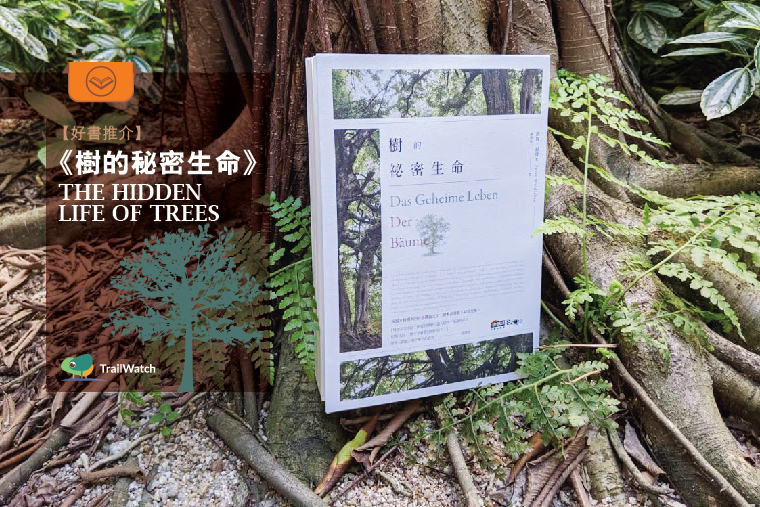
When you meet an old tree, you might stop for a while and admire its astonishing appearance, but have you thought about the life of this tree in front of you and what it has gone through?
Trees have social networks and are like human families, writes Peter Wohlleben in his book, The Hidden Life of Trees: What They Feel, How They Communicate (Das geheime Leben der Bäume). With stories that uncover the amazing process of life, death, and regeneration of trees and forests, Wohlleben will leave you with a deeper appreciation for the complexity of their lives and what they offer to the natural world.
There are many parallels between the forest ecosystem and human society. For one, trees interact with other living creatures. Using African acacias as an example, Wohlleben explains how trees can communicate: when a giraffe starts to eat its leaves, the tree releases a toxic chemical to get rid of predators; meanwhile, the chemical drifts through the air to warn other tree tribes. Other acacias can “smell” this signal and also release the same chemical at the same time. Tree parents also live with, communicate with and support their children, and share nutrients with other trees who are sick or struggling.
Being an island city covered in nature that offers plenty of natural habitats of high ecological value, Hong Kong has a long relationship with trees. Unfortunately, trees in both natural and urban areas are often under-appreciated. Expert Jim Chi-yung — also known as the Tree Professor — has found that 54 of the 380 heritage trees have been lost between 1993 to 1998 and 1999 to 2003. When Typhoon Mangkhut ripped through Hong Kong in 2018, it reportedly caused close to 61,000 trees to fall — you might recall images of paths blocked and playgrounds full of branches and trunks waiting to be sent to landfills. What a devastation.
Trees and nature are necessary to our survival, helping to clean the air and provide oxygen that we can breathe. Amid COVID-19, they offer open space and areas with fresher air, a respite from often small, cramped homes of Hong Kong. Forests and trees offer habitats and enhance biodiversity — crucial to helping keep diseases at bay. Trees are a part of our lives.
Wohlleben writes, “the main reason we misunderstand trees is that they are so incredibly slow. Their complete life-span is at least five times as long as ours.” It takes hundreds of years for them to grow, which makes them the perfect role model to demonstrate that maintaining the entire environment as a whole, is the only way to survive, not a single tree nor a single person can do it alone. We too, are part of this environment. You might be inspired by The Hidden Life of Trees: What They Feel, How They Communicate and develop a deeper appreciation for trees and nature.
After reading the book, why not find a tree and admire its long kept stories. You can also watch the same name documentary by German director Jörg Adolph, who brings Wohlleben’s book to life. Das geheime Leben der Bäume Trailer (German)