Text & Photos: Daniel-C
Hiking on the ridge of Sunset Peak in late winter, I could see the snow-white blossoms in the dense forest down the valley, even from a distance, so I began to whack through the long grasses and bushes, advancing towards the goal. One of the pleasures of hiking is to enjoy the change of scenery in different seasons, and the blooming wildflowers are one of them. "The hillsides below Sunset Peak take on a bridal look as the trees with their crown of blossoms stand out for miles around”, described in 1985 by Derek Kamp in his book "12 Hong Kong Walks". After reading the book, I decided to see that beauty for myself.
The "white bridal look" described in the book were the wild Magnolia trees, Michelia maudiae, also known as Maud's Michelia. Among the wildflowers that bloom in Hong Kong during winter, Maud's Michelia will definitely be in the top three in term of her beauty : big showy snow-white flowers, bright yellow anthers, shiny dark green obovate oval leaves, reminding people of the other relatives of the Magnolia family, the widely cultivated Lotus Magnolia and Purple Magnolia. This native tree is rare and only recorded in three locations in the territory, first discovered in 1900 by S. T. Dunn, who was then working in the Botanical and Forestry Service, and the plant was named after his wife Maud.
Different flowers for different seasons, Maud's Michelia in January, Chinese New Year Flower in February, Westland's Rhododendron in March… It is like an annual appointment with the wild flowers, from season to season. No matter how busy I am, I can still find time to go. The planning of the locations to visit and itineraries for each year almost always follow the flowering calendar. A friend of mine once said, "Isn't hiking supposed to be a chance to stretch your bones and relax? Why do you seem to be visiting traditional Kyoto ryōtei?" He was referring to the attention and persistence in some old ryōtei in Kyoto. For each room, based on the plant species that can be seen when looking out to the courtyard, the management will only arrange to use it during the flowering season, so that the customers will always have the view of a garden filled with flowers.
Pity that the beautiful scene in the Sunset Peak Valley described in the book has not been seen again in recent years. Only small patches of white flowers can be seen faintly in the dense forest. During the last visit a few years ago, I could only see a single tree in bloom. Global warming has caused the flowering period to become chaotic and unpredictable. Considering the safety issue of hiking alone, the annual appointment with the wild Magnolia trees has come to an end. However, at the Magnolia Garden of Kadoorie Farm, there are several specimens that have reached mature flowering age, and usually bloom later in February, just when the peach trees start to flower.
When Maud's Michelia meets the peach blossoms, to most city dwellers, the latter is certainly much better known. During the Lunar New Year, from the flower market to major shopping malls, it is the show time for the peach red blossoms. However, rather than blooming according to nature's timetable, they are controlled carefully by the flower farmers. As a traditional new year custom, flowering peach branches are cut and placed in expensive vases to attract romance and prosperity. Businessmen love it because "Red Peach (Hungtao)" is the homophonic pun of "great prospect", and a single person will circle clockwise under the flowering branches to pray for romance. I remember the old Cantopop "Plum Blossom" by Michael Kwan Ching-kit, chanting about how plum blossoms are "cut and placed at home to be worshiped", and sighing "the blossoms can only last for a while, like praise is not forever". "The day when the fragrance is gone, leaving only the withered branches to weep in the wind". Unlike peach blossoms, Cantonese people will not have plum flowers displayed during lunar new year, since the words "plum" and "bad fortune" have the same pronunciation. Peach blossoms are popular and in great demand, but that does not mean they will have a better fate.
While passing through the back street of To Kwa Wan on the second day of the lunar new year, I saw a rather big lot of abandoned flowering peach branches lying on the ground. Without water, they were still blooming brilliantly, as if they were struggling to fulfill their "duties" as the New Year's flowers, or just performing their swan song. After the lunar new year holiday, it is common to see garbage collection stations being piled with peach branches. It is also common for unsellable peach blossoms to be dumped after the last day of the Lunar New Year Fair. Under the epidemic situation, the Lunar New Year Fair was banned, instead there were "guerrilla flower stalls" selling peach blossoms on the street. The situation of unsellable goods being abandoned on the street became even more serious.
My friend's father is a flower farmer and told me how he cultivated peach trees for the new year flower market. After the top of a blooming peach tree is cut and shipped to the flower market, he will cut open the remaining stump and plant a young branch (scion) into the opening. He called that process "Chim-Tao" and surely sounds like a kind of budding and rootstock grafting technique. Most flower farmers in Hong Kong cultivate peach blossoms in this way, so the life of those peach tree stumps can be continued. However, the peach branches sent to the flower market have their fate sealed from the moment they are cut off. I often wonder, why do people like to talk about the homophonic pun of "great prospect" and the symbol of romance, but at the same time accept the fact that the peach branch that is cut off will not bear fruit in the end.
Kadoorie Farm was closed again due to the epidemic situation. I thought that this year’s opportunity to visit Maud's Michelia was lost. In mid-February, I got the message from a hiking friend that patches of Maud's Michelia were in bloom on the other side of Lantau Island. In fact I had been nearby many times, maybe at the wrong seasons, hence did not notice the existence of this plant. It's a pity that I knew it too late. When I reached the spot in the dense fog, I saw only fallen flower petals like remnants of snow on the forest ground. However, there was no sadness. Flowers do not last very long, and it is only natural to see them bloom and then fall. There is still a chance to see them blooming again next year. Even for the annual species, they bear fruits after the flowers are gone, then seeds germinate and the seedlings grow. Blossoms will still be seen in the coming year, and all that will not be in vain.
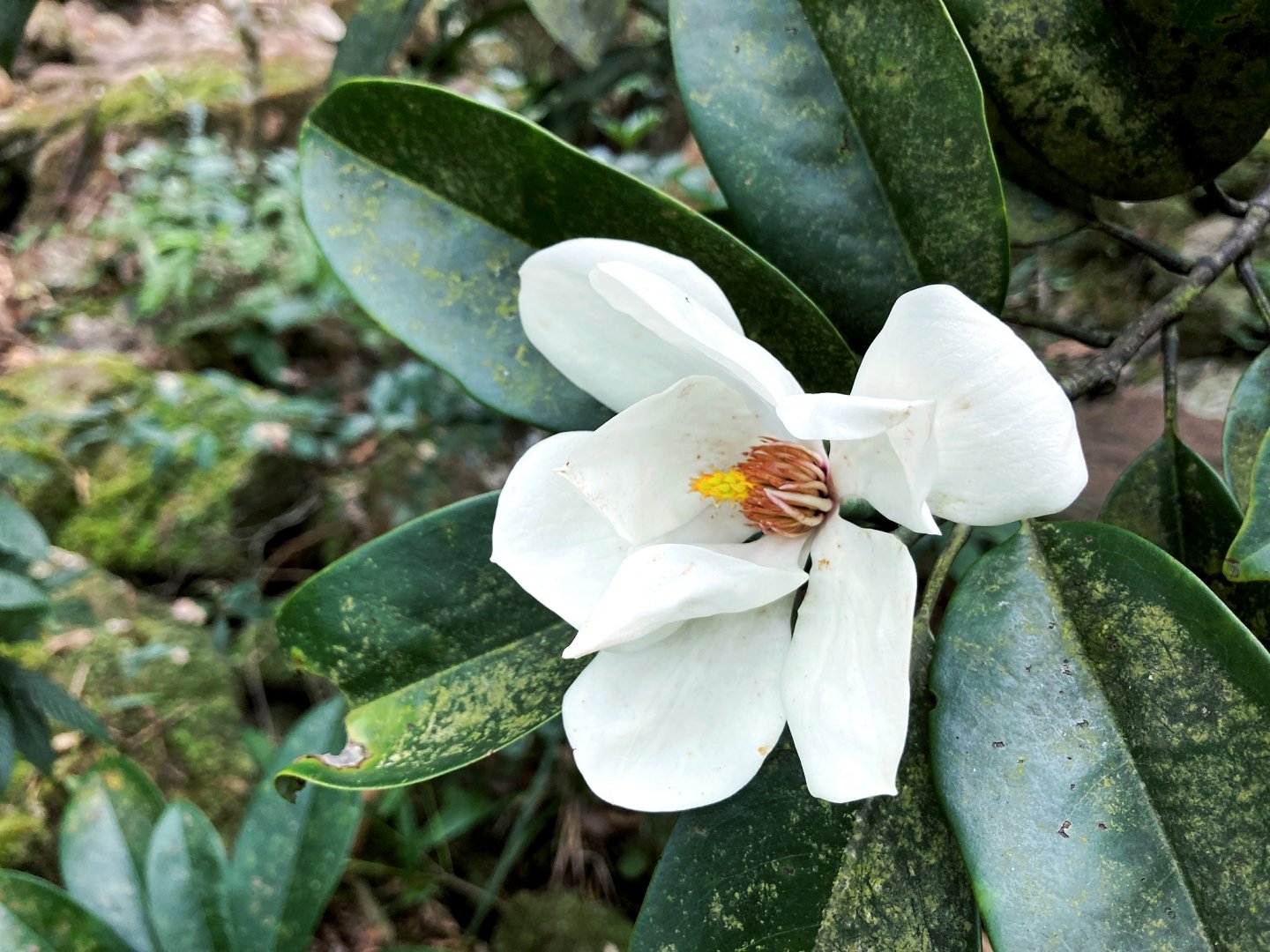
1. The large, snow-white flower of Michelia maudiae, described by Derek Kamp as "The white bridal look" (Photo credit: Tim Chow)
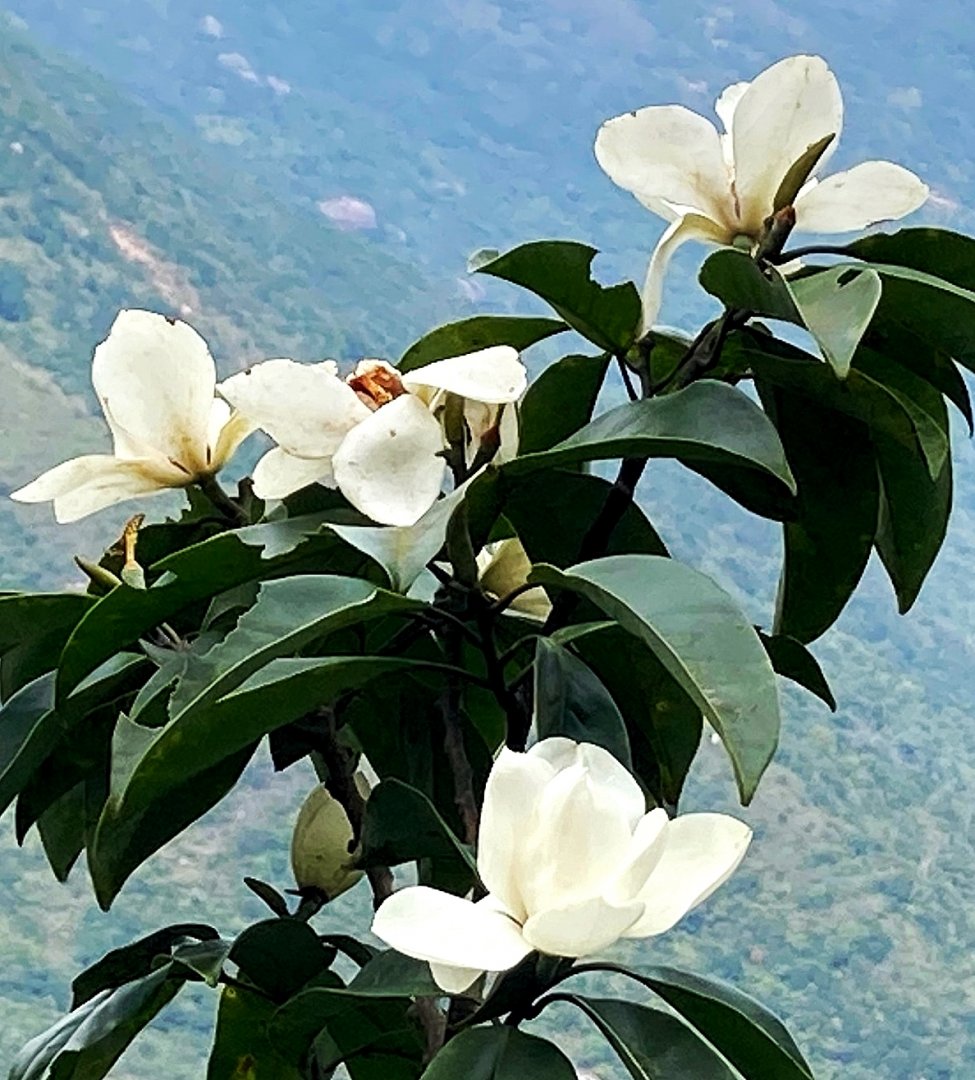
2. Michelia maudiae in full bloom this February(Photo credit : Tim Chow)
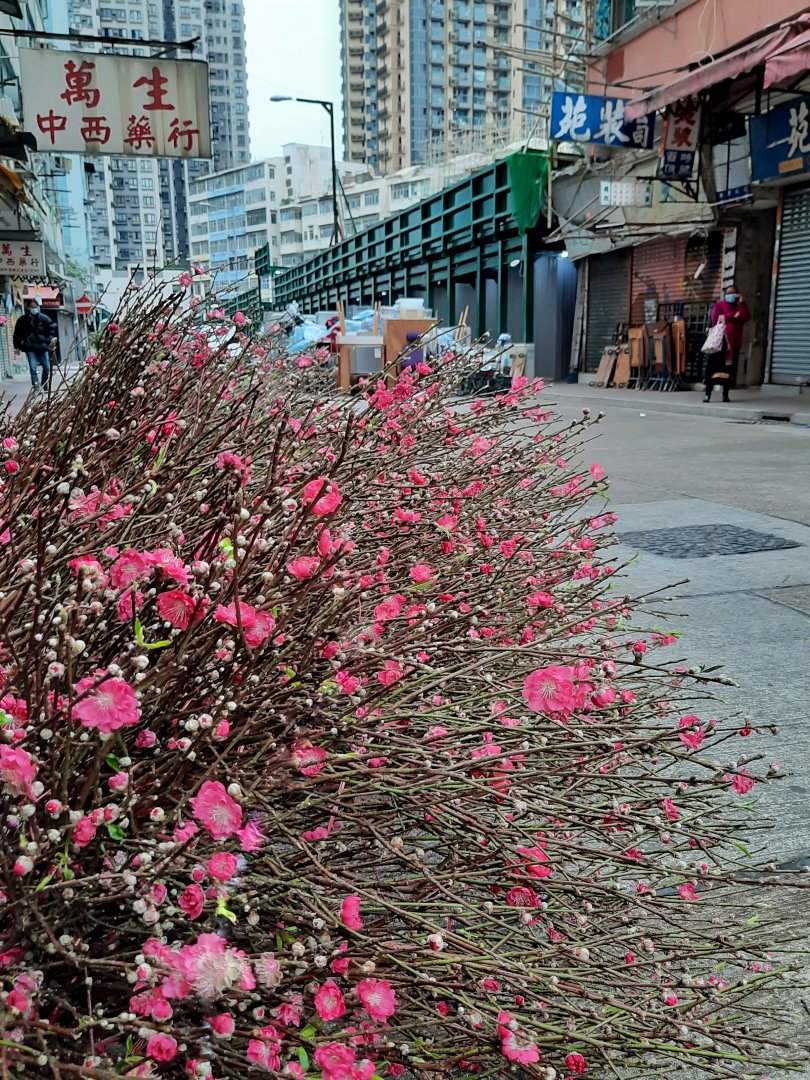
3. After the first day of the lunar new year, abandoned peach branches were everywhere – at the back Street of To Kwa Wan
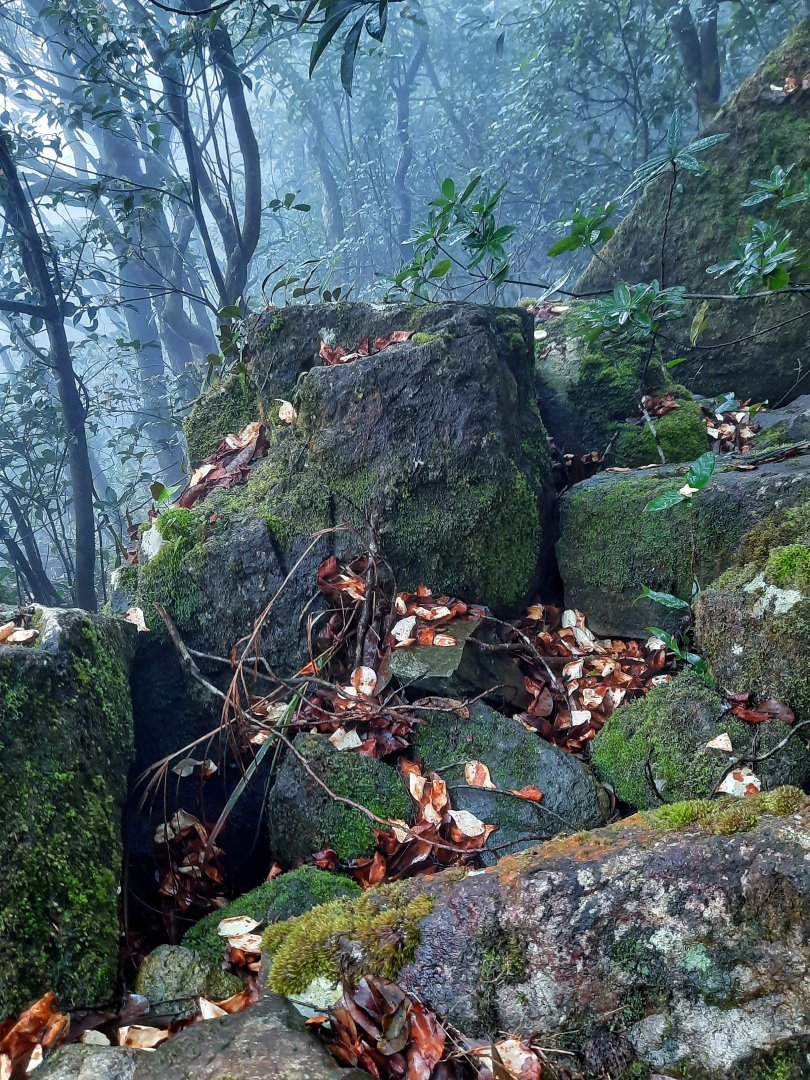
4. Fallen petals were like remnants of snow. No need to be sentimental, wait for them to bloom again in the coming year