Text & Photos: Daniel-C
There are 5 major Zen Buddhism monastic communities (or Tsunglin, meaning Forest, a term used in Chinese Zen Buddhism) on Lantau Island, namely Ngong Ping, Tei Tong Tsai, Man Cheung Po, Keung Shan and Luk Wu. Located at Lantau Peak area and linked by an ancient path, the first two are often mistaken as one single monastic community, but in fact have different origins.
As early as 1906, thatched sheds and self-sufficient farming had been set up by monks at Ngong Ping for meditation practice. The first among them was "Dai Mao Fung" (The Big Thatched Shed), founded by Da-yue, Dun-xiu and Yue-ming, the three Zen Masters from Jiangsu. This is considered to be the origin of the now prosperous Po Lin Monastery, and a model of the Zen Buddhism monastic community in Hong Kong.
Located between Ngong Ping and Tung Chung and accessible only on foot, the remote Tei Tong Tsai also attracted nuns and monks to come to build meditation huts. However, the first hut, called "He-Lin", did not appear until 1926. In 1995, the ascetic Master Wu-Ming founded Po Lum Monastery, at which all monks had to work hard in the field to produce their own food.
While the Fa Mun Traditional Path is the only way to access Tei Tong Tsai, one can have the option to reach Ngong Ping either by bus, taxi or cable car. For hikers, the choices of route are many too, and for stream trekkers, streams run at all directions from Lantau Peak as well as the neighboring Nei Nak Shan. Flowing from Ngong Ping to Shum Wat, Ngong Shum Stream is surely the most famous of all. Being difficult to climb is one of the reasons, and the stunning "Thousand-step Falls" is another. Trekking starts from the catchwater at Shum Wat Road. Contributed by the main stream from Ngong Ping as well the branch from Nei Mak Shan, namely the Nei Shum Steam, a huge volume of stream water flows between large boulders.
At the meeting point of the two streams, the roaring Nei Ngong Falls is another highlight of the trip. Not far away, the Devil's Grotto Pool is the starting point of the "Thousand-step Falls". Water flows down the hundred-meter-high slope in nine steep drops with flying droplets. However, the experience was by no means pleasant, as I had to climb quickly with my month firmly closed – to avoid the extremely polluted and smelly sprays and foams accumulated in the pools, a result of the sewage and wastewater discharge from the village and the vegetarian kitchens located at the upper stream. There has been great improvement in recent years, but I am still not keen on another re-visit.
The stream that flows through Tei Tong Tsai is named "Stream of the Northern Heaven Gate", alias "Cho Kai" (Cho Stream), and has its source at the northern slope of Lantau Peak. The name "Cho Kai" came from the Po Lum Monastery of Guangdong, and is the alias for the Southern Zen School, but "Cho" also has an implication of Hell, referring to the gloomy environment of the upper stream. However, the lower reach of the stream is rather open and pleasant, with waterfalls and pools like those of the Bride's Pool of Tai Po.
The stream branches at about 400m above sea level, and the main branch is on the right. Steep walls rise up at the end of the ravine, with shape resembling a lying buddha, and a narrow opening in the middle, the "Northern Haven Gate". The natural rock ledge on the right clifftop is the only access to the saddle between the twin peaks of Lantau Peak.
The introduction of the Tsunglin system to Hong Kong from Jiangsu by the founders of Po Lin Monastery had formed the foundation of the "Agrizen Life" idea of modern Zen Buddhism in Hong Kong. While the resplendent temples and towering Bronze Buddha statue at Ngong Ping attract a huge number of worshippers and tourists, the simple, self-sufficient and ascetic way of zen practice remains at Tei Tong Tsai. Like Nei Ngong and Cho Streams, the former looks surging and magnificent yet polluted, while the latter seems delicate and gloomy but solemn. As a stream-lover, certainly Cho Stream is my cup of tea.
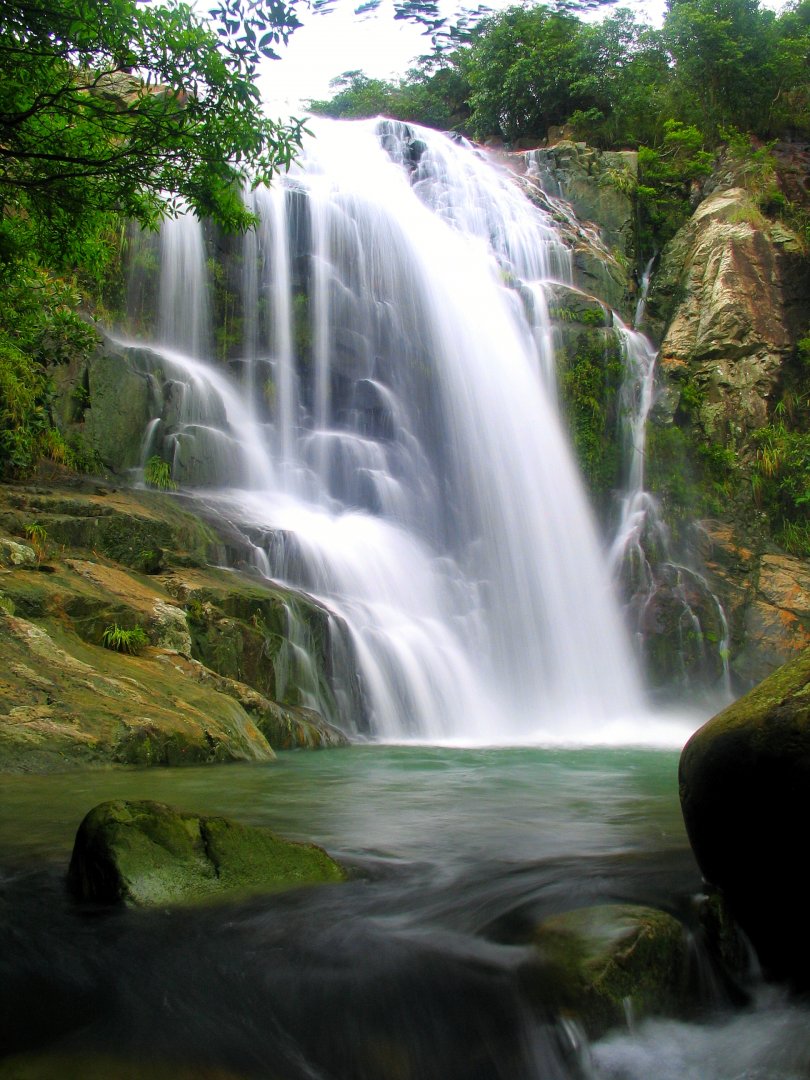
The roaring Nei Ngong Falls
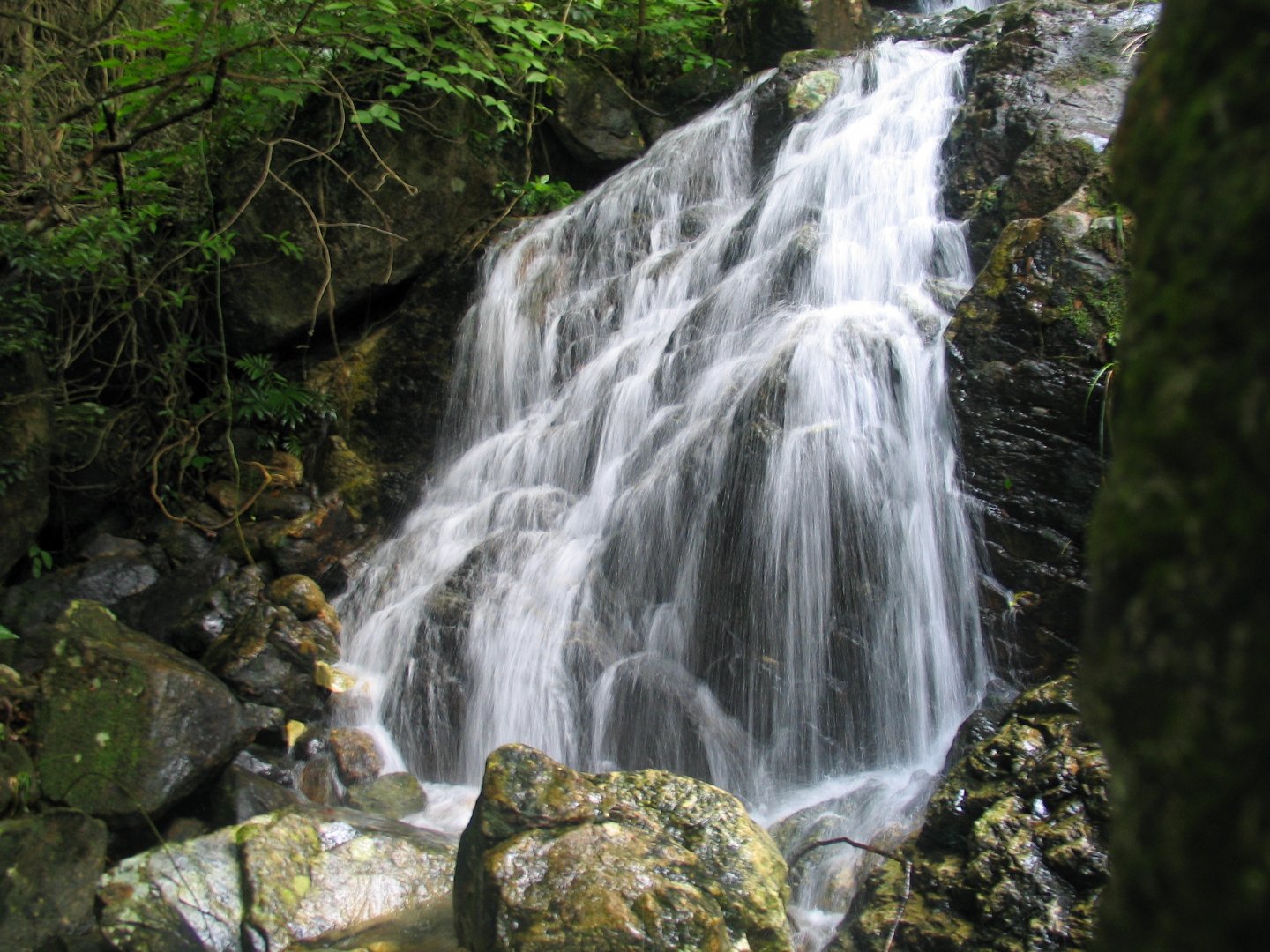
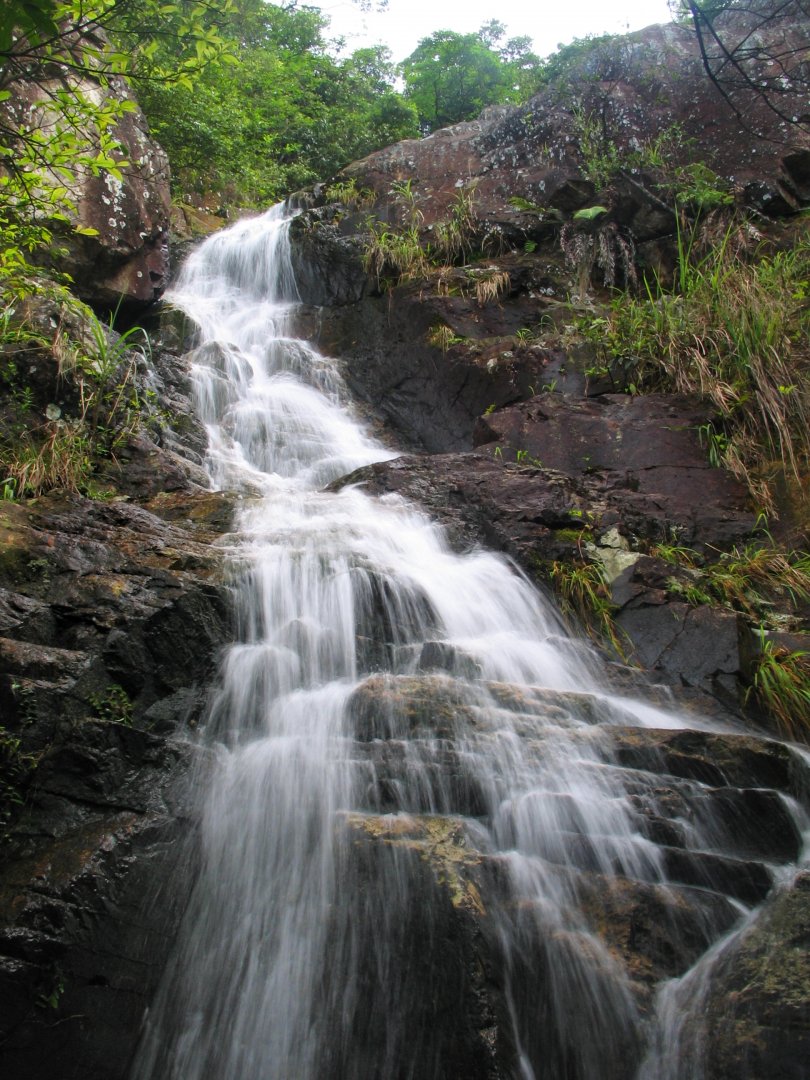
Upper stream of the Northern Gate of Heaven
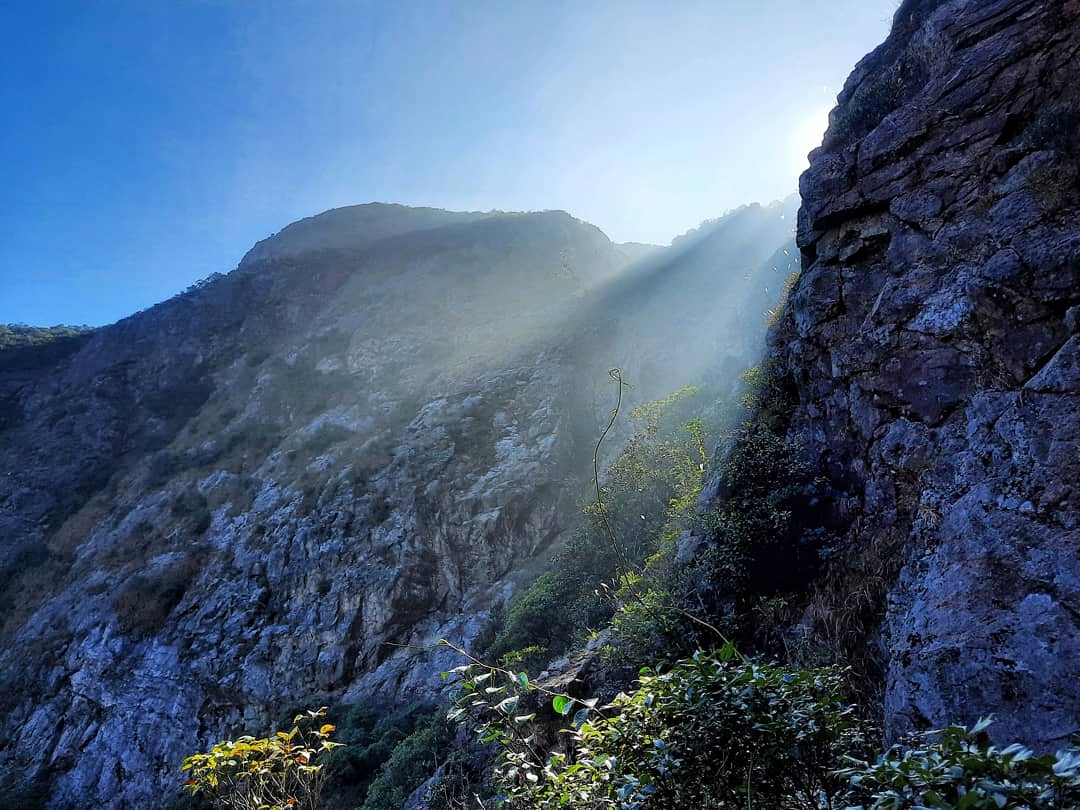
Ascending the walls of the Northern Haven Gate