Text & Photos: Dr Chloe Lai, Chairperson of the Conservancy Association Centre for Heritage
If there is one place to see the collective ingenuity and perseverance of ordinary Hongkongers, it is at Woh Chai Shan (窩仔山) in Shek Kip Mei. The church facilities at the foothill gave the place an Anglican nickname, some people call it Bishop Hill.
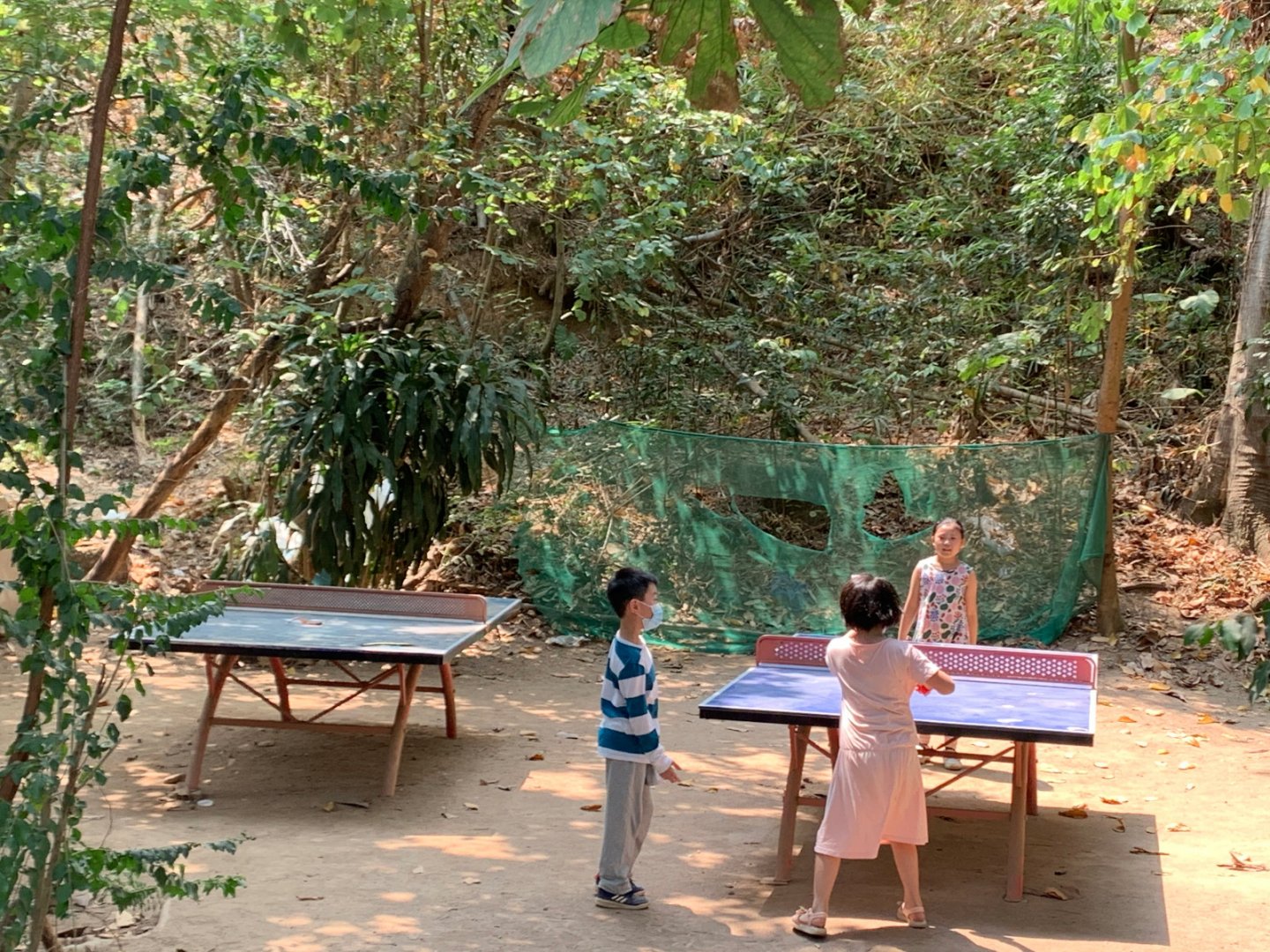
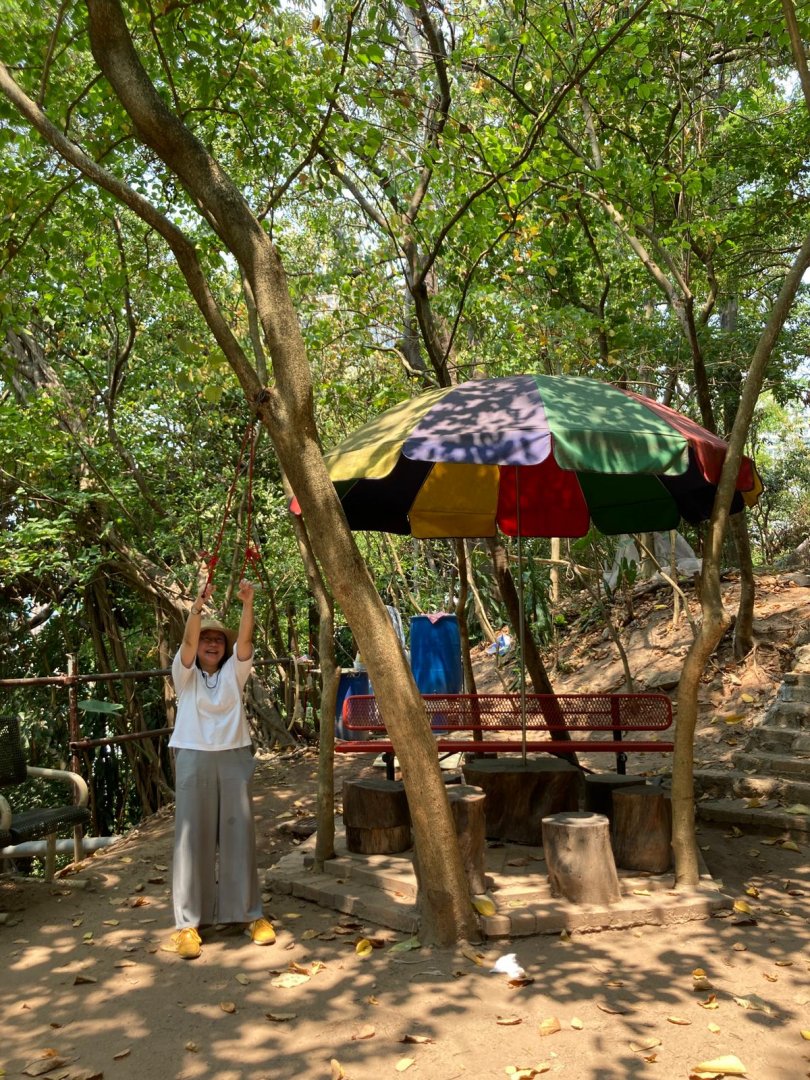
For years, this densely forested hill that rises between public housing blocks in Shek Kip Mei and Sham Shui Po has been a popular morning destination where families living in the neighbourhood go for fresh air and exercise. Bounded by Woh Chai Street in the north, Berwick Street in the southwest and Tong Yam Street in the southeast, here, under the tree crowns are a dozen clusters of leisure corners, each dotted with facilities such as table-tennis and badminton courts, jogging and cycling machines. Punctuated between the clusters are gardens, sitting benches, clocks, handwashing bowls and toilets. Bit-by-bit, day-after-day, morning hikers have moved abandoned items to the hill, reassembled and turned them into leisure facilities. They are proud of the leisure ground they have been co-building since 2008 and are prepared to defend their communal garden.
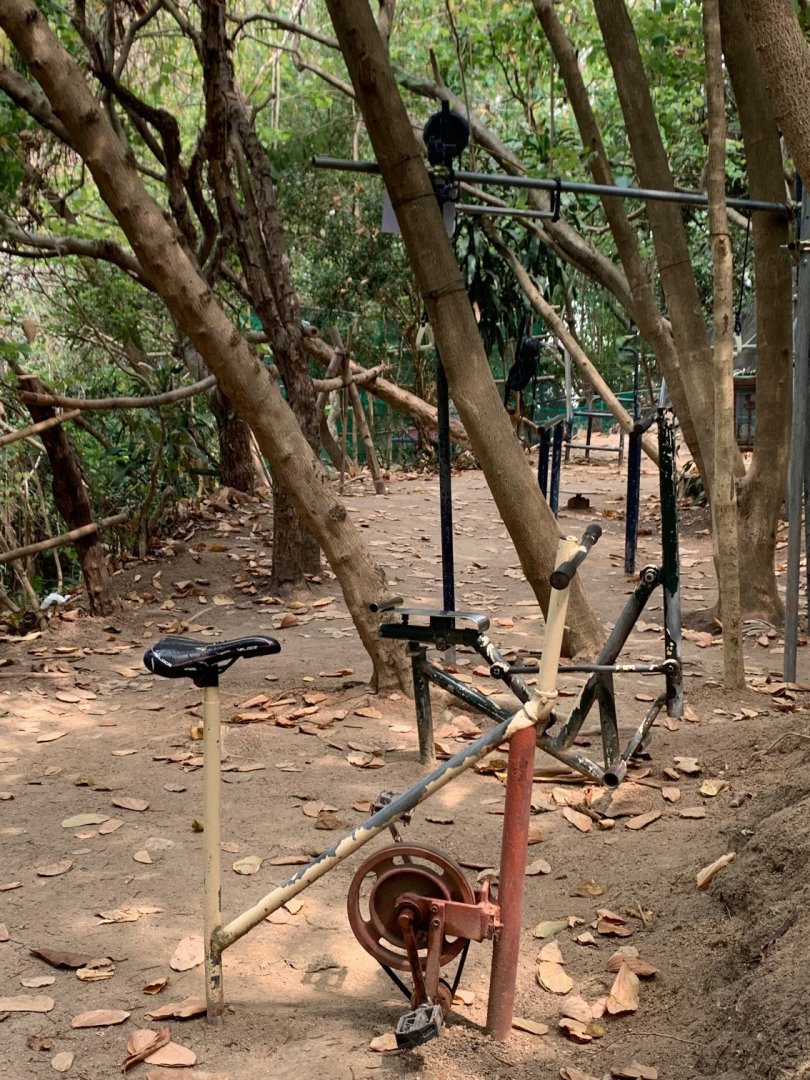
To thoroughly grasp how a spectacular grassroots campaign prompted the reversal in fortune of a historic underground service reservoir from an unknown structure pending for demolition to Grade I status, we must begin here. And the key watershed moment of this Woh Chai Shan story is, aptly, connected to pandemics.
The official name of the Woh Chai Shan communal leisure ground is Sham Shui Po Fresh Water Break Pressure Tank. News about the discovery of Roman-style arches broke in the morning of 28 December 2020 and went viral. This area is not just a communal leisure ground co-built by morning hikers from the neighbourhood, but actually home to an unused one hundred-year-old underground service reservoir.
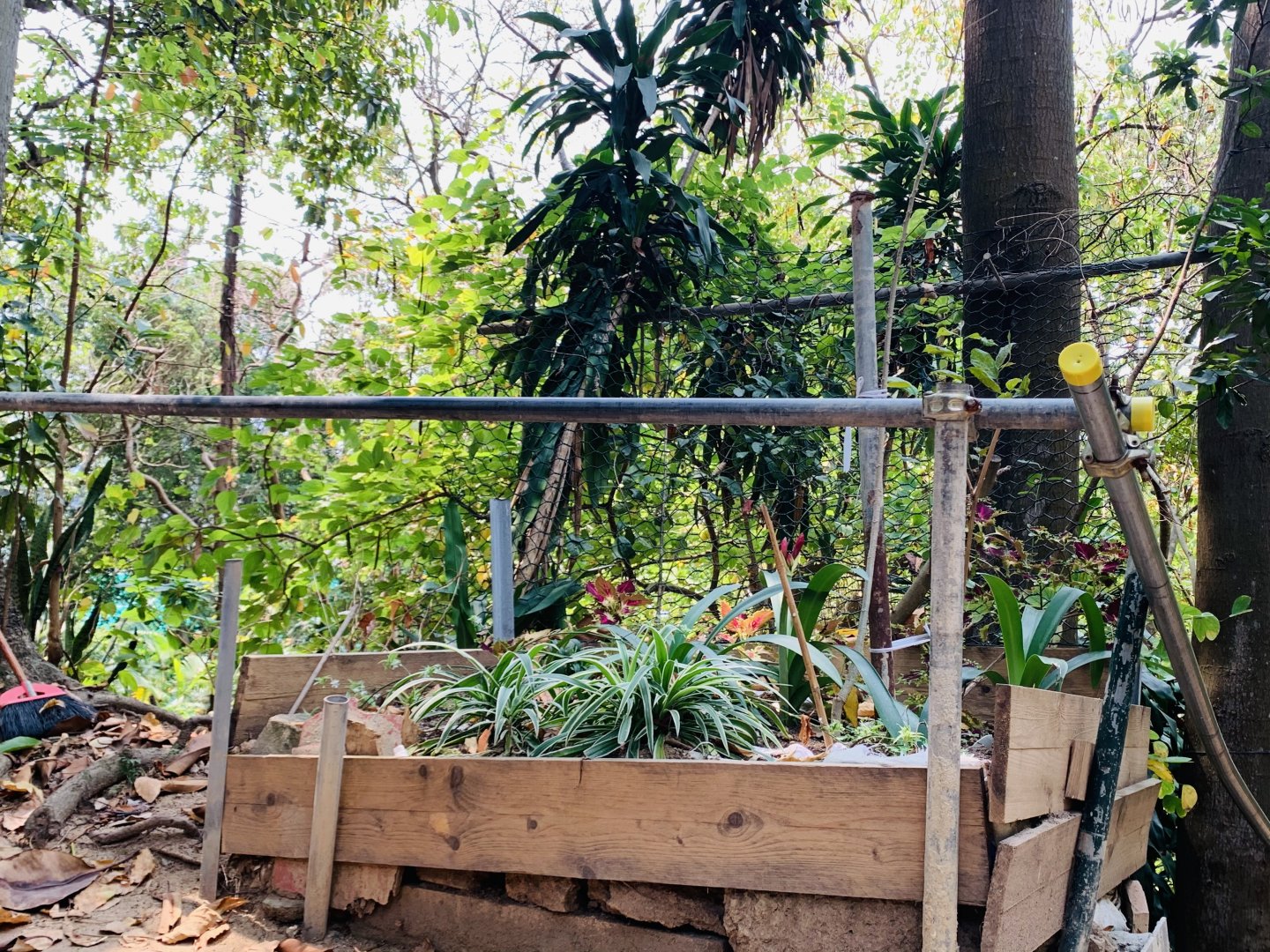
In 2008, a former SARS patient So Chi-keung started carrying parts of unused body building machines to Woh Chai Shan where he reassembled them so that these abandoned machines could serve his beloved community. Since SARS in 2003, climbing 800 steps to reach the hilltop of Woh Chai Shan every day offers him joy and comfort. In an interview with HK01 in 2017, So mentioned that his health has never fully recovered from SARS. It was with his own personal experiences in mind, that he started the endeavour to make the densely forested hill a kaifong friendly leisure ground so that everyone can exercise there for free.
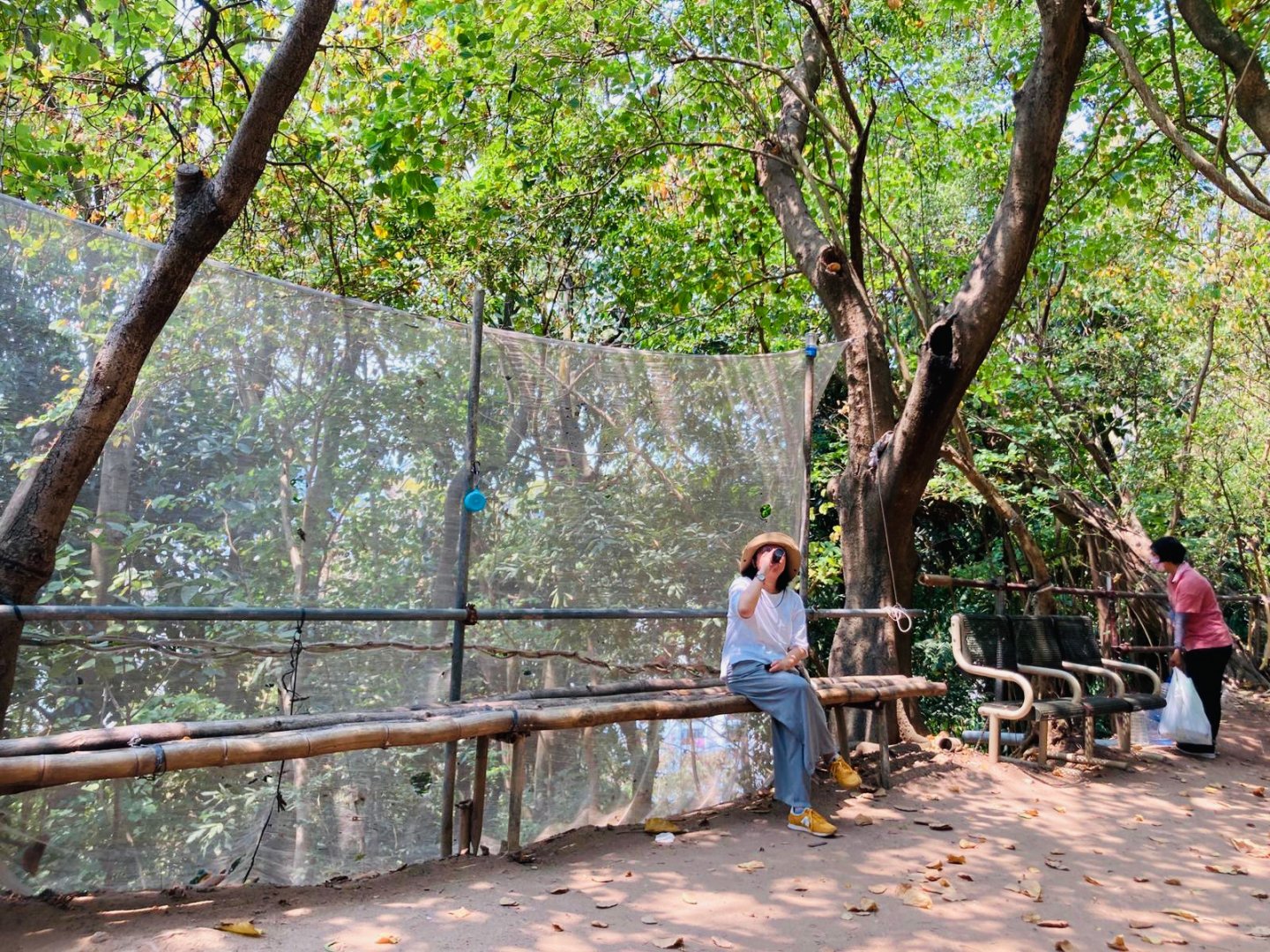
This one-person endeavour quickly turned into a collective effort. Cluster after cluster of leisure corners were built one after another. Even today, kids play table-tennis while parents enjoy other aspects of being outdoors. There are tables for chess, mahjong and a dozen gardens where people grow different flowers and plants. Construction is ongoing. Trees struck down by various typhoons since 2008have been turned into tables and chairs. Abandoned metals from construction sites have become sitting benches. There are beach umbrellas to provide shading from sunshine and clocks for hikers to check their time. No one claims ownership. Strangers, including myself, are welcome to amuse and enjoy ourselves.
In 2016, the Water Services Department, the government department that administers this land, tried several times to stop hikers from ‘trespassing’ government land. The next year, the Lands Department warned that they would confiscate the community-built exercise facilities. The morning hikers responded by seeking assistance from district councillors and the mass media. Collective resistance successfully preserved the communal leisure facilities that everyone had played a part in building.
The morning hikers acted again at the end of 2020 while most people were still indulging in Christmas festivities. While the Water Services Department bulldozers stood on top of the hill and dismantled the top layer of rocks, they accidentally revealed an underground chamber supported by dozens of stone arches. The morning hikers decided to intervene, again. When protests failed, one of the morning hikers, nicknamed “Fong Tse” ( 芳姐 ) stood right in front of the bulldozer and demanded an immediate cease of work.
It worked!
The workers stopped drilling the rocks, giving the hikers and fellow Hongkongers precious time to save the underground service reservoir. They contacted district councillors and started sending photos of the magnificent Roman-style arches around. The photos went viral in social media; district councillors and conservation enthusiasts from across the city rushed to the site, trying their best to turn things around.
Had Fong Tse and her fellow morning hikers to this Woh Chai Shan communal leisure ground not intervened, Hongkongers would lose an important piece of water supply infrastructure that tells the history of urbanisation and fresh water supply.
Providing uninterrupted fresh water supply to every household was a major challenge to the colonial government. Droughts and water rationing were a constant feature until Hong Kong secured Dongjiang water from China in 1965.
But long before this, to keep pace with the population and economic growth in Kowloon, the colonial government had begun construction to increase water supply to meet the increased demand. In 1902, the Public Works Department started the Kowloon Waterworks Gravitation Scheme. Ten waterworks infrastructures were built for fresh water to reach shops and homes in Kowloon, including the completion of this underground service reservoir in Woh Chai Shan in 1904. Fresh water pumped from this service reservoir was to serve residents of Sham Shui Po, Shek Kep Mei and Tai Kok Tsui. Also constructed under this Scheme were water pipes, fire hydrants and street fountains.
The importance of this Scheme was clearly articulated when Kowloon Reservoir was declared a monument in 2009. The Antiquities and Monuments Office explained that the Gravitation Scheme “radically changed the way in which water was supplied to the Kowloon Peninsula, with rainwater collected in the reservoir replacing well water and subterranean water pumped out by the Yau Ma Tei Pumping Station”.
The Woh Chai Shan Service Reservoir, supported by 108 granite arches, is one of the five surviving service reservoirs built pre-war, according to a heritage report compiled by Walk In Hong Kong. The others are fresh water service reservoirs in Albany (top of Garden Road), Yau Ma Tei, the Peak and Mount Gough. Not all one hundred-year-old service reservoirs have had the luck of escaping demolition. The Water Services Department demolished the fresh water service reservoir at Hatton Road in the Mid-level in 2011. Built in 1908 and also supported by columns and arches, the Hatton Road Service Reservoir shared a similar style to the one in Woh Chai Shan.
Collective efforts of the morning hikers and conservation enthusiasts, aided by social media, saved the service reservoir in Woh Chai Shan from demolition. Now a Grade I historic structure enjoying city-wide stardom, the only unknown about the service reservoir is its “future use”. It will not be a reservoir again. But what will it be and how will it affect the communal leisure ground co-built by the morning hikers? When all eyes are still focusing on the Roman-style arches, the Sham Shui Po District Council has already hosted several meetings to gauge expert opinions about the future of leisure facilities and the service reservoir.
The morning hikers co-built the communal facilitates, which in turn built a community. The ingenuity and resilience of a community that manifested in the preservation of this communal leisure ground deserves documentation and examination. I hope this article will bring more appreciation to the Woh Chai Shan communal facilities.