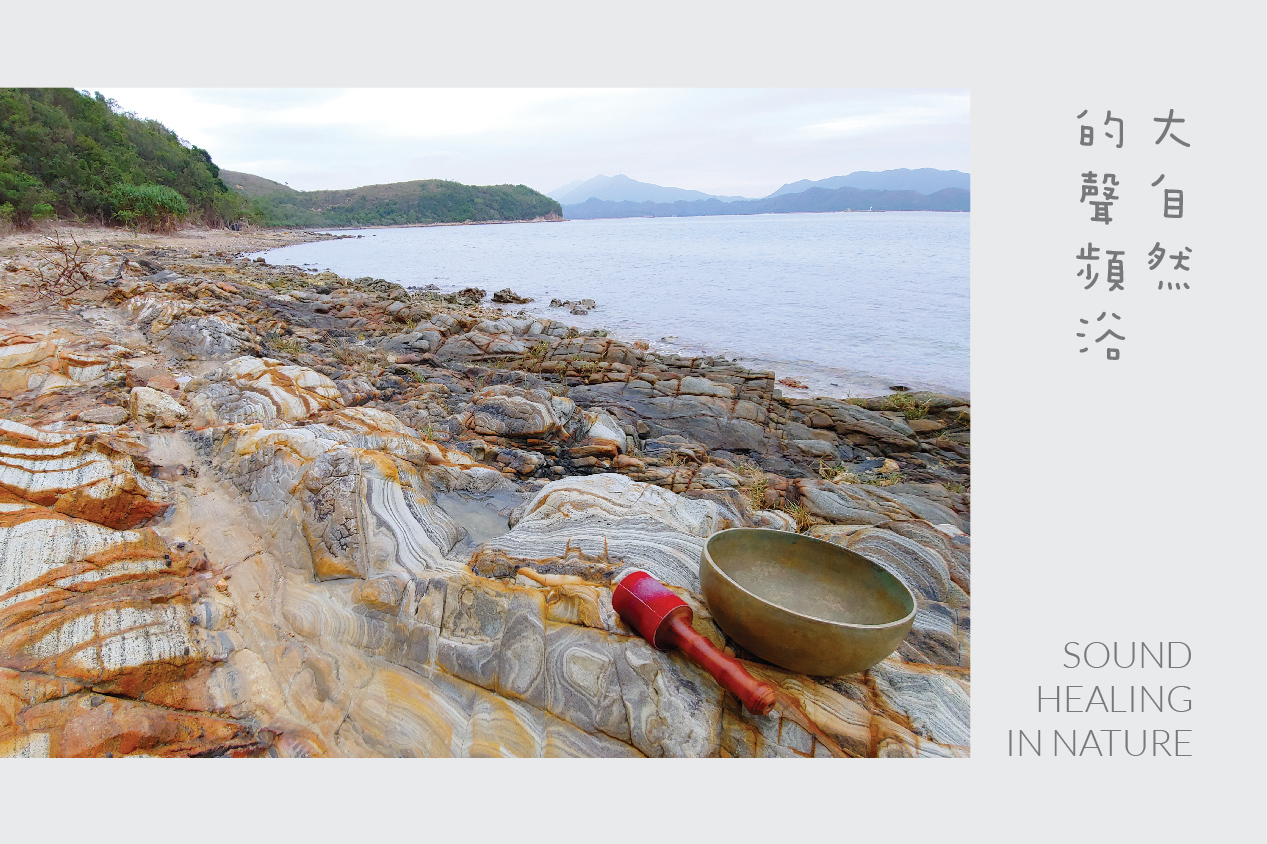
We, like nature, possess the ability to self-heal. Unfortunately, with the bombarding of information and the quest for stimuli in our fast-paced life, we often forget that we are a part of nature — and that humans and nature are linked, one way or the other. Very often, we are so busy with our lives and obsessed with the idea of “efficiency”, and in our pursuit for “further”, “faster”, or “higher”, even when we are taking a stroll in the woods, we don’t seem to be willing to spare a second of our lives to take a pause… Himalayan Singing Bowl is a tool for us to reconnect with nature. When the bowl is struck, the harmonics produced resonates with our body, helping us to calm and concentrate on our own presence. It also helps to relieve our stress and anxiety, insomnia, body pain and chronic fatigue, keeps us energetic and boosts our blood circulation.
Due to its stress relieving nature, singing bowls are often used for connecting with nature — and this would first require picking a venue. There are actually more nature places in Hong Kong than you think that are suitable for sound therapy, with a diverse range of choices. The perks that come with this diversity is that different environments can offer you different vibes. For example, coastal environments give you a cleansing feeling, grasslands or trees offer a safe and supportive vibe, tall mountains give you a sense of broadening, and reservoirs provide a calming effect.
An outdoor sound healing therapy takes about 30 to 45 minutes, and is usually conducted on a one-to-one basis. According to each individual case, the sound therapist will place the singing bowl on one’s body and start to lightly strike it. The participant can enjoy the vibration of each soundwave while lying on the ground. In about 90% of the cases, the participants fall asleep 10 minutes into the therapy, and wake up feeling refreshed and energized. Therefore, the therapy is best conducted in the morning, with fresher air and fewer crowds. It is also important to choose a safe environment in order to avoid disturbances.
The tools needed are a singing bowl with a diameter of about 8-10 inches. Smaller instruments are usually used for self-calming, whereas bigger ones are more suitable for group therapy. Even without a sound therapist, you can get your own singing bowl and invite your friends to meditate together following the pace of your breathing. By feeling your presence in the surrounding environment with total concentration, you can relax and calm your senses.
One time, I was meditating with my friends at the Victoria Peak Garden. As my heart became at peace, it was as if time had gone still and I had entered another dimension. The sparrows slowly approached us and I felt that we were a part of nature. Aroused, I tried to signal my friends to look at the surroundings, and instantly, the sparrows flew away — it was as if the sparrows knew that we were no longer a part of them. I truly felt the power of nature in that short but calming 15 minutes.
While it is not difficult to reconnect with nature within a short period of time, it is less easy to be constantly conscious of our connection with nature on a daily basis. Therefore, I would recommend everyone to spend 10 minutes of your time in the morning, as well as at night, to listen to the sounds of the singing bowl, and to imagine yourself in nature. The melodic sounds of the singing bowl is like a door to nature, which guides us to take a rest from our fast-paced lives. As you allow your body and mind to relax, you will be able to summon your ability to self-heal.
Polly
Sound Therapist