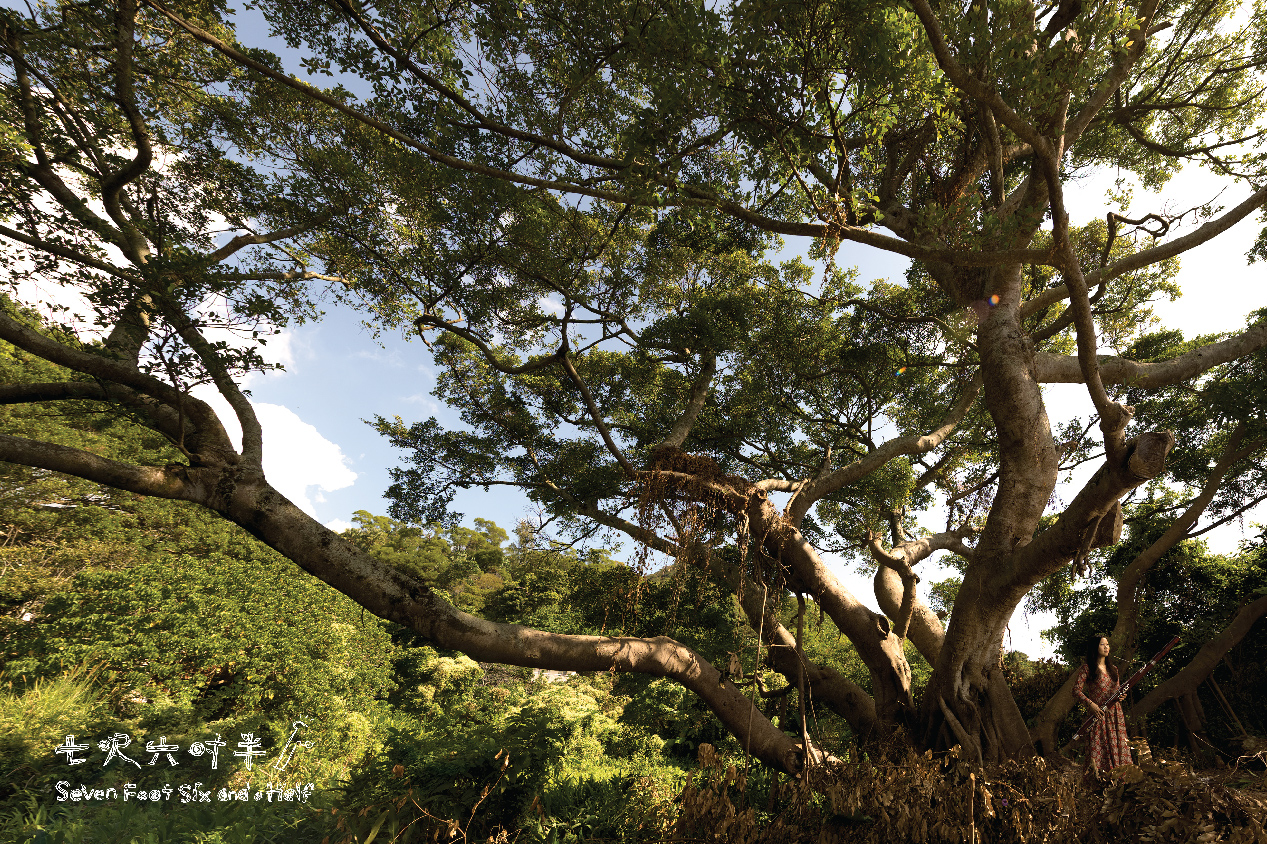
Trees are places gathering all kinds of lives on earth. Many living creatures take trees as their stronghold and they are connected as an enormous web of relations. However, how does this network relate to us? To what extent do we understand this web of life as civilians living in the city? The outbreak of an epidemic has unquestionably brought us inconveniences, yet it also provides us a chance to breathe. I would like to take this opportunity to introduce you to a new option – to approach nature by listening.
Many of us would agree that listening is important. We often use our vision to collect information but we might not be used to listening. You would feel happy and grateful if there is someone who is always willing to listen to you. In fact, not only does the one being listened feel happy, but also the listener. Not only humans can listen to one another, we can also listen to trees.
I once read a book called “The Songs of Trees”. The author is an arborist. He wrote the book from a literary perspective and to appreciate trees by listening to their sounds. In the book, he interpreted the trees’ “singing” romantically and reasonably. The foreword (only the Chinese version was found) title is “Listening is like a straw in the wind. Understanding nature starts with listening to the sound of nature.” It explains the aim of the book – we can understand ecology by listening.
“For the Homeric Greeks, kleos, fame, was made of song. Vibrations in air contained the measure and memory of a person’s life. To listen was therefore to learn what endures. I turned my ears to trees, seeking ecological kleos. I found no heroes, no individuals around whom history pivots. Instead, living memories of trees, manifest in their songs, tell of life’s community, a net of relations. We humans belong within this conversation, as blood kin and incarnate members.”
What the author would like to convey is that “nature itself exists in unity”. He disagrees that humans should “return” to nature due to the dualization between humans and nature. He also disagrees that artificial products are out of touch with nature. Humans’ body and soul, science, and arts are always a part of nature. Since we are part of the web of life, listening to the tree’s singing is like listening to our voice. The author further explains in later chapters how indigenous people in the Amazon receive the jungle’s message by listening.
“Seven Foot Six and A Half” was established in the hopes to provide opportunities for people to get along with nature. By holding concerts in the woods, we encourage people to get close to the woods with their ears and listen to trees’ singing. Seven foot six and a half is the total length of a Bassoon. Our name acts as a metonymy for this woodwind instrument. A bassoon is made of maple and its tone is harmonious. It is the longest and lowest pitch instrument in the woodwind family in an orchestra. However, compared to the trees of which it is made, its height is incomparable to the lofty and gigantic maple. This image looks similar when humans realize the vastness of nature and stay humble as they walk into the woods.
My name is Wyee. I make a living by playing and teaching Bassoon. I love ecology and yearn for the mysteries of nature. I think that everything on Earth is a marvellous art piece made by our creator. I have not received any professional training in ecology, but I have learnt about nature as a voluntary ecoguide before. I believe that humans have the ability to receive messages from nature as we are part of it. Yet, we are losing this ability due to our limited use of it. There are only few people left in this world who can communicate directly with nature like how the indigenous people in the Amazon.
Although redeveloping our supernatural power to feel nature seems unrealistic, do not feel hopeless about it. We still have the right and freedom to explore and seek it. I hope to gather tree lovers together in the name of “Seven Foot Six and A Half” to discover the possibility of staying in contact with nature by hearing. I hope to make use of this wood-made Bassoon and its muffle bass to interact with trees in the woods, to imitate the singing of trees by performing as an ensemble with other friends. I also hope to use both harmonious and discordant music to interpret the harmony and conflicts in the web of life. To open the audiences’ sense of hearing and listen to the voice of nature.
I am so glad to have the opportunity here to share the beliefs of “Seven Foot Six and A Half”. I hope that our project can bring all of you valuable experiences to understand nature from a new perspective. Perhaps, one day, by listening to the songs of trees, you can feel how nature listens to us and shows us how it cares for us.