Jog your memory with these hiking dos and don’ts
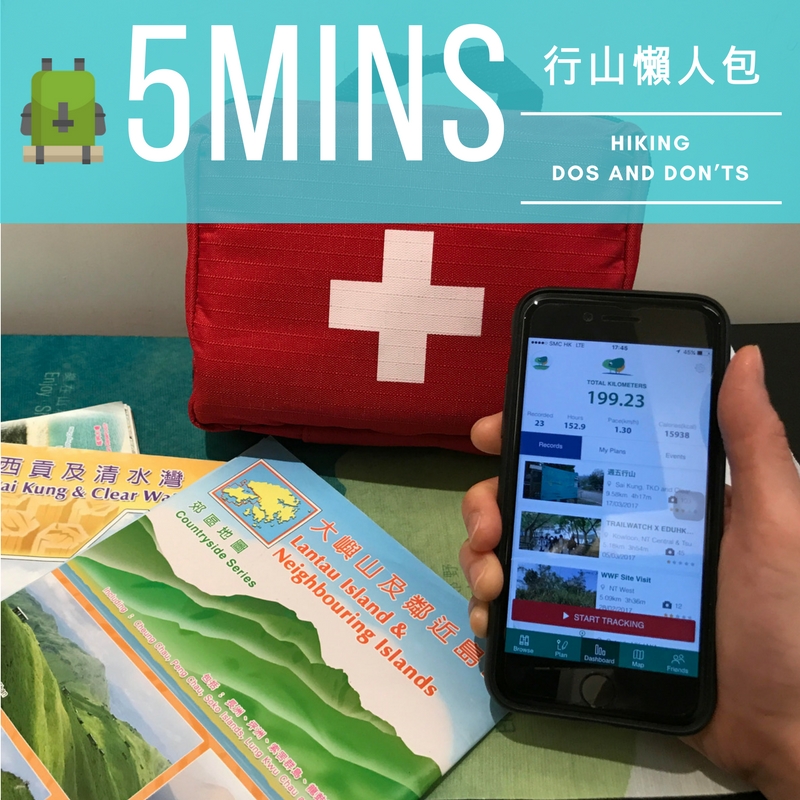
Anyone can hike, but mastering the art of hiking—now that’s another issue. In addition to having sufficient stamina, you’ll also need to apply different areas of knowledge to your journeys. We at TrailWatch want everyone to enjoy their hiking experiences safely without putting others (such as firefighters and rescue teams) at risk, so we’ve compiled a list of dos and don’ts that will hopefully come in handy.
Here’s what every prepared hiker’s packing list should include:
-
Headlamp and flashlight (don’t forget to check the batteries)
-
Whistle (some backpacks come with whistles built into the shoulder straps)
-
Water (bring an additional 500ml just in case)
-
Printed map (we recommend the government’s map of Hong Kong country parks on a 1:20000 scale)
-
TrailWatch (download an offline map before starting your journey)
-
Food supplies—think high-calorie, portable, easily ingestible snacks such as glucose, chocolate and energy bars
-
Medication such as antacid tablets
-
Mobile phone, spare batteries, a power bank
-
A change of clothing
-
Emergency supplies
-
Rain gear and a raincoat
-
Emergency blanket
Now that you’ve got everything packed, here’s what you need to do before setting off for the hills:
-
Check out the government’s latest announcements on nature trails so you can plan ahead, and make sure you have the latest official country park map on hand. In addition to information provided by authorities, it may be a good idea to check out other online resources for more insights such as distance, difficulty, refreshments and exit paths. http://www.hiking.gov.hk/pathinfo/announcement_eng.php
-
Get the latest weather information from the Hong Kong Observatory (HKO)—you may want to reconsider that hike if it’s too hot, too damp, not windy enough, too polluted, or if weather conditions are expected to take a turn for the worse.
If the HKO issues the “Thunderstorm Warning” or if you see rain clouds forming, stay away from peaks and ridges. You’re strongly advised NOT to head downhill along a spur, stand near trees, telephone posts, lampposts, high voltage cable posts or high towers. Don’t even think about taking cover in shallow ditches or among rocks—seek temporary shelter in village houses instead, or find cover near a small 7 to 10m mount. Keep both hands off the ground, feet together and squat on insulated material or gravel. Whatever you do, do not sit or lie on the ground, and keep your body dry as best as you can. http://www.hko.gov.hk/sports/hiking_e.html
-
Download and activate a smartphone app with a tracking function
A. TrailWatch
Before setting off on your hike, plan your route using TrailWatch. Start tracking your route and check from time to time if you’ve strayed from your planned route. This video [https://www.youtube.com/watch?v=rxYhRIBOfBQ] will show you how.B. Hiker Tracking Service by the Agriculture, Fisheries and Conservation Department
Data will be encrypted and stored by the Communications Association of Hong Kong’s service centre. If in seven days data from a mobile phone is required for a rescue operation, the service centre will email the encrypted tracking data to the relevant departments. http://www.cahk.hk/hiker_tracking_service/eng.html
-
Let your friends or family members know where you’ll be hiking and check in with them at specific times so they would know when to seek police assistance in the event of an emergency.
And while hiking,
-
Do not eat wild fruit or drink water from the hills.
-
Do not stand on the edge of a cliff or climb rocks just to get the perfect scenic photo, and pay special attention to warning signs—or they may be the last thing you see.
-
Do not attempt to lure or feed feral cats, dogs, monkeys, insects or snakes or risk getting attacked.
-
Tread with caution—or avoid completely—slippery rocks and dirt roads, or sandy paths. Hikers should always wear sturdy hiking shoes that protect the ankle and feature grooves for optimum traction, and bring a hiking staff along just in case.
And finally, a few tips to bear in mind in case of emergency:
-
Sprains
Identify the affected area and apply light pressure to the area by wrapping a bandage around it. This would help limit and reduce swelling and prevent the buildup of fluid in the area. Lie down and elevate the affected area until it is at a higher position than chest-level to reduce swelling. Proceed only after you’ve gotten enough rest.
-
Cramps
Identify the affected area and relieve muscle tension by massaging and stretching the area. For instance, if you’re experiencing cramping in your calf, straighten your knee and lightly pull the sole of your foot towards your body. If you’re experiencing cramping in your thighs, grab your ankle, straighten your knee and raise your leg. Press down into your ankle to relieve the cramp. If your foot is cramping up, tug on your toes or press your big toe into the ground. Massage the affected area.
-
Heat stroke/low blood pressure
The excessive loss of water and electrolytes will result in low blood pressure and dizziness. If that happens to you, lie flat on your back in a cool and breezy shaded area and consume electrolyte drinks or saline solution to make up for the loss.
-
Getting lost
Stop—head back to where you started. When necessary, seek immediate assistance. If you don’t remember where you came from, stay where you are and await rescue. Don’t proceed further to avoid wasting energy.
If you do decide to proceed, leave a mark at every intersection. If you still don’t know where you are, head uphill for a better view of possible ways out and to make yourself more visible to rescuers.
Don’t venture into a valley—it’ll just confuse you further. It may be easier when making your way downhill, but it’s also more dangerous and demanding when returning to higher ground.
With a whistle or a flashlight, send International Mountain Distress Signals. Here’s how:
a. Make six long blasts within one minute;
b. Pause for one minute;
c. Repeat a and b.
Alternatively, send a distress signal using the Morse code:
Send three short blasts, followed by three long blasts and finish with three short blasts.
If necessary and when possible, form a 6x6m “SOS” using stones or branches.
4. Fog
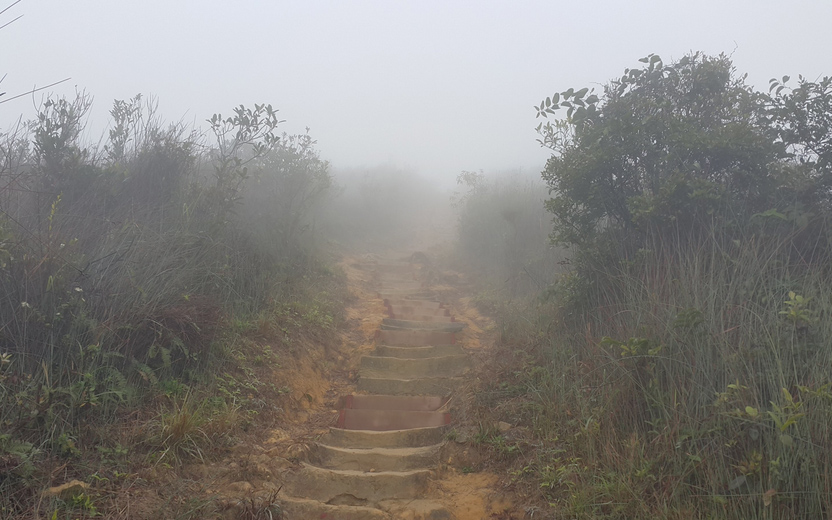
Before heading into a fog zone, know your location and take note of identifiable features in your surroundings. When visibility is down to a few feet, keep calm and carry on looking for a way out. If your company’s stamina is failing or if you’re not sure where you’re going, stop and stay put, or find a safe area to await rescue. Stay in a group and use food supplies sparingly. Wait for the fog to dissipate and think of ways to get help.
5. Bee stings
Walk around nests that are in your way. If you’re chased by a swarm of bees, sit still and cover your head and neck for protection. Lay curled up on the ground and wait for the swarm to disperse before leaving the scene quietly. Remove any stingers with tweezers, but be careful not to release venom from the sac. Wet a towel with cold water and apply to the affected area to relieve redness and swelling. Seek medical attention as soon as possible.
6. Snake bites
If you encounter a snake, keep calm and don’t move. The snake would probably more afraid of you than you are of it, so just let it run off on its own. Snakes have sharp vision and will likely attack when they spot fast-moving objects, so if you or your buddies are bitten, bear the following in mind:
Do not cut open the wound, wash or suck on it. Have the victim lie on the ground and keep the injured area still, but not elevated. Do not consume alcohol or perform unnecessary movements.
If possible, wrap the area above the wound tightly with a bandage, especially if the bite is on the limbs.
Comfort the victim and take him/her to hospital as soon as possible. Try identifying the type of snake responsible for the injury by taking photos and noting its colours and patterns. If the snake has been captured, it should be taken to hospital for reference.