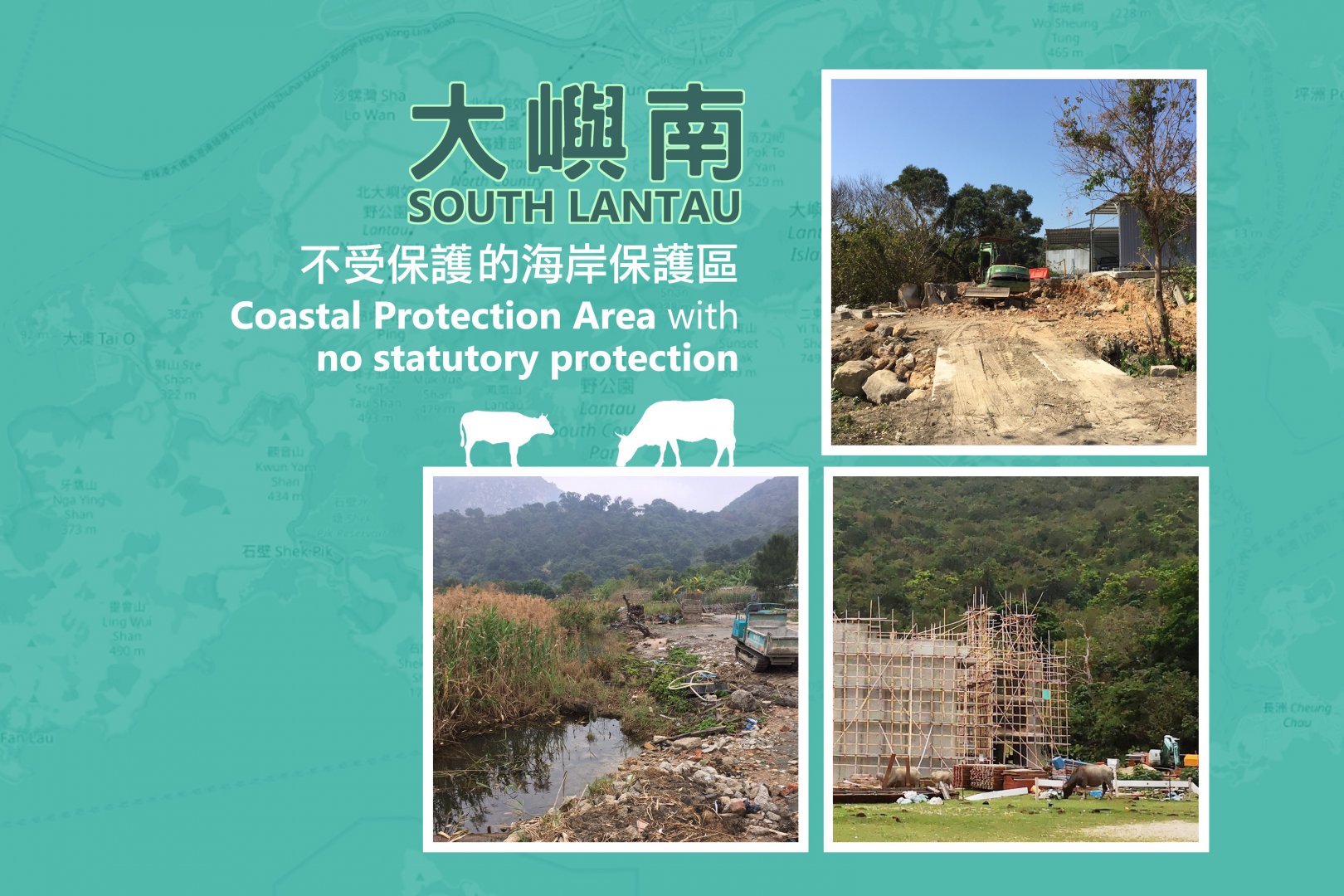
Article by Save Lantau Alliance
The designated Coastal Protection Area, Green Belt, Conservation Area and especially the wetlands located along the coast of southern Lantau are important nursery grounds and habitats for biodiversity conservation. They are of high ecological values and represent valuable public space in the countryside for Hong Kongers. Regrettably, these terrains are continuously subject to destruction such as dumping and improper disposal of construction waste. Over the years, such valuable environments are turned into brownfields or used for parking and other commercial activities. NGOs including Save Lantau Alliance have been relentless in voicing out the issue and urging the government for actions. However, the situation has not improved and is only worsening.
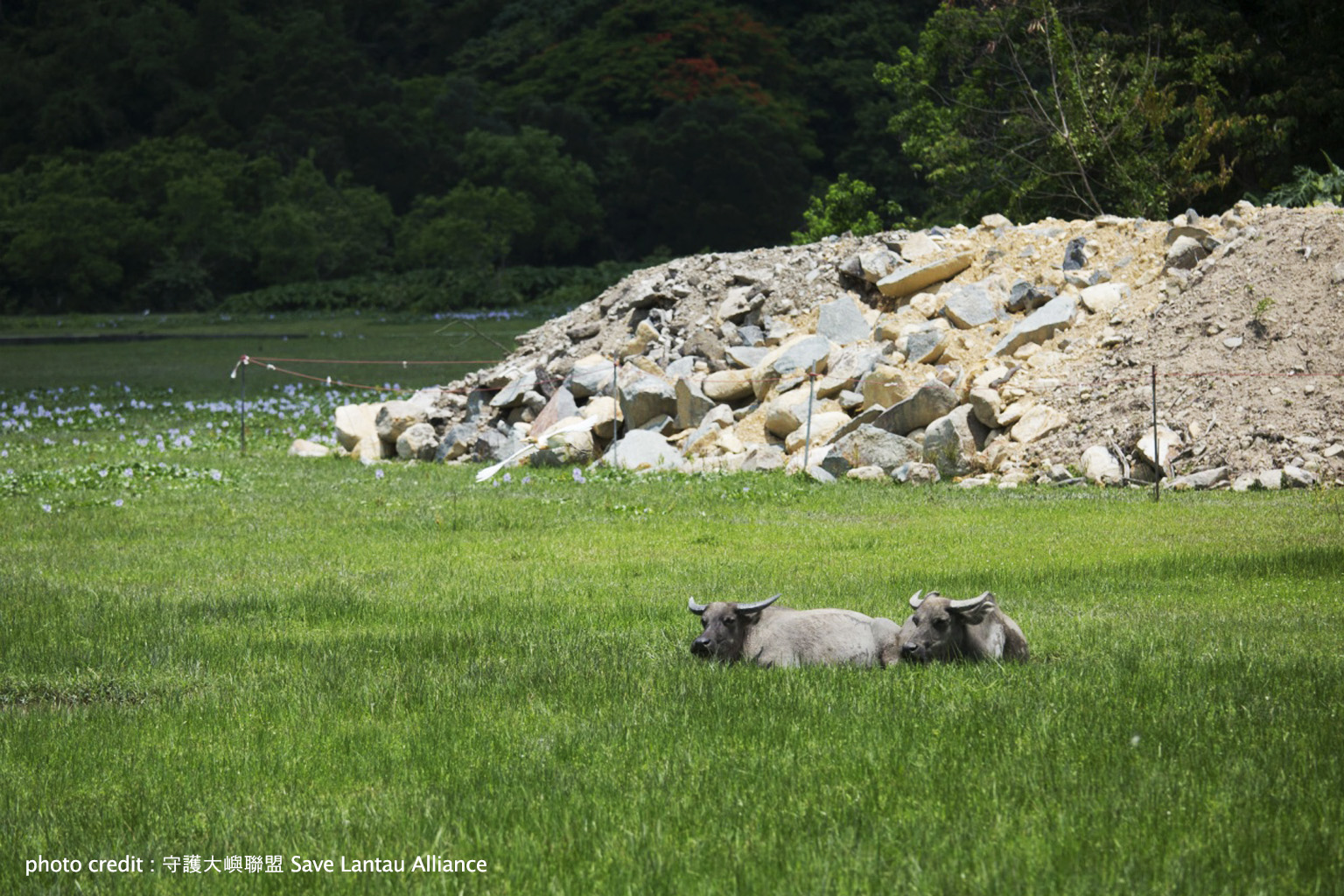
llegal dumping at Buffalo’s habitat in Pui O, 2005.
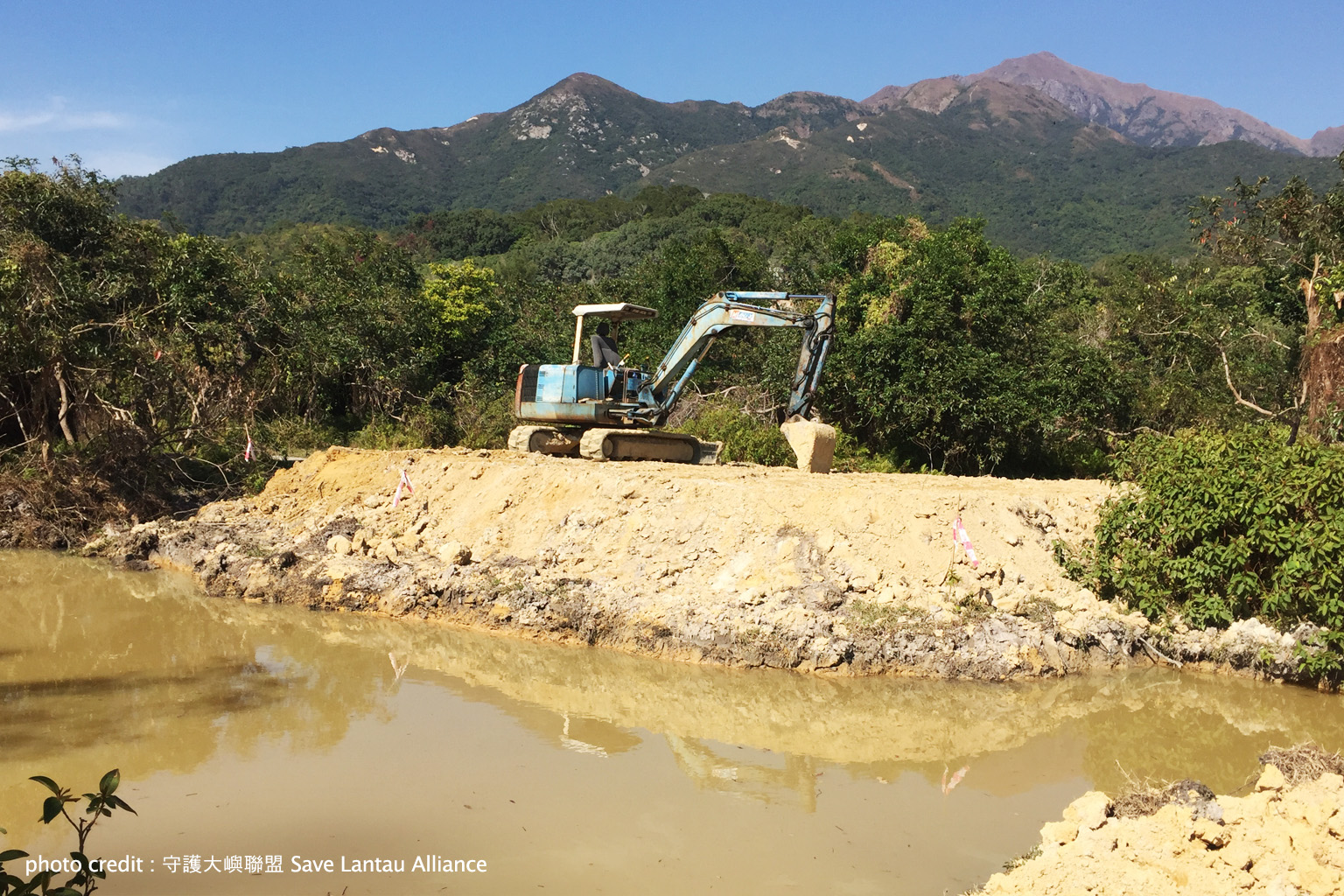
Dredging operation in Shui Hau’s wetlands, 2017.
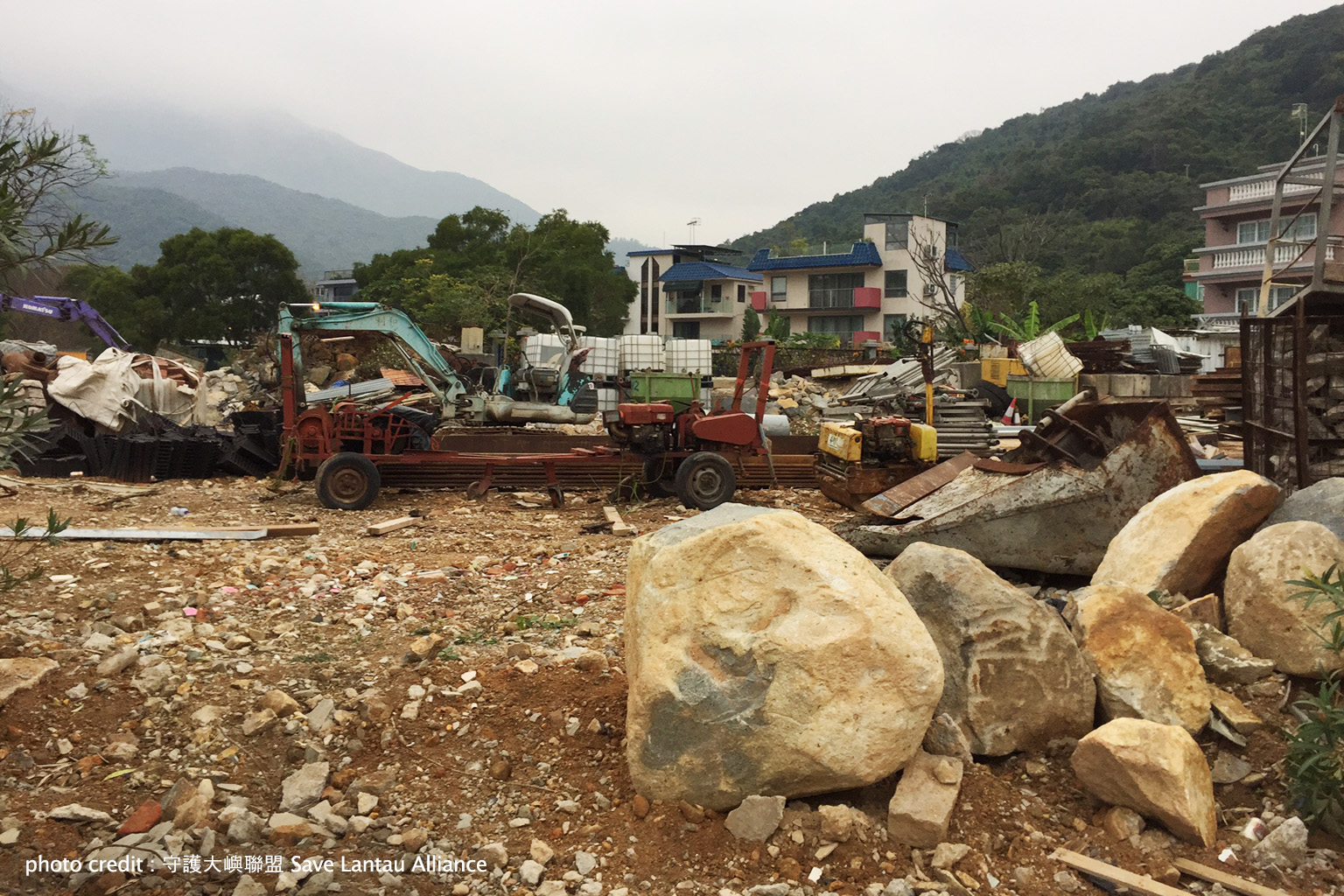
“Coastal Protection Area” in Pui O and Ham Tin literally turned into construction sites. March 2017.
A research report, “ Brownfields in Time: Tracing the course of Brownfields expansion in the New Territories”, has been published by Liber Research Community in December 2018. It pointed out that agricultural lands are being converted to brownfields at an accelerating rate and the area concerned is vastly expanding. According to their findings, there was 1,521 hectares of brownfields in Hong Kong towards the end of 2017. Interestingly, the area coverage as reported by the government during the heated debate over Hong Kong’s land supply in early 2018 has shrunken by 221 hectares, an area equivalent to 10 Tai Koo Shing combined.
What are brownfields?
The term “brownfields” first came into use in 1992 and the name originates from the environmentally disastrous incident at Love Canal in the US in the 1980s. According to “Study on Brownfields in New Territories and Strategies for Land Development” published by the Professional Commons in 2012, the term brownfields is defined as “former industrial lands which are abandoned and left idle, they are usually contaminated by previous industrial uses or heavy metals and converted to open-air storage yards. The usage of land generally incurs negative impact on surrounding environments, ecosystem and health and safety for the public”. Locally in Hong Kong, one of the reasons for the phenomenal increase in brownfields can trace back to the Melhado Case in 1983.
When the Kwai Chung Container Terminals first opened in the 1970s, it lacked sufficient facilities and back-end supports to handle the rapidly growing shipping industry. Lots of agricultural lands were then converted to storage yards, containers yards and lorry parking lots etc. On 2 February 1981, Melhado Investment Limited, in which Lau Wong Fat was a major shareholder, was sued by the then government for storing steel bars used in construction industry on abandoned agricultural lands, on the ground that such non-agricultural use of land was in breach of the land lease. The appeal was made to the Privy Council of the United Kingdom, but the British Government lost the case. The result of this final ruling was equivalent to stripping off the legal validity of a land lease in enforcing land usage compliance. It implies that owners of agricultural lands could use their lands for any purpose so long as the development does not include any structural buildings.
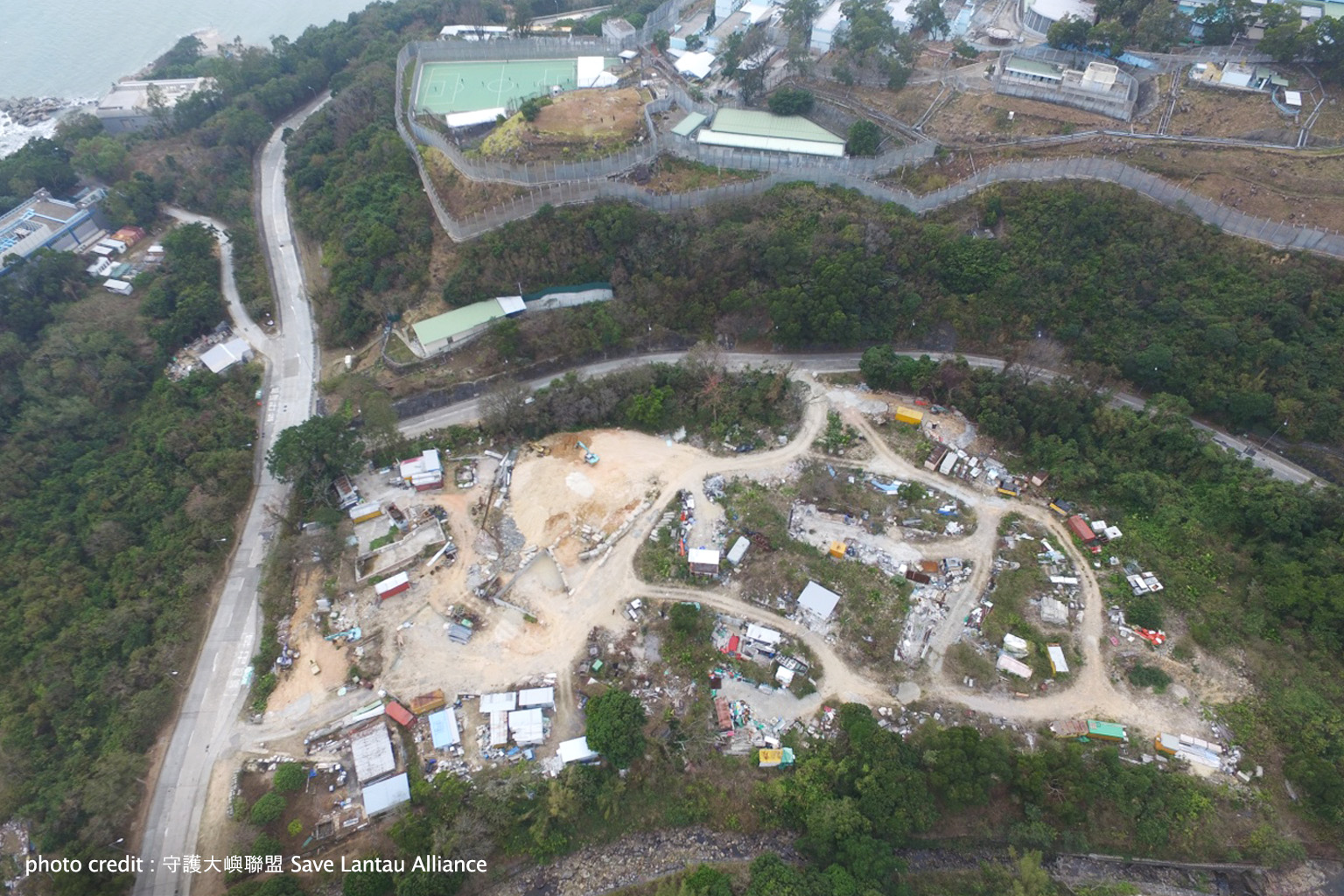
Green belt in Tong Fok is subject to continuous destruction and there is no regulation in place to prohibit such activities in the first place.
From then on, more and more agricultural lands in the New Territories were abandoned and converted to brownfields. They are used for containers, trucks parking, storage of industrial materials, recycling operations and vehicles dismantling etc. There are metal recycling companies who are using brownfields to illegally handle hazardous waste and toxic substances. All in all, the expansion of brownfields and the unregulated activities associated with them have created considerable disorders in the New Territories and caused ecological disasters. Regarding the development strategies for Lantau, the current term government has outlined the principle of “Development in the North, Conservation for the South”. But then why are more and more brownfields taking over agricultural lands, wetlands and green belts in southern Lantau in such an alarming rate?
“A tiger without teeth” – existing laws without enforcement power
The control of illegal dumping and depositing of inert construction waste mainly concern two of the Hong Kong’s laws: the Waste Disposal (Amendment) Ordinance 2013 and Cap. 131 Town Planning Ordinance. Sections 16B and 16C under the Waste Disposal (Amendment) Ordinance 2013 are specifically enacted to enhance the control of the depositing or dumping of construction waste on a private land. However, instead of preventing illegal dumping, these two sections are in fact issuing “legitimate permits” for dumping. For a person to dump on a private land, it merely requires him/her to obtain a written permission of the owners and submit it to the Environmental Protection Department (EPD), who will then approve and state its acknowledgment on the application form. EPD could inform other departments of the dumping. However, even if the dumping is not in compliance with other applicable laws of Hong Kong (for example if it is in breach of land usage designated by Town Planning Board), EPD has no legal obligation to step in and no authority to even refuse approval of the “dumping application”. For years, Save Lantau Alliance has been filing countless complaints on dumping and dredging in Coastal Protection Area, Green Belts and Conservation Area in southern Lantau, but all in vain.
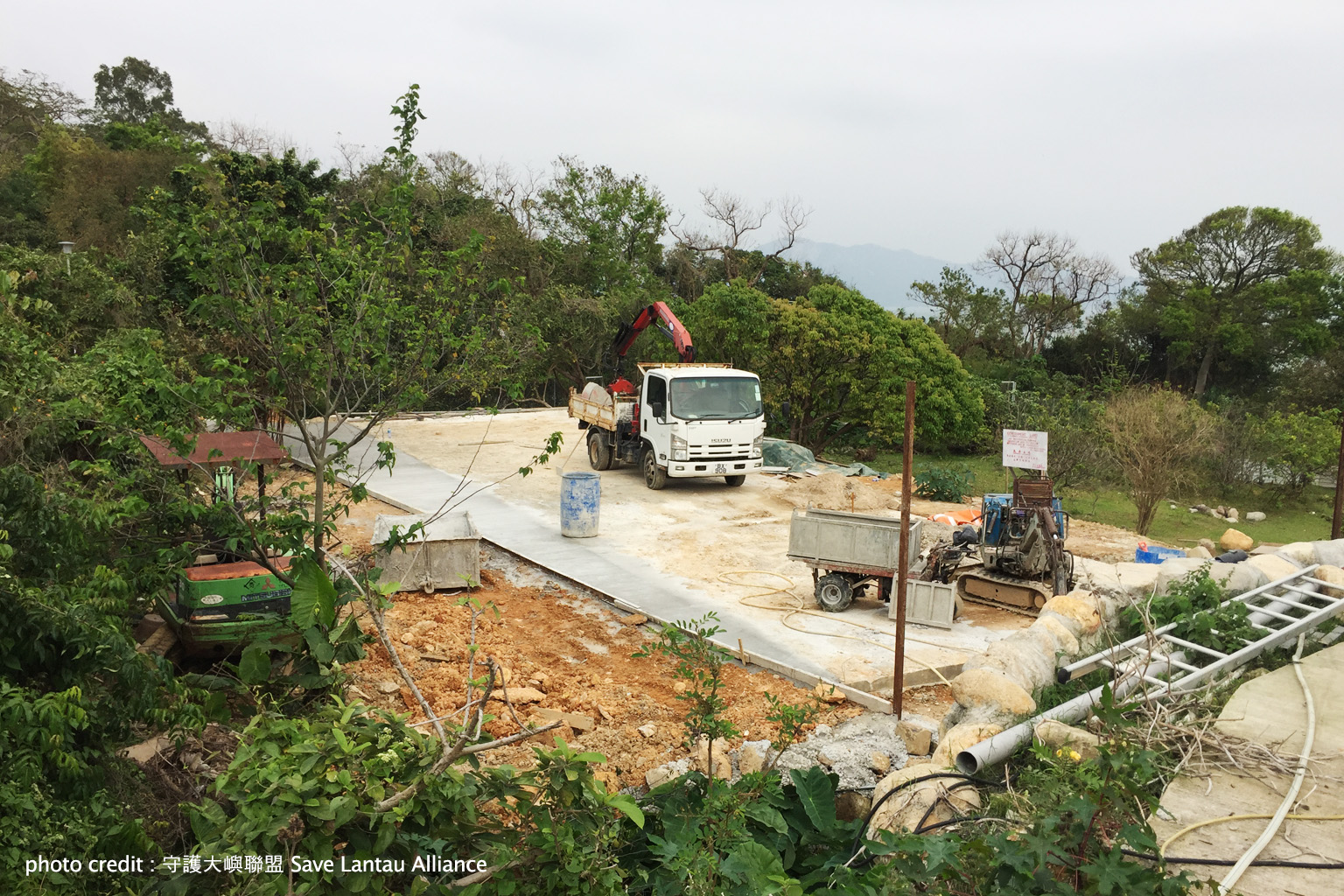
Just the tip of an iceberg – agricultural lands are converted into brownfield sites in Tong Fok, Lantau
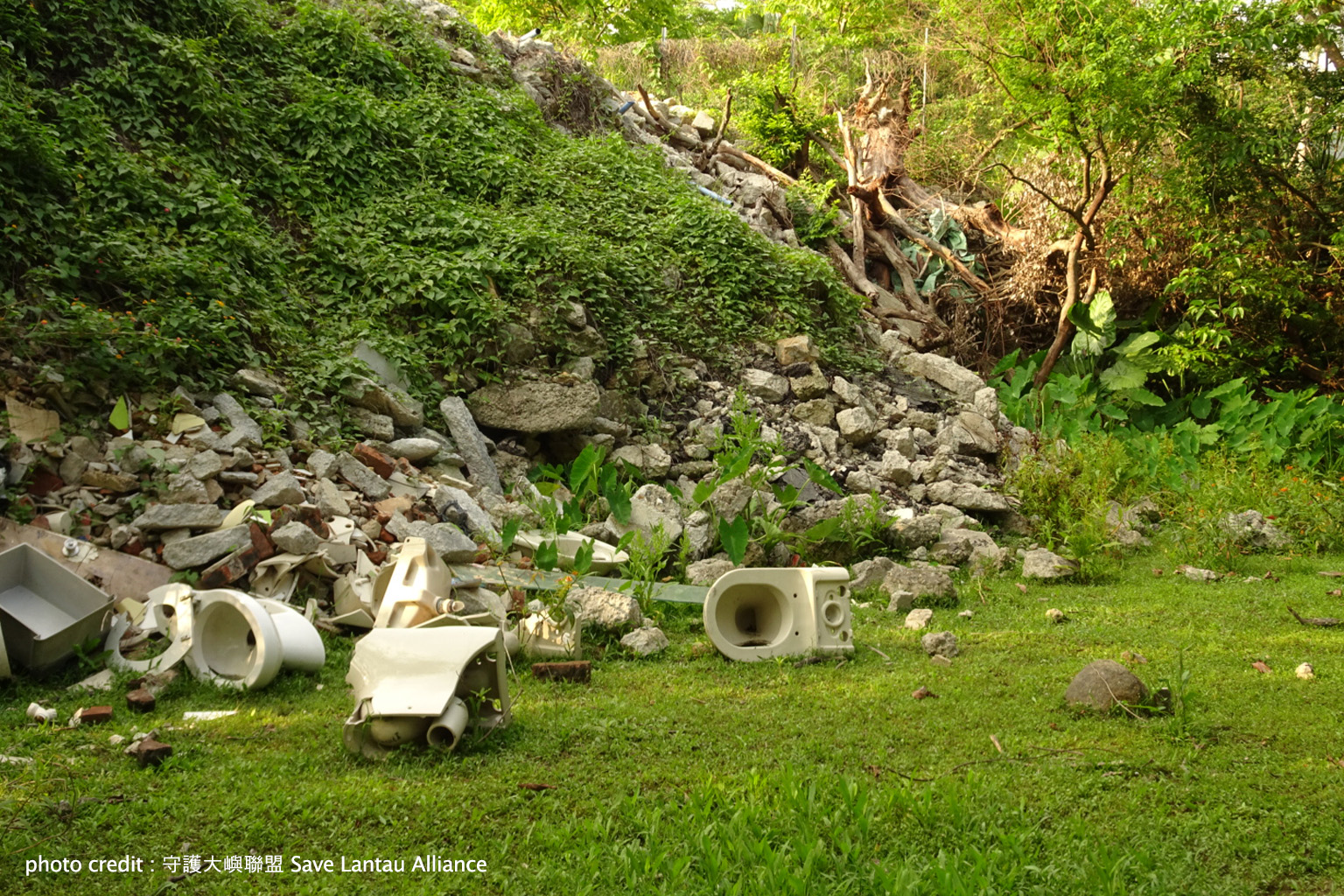
One of the construction waste mountains in Pui O, Lantau.
The other law concerned with dumping is Cap. 131 Town Planning Ordinance. According to the Approved South Lantau Coast Outline Zoning Plan No. S/SLC/21, a big portion of southern Lantau are designated as “Coastal Protection Area”. The annotations indicates that no reclamation or dredging operation should take place in “Coastal Protection Area” unless a permit is granted by the Town Planning Board (TPB). Unfortunately, as this was created in 1980, it is inevitably override by the ruling of the 1983 Melhado Case aforementioned. The ordinance only grants TPB with the rights to formulate plans, but no authority to execute any enforcement power or lay charges against the offenders. In the case where TPB discovers unlawful dumping and non-compliant land use, there is no statutory framework that allows TPB to do take legal actions against it.
The Sustainable Lantau Blueprint issued by the government in June 2017 specifically outlined its planning vision of “balancing development and conservation” with due consideration to preserve the rural characteristics and protect the ecological environment. In the Policy Address released in October 2017, the Chief executive Carrie Lam remarked on conservation objectives and reinforced the principle of “Conservation for the South”. However, talking about conservation without making actual legislation amendment to address the legal loopholes has no use in halting the persisting destruction in the Coastal Protection Area in southern Lantau. In the Chief Executive’s Q&A session at Legco on 7 February 2018, Carrie Lam was questioned by a legislative councillor regarding how “Conservation for the South” can be achieved. This was how Carrie Lam responded to the question: “Laws can never take everything into account, there are always grey areas and loopholes that cannot be filled. Some actions are seemingly destructive to the ecology but it does not mean that any laws are breached”. Instead of condemning the destructive activities and trying to address the legal loopholes, Carrie Lam put an emphasis on public education to divert people’s attention to the subject.
It is crystal clear that the core of the problem lies in the contradiction between the two laws aforementioned and the lack of statutory authority to execute enforcement power. The Waste Disposal (Amendment) Ordinance and Town Planning Ordinance must be amended so as to authorise the departments with sufficient enforcement power to stop destructive dumping in the countryside.
It is up to us to save our environment! While Save Lantau Alliance is pressing the government to amend relevant legislation, the power of citizen engagement and community-based monitoring are also imperative. Anyone can help safeguard the countryside and we urge you to be part of this. If you notice any waste dumping activities, take photos as evidence, jot down the location and report this using the “report incident” function on the TrailWatch app. We need your collective efforts.