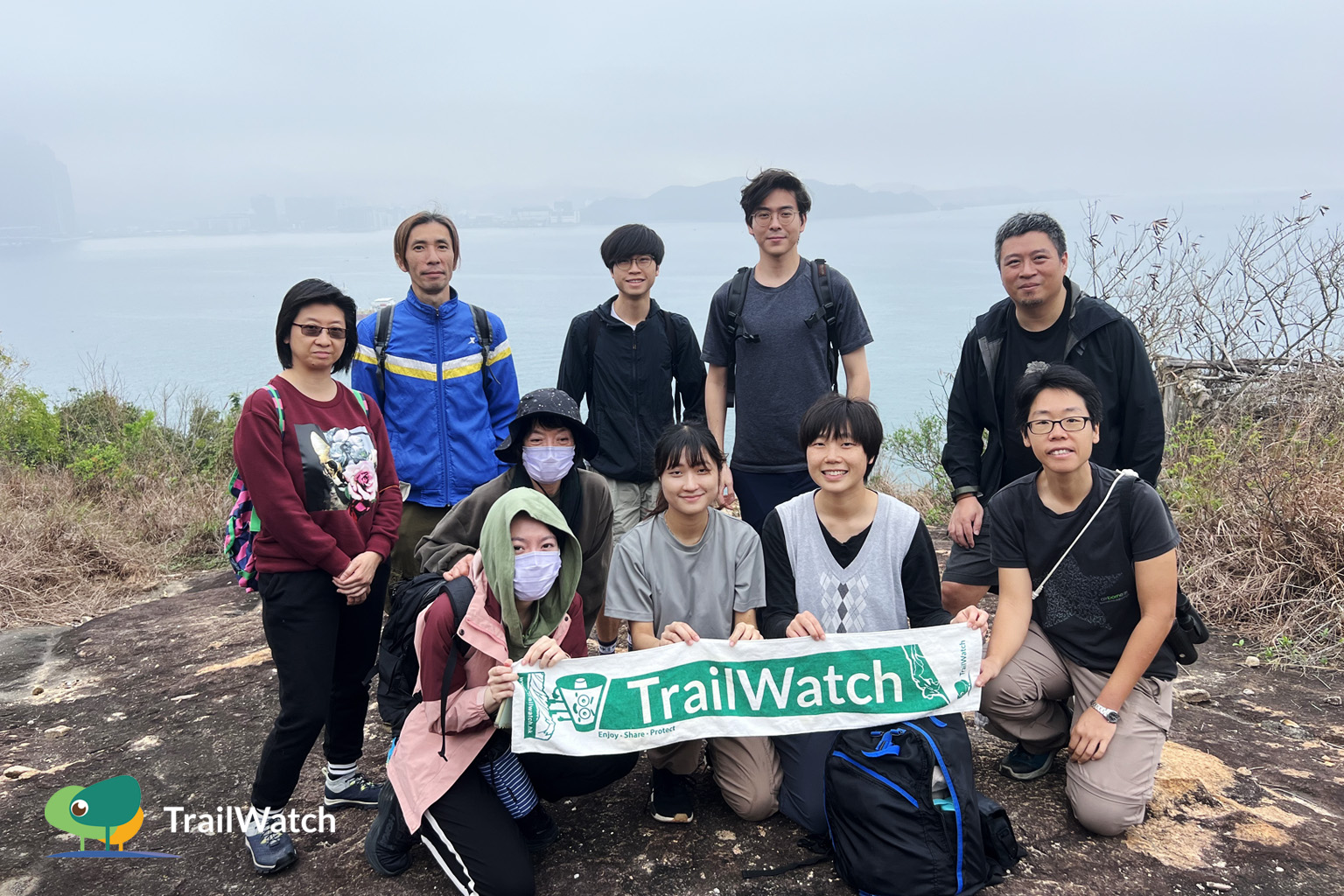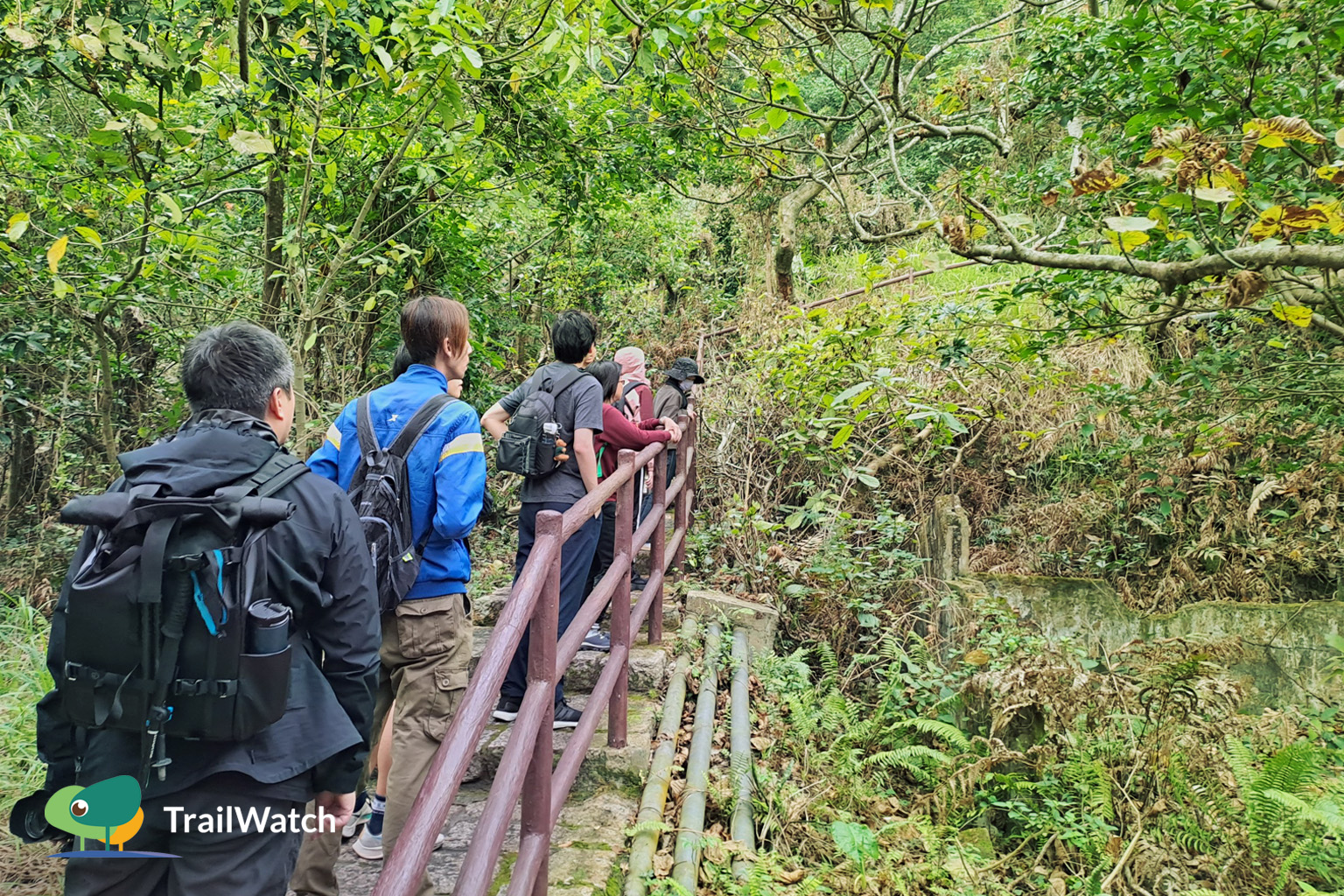
We organised the Shek Lei Hang Village guided tour twice last year, not only leading participants on the backyard trail to experience and understand issues related to green belts, but also creating opportunities to connect with many organisations concerned about community development, including the Yau Tong Community News, Zaap Yau (集油), with whom we partnered this time.
In March, we co-organized the Yau Tong Backyard Trail guided tour and invited a nature guide Holis Lam (木葉) to lead us through Sam Ka Tsuen in Lei Yue Mun and get to know the urban and rural community. Deep into On Luen Village (安聯村), we learned about the stories of the villagers.
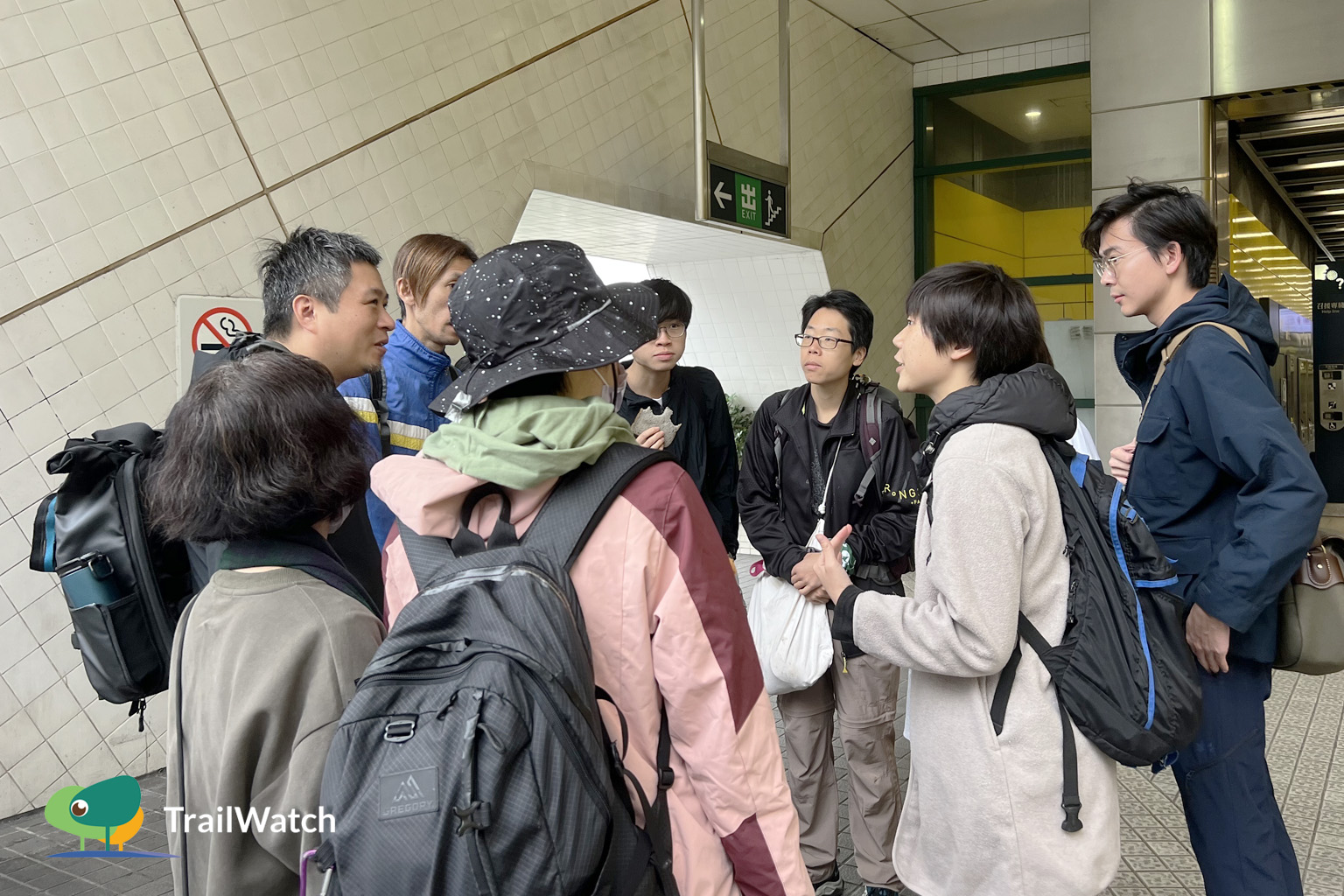
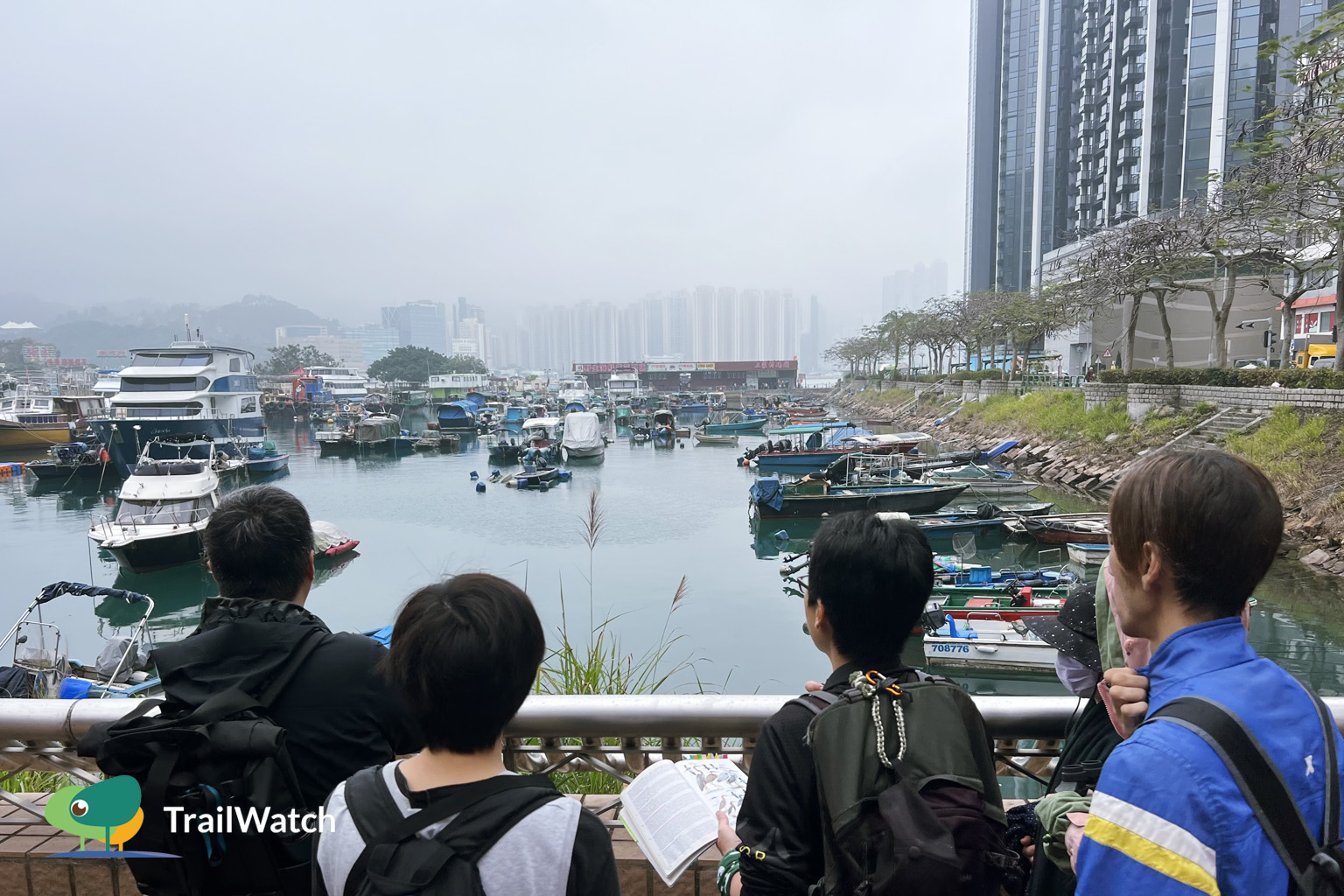
In the foggy early spring, our group of 11 people gathered at the Yau Tong MTR Station and set off, passing through parks and walkways to the Lei Yue Mun Archway. As we passed by Sam Ka Tsuen Typhoon Shelter, we spotted birds on the boats and Holis took out a binocular and a bird-watching guide to share her knowledge with the participants.
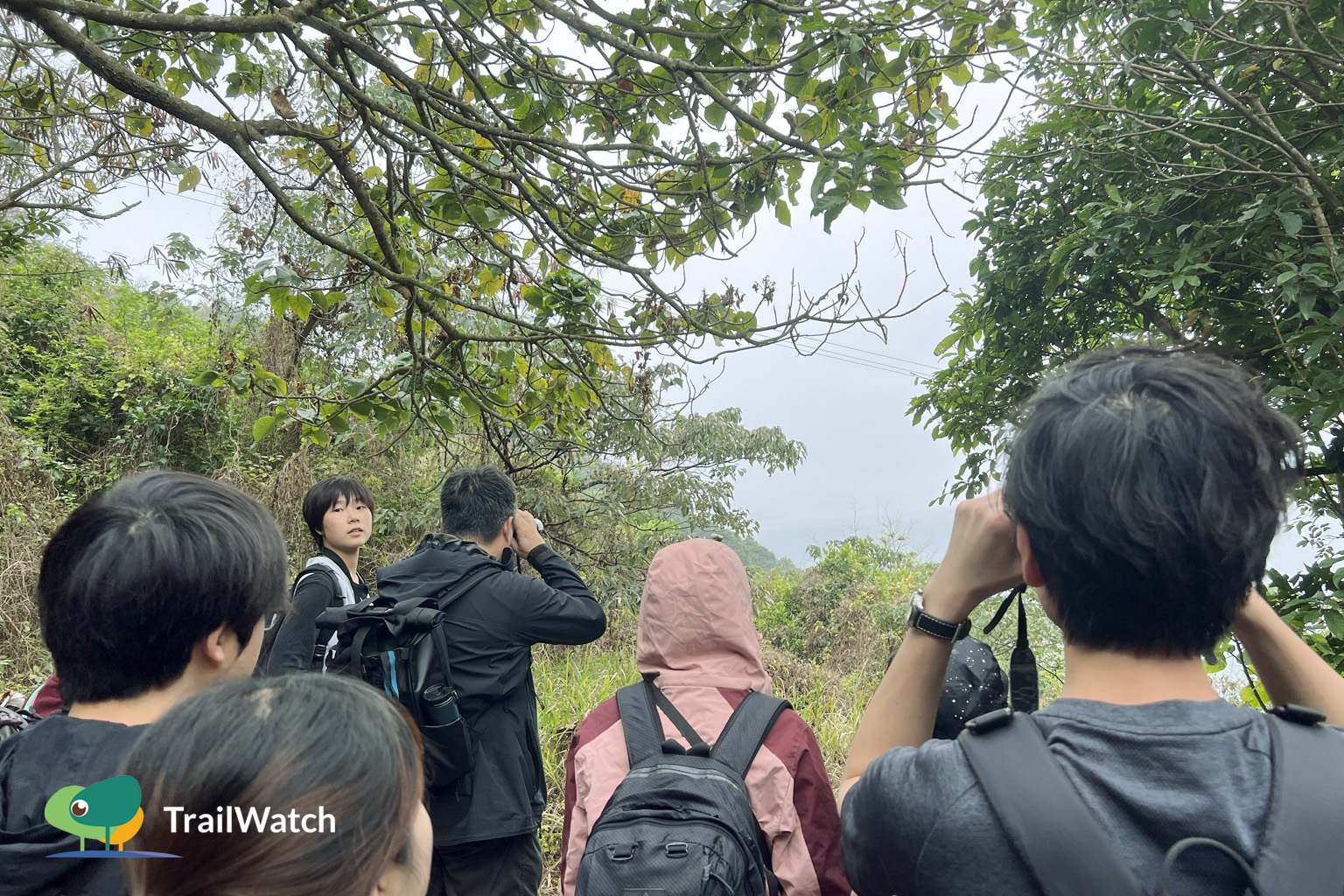
Afterwards, we walked along the Lei Yue Mun seafront, passing by many seafood stalls, restaurants, and shops, and then took the stairs up to the road to the Junk Bay Chinese Permanent Cemetery. Along the stairs, there were many abandoned village houses and grasslands which served as habitats for butterflies and insects. Participants looked around from time to time, some were looking closely at the insects clinging to the railings, some were looking at the birds hiding in the bushes, and some were squatting down to observe the grass, all feeling the breath of nature in the backyard.
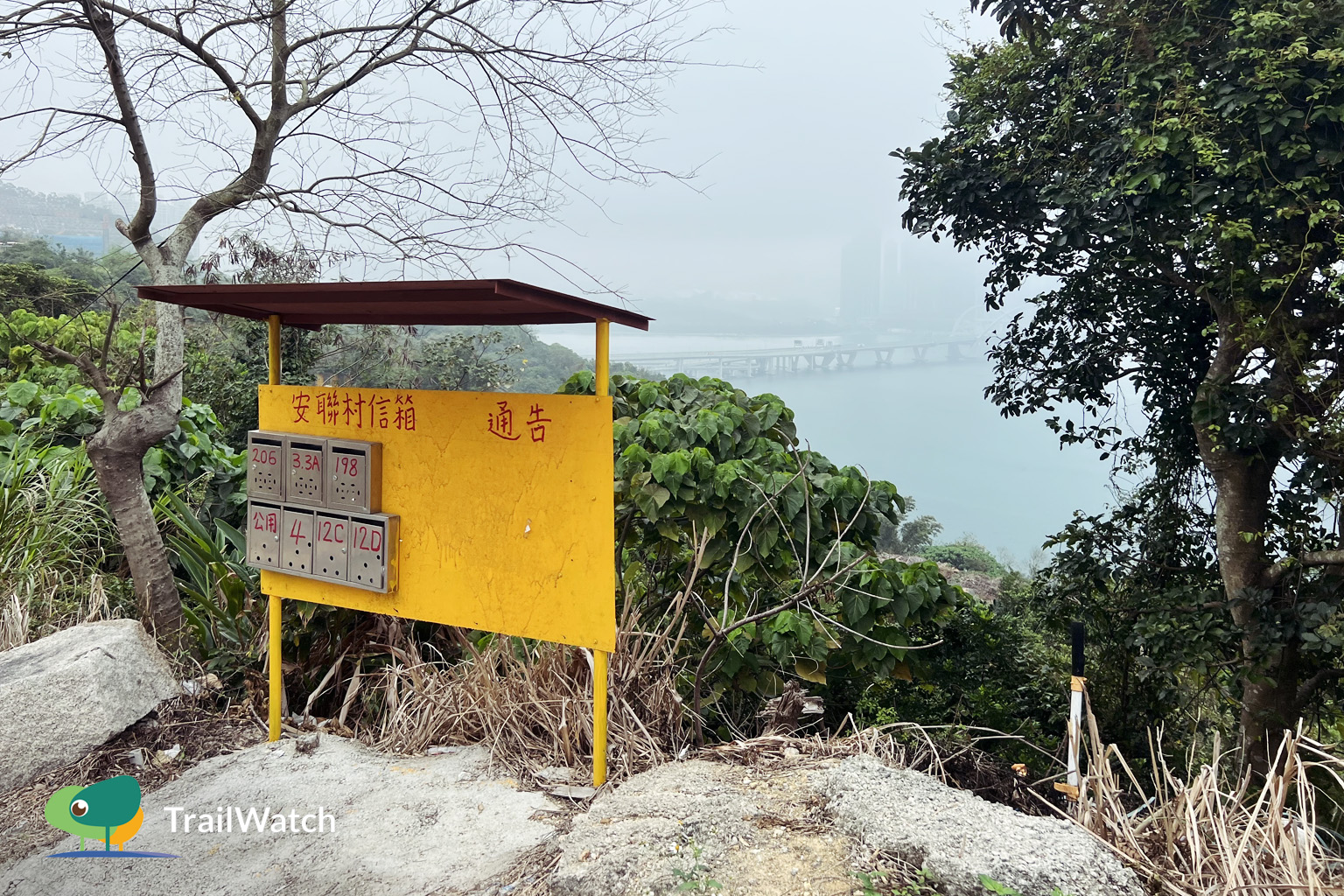
We walked around the cemetery along the road, and a yellow sign stood in the distance with "On Luen Village Mailbox (安聯村信箱)" and "Notice (通告)" written on it, indicating that we had arrived at the village entrance. Since the 1950s, people have gradually settled on the east side of Lei Yue Mun's Devil's Peak. With the increase in population, this place was named On Luen Village in the 1970s.
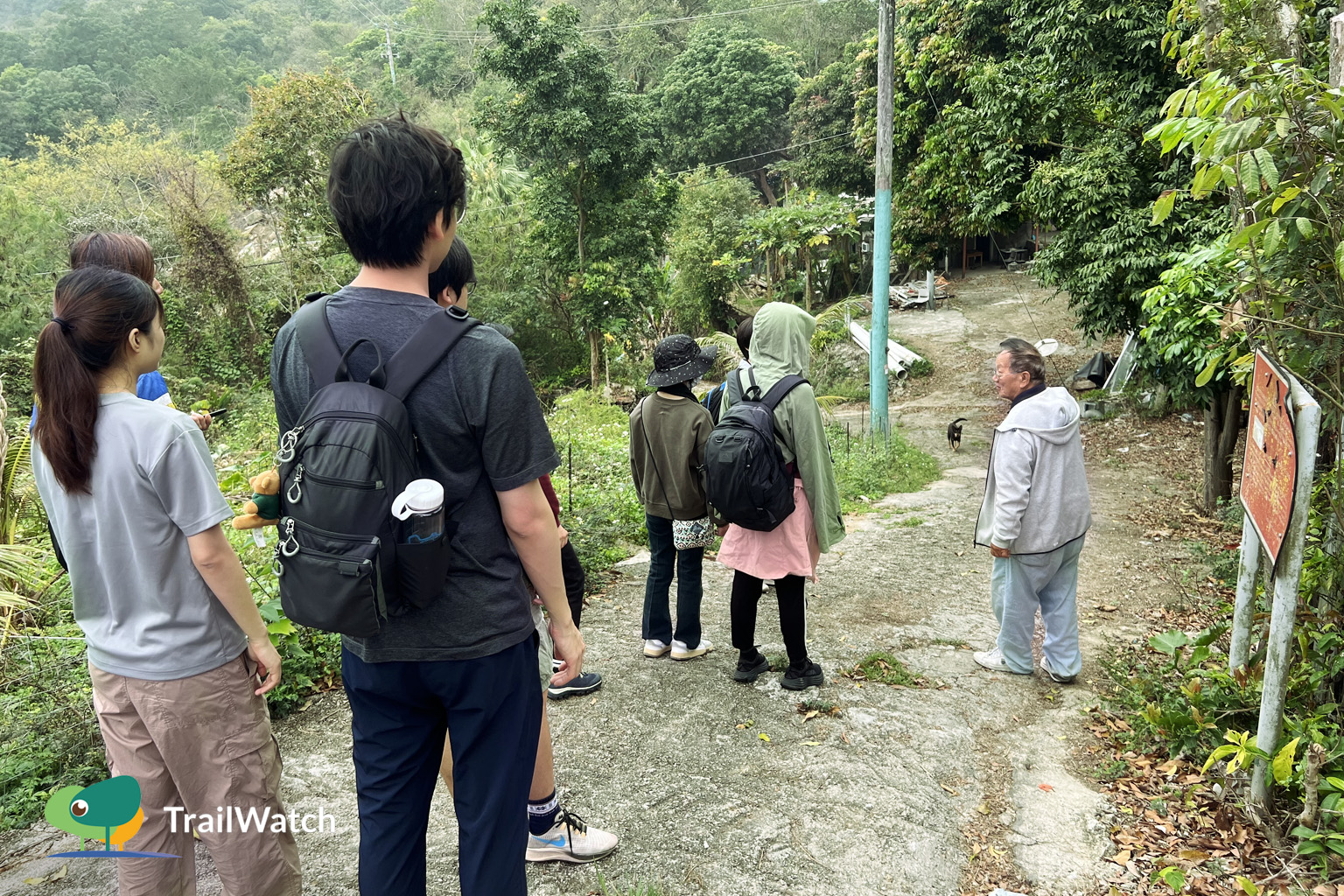
There is a cement road down, and we happened to meet Uncle Man (文叔), a villager who lived there for over 60 years. We chatted with him casually and played with the dog he raised. As we continued walking, we saw some abandoned village houses and some newly renovated village houses. In recent years, some villagers have chosen to return to the countryside from the city, and Mr. Li, who lives next to the main path, is one of them. When we approached his home, his dogs started to bark, and Mr. Li looked out and saw the familiar faces from Zaap Yau, so he chatted with us. He shared that the government has recently entered the village to conduct soil exploration work and has also negotiated with villagers. He estimated that the reclamation plan at the foothill would begin next year, and he believed that this Yau Tong backyard trail would face dramatic changes.
We said goodbye to Mr. Li, and then passed through the wooden sign he made, "Thank you for coming to On Luen Village (多謝光臨安聯村)", and soon passed through the rusty iron plaque with the Chinese words "On Luen Village" carved on it. As we reached the end of the tour, we looked back at the small village houses on the hill. At this moment, Holis took out a leaf from her bag and blew it on her lips. With the melodious music and refreshing wind, we gazed at the vast ocean in front of us, bringing an end to this Yau Tong backyard trail trip.