Never did I imagine returning to the same location after three months, only to find the beautiful scenery gone. The Battery was flooded, the roads were covered in mud, barriers were placed to block the way, and workers operated excavators to clear away the massive rocks and landslips. This is Chung Hom Kok in the Southern District of Hong Kong Island, which you can reach by walking along the flat road all the way to the end of the cape before passing through the Jockey Club Cheshire Home.
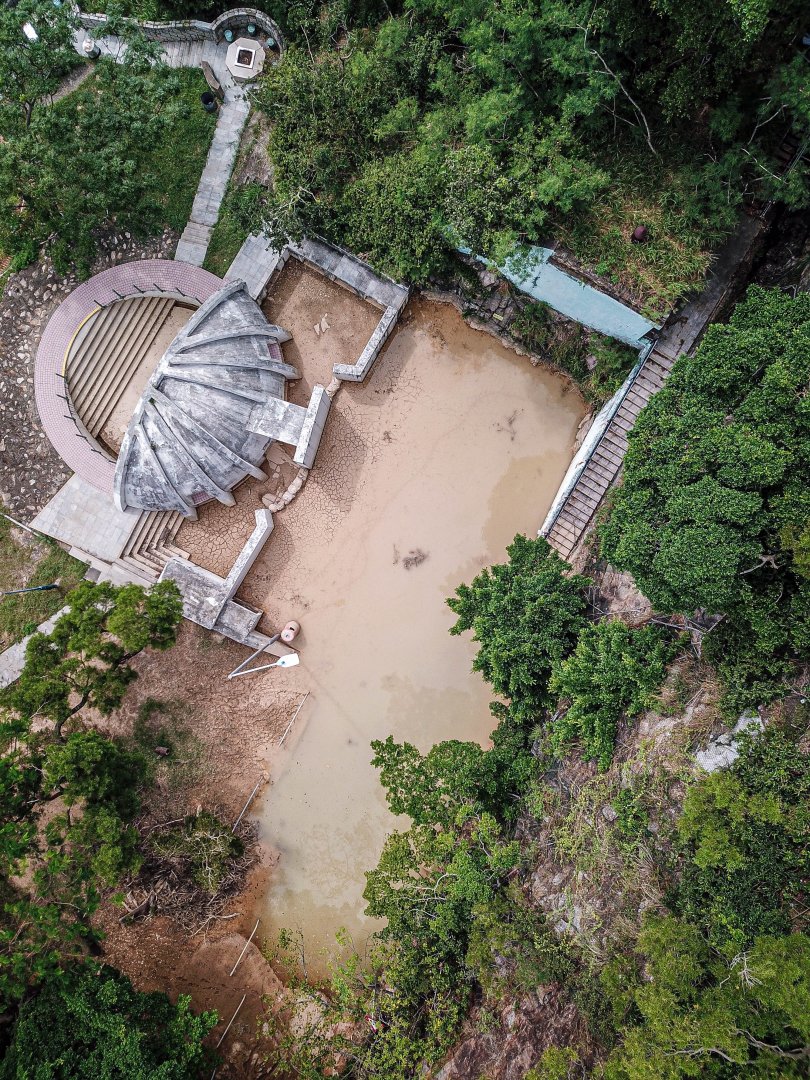
Chung Hom Kok Battery has been submerged for over a month, and the road is still blocked by landslips. (Photo Credit: YK Chan)
Over the past month, Hong Kong has experienced consecutive weather disasters, particularly severe in the eastern and southern areas of Hong Kong Island, with widespread flooding and landslips. The Chung Hom Kok Battery, a Grade II historical building, has become the centre of attention. Its circular cement structure has accumulated a large amount of water, and the stone stairs, tables, and chairs have all been submerged, turning the area into a pool of water. The accumulated water has not receded for more than a month, which may pose difficulties for future restoration work on the building.
This defence facility, built to defend the southern coastline of Hong Kong Island, has a history of over 80 years. The Battery originally had two levels, each equipped with a 6-inch cannon and an associated searchlight. As the pressure from the Japanese invasion of Hong Kong increased, the British intentionally destroyed the Battery to prevent it from falling into enemy hands. After the war, the upper part of the Battery was demolished and rebuilt as a nursing home. Currently, only the lower part remains, consisting of a semi-circular protective structure and two searchlights. This has been transformed into a park managed by the Leisure and Cultural Services Department (“LCSD”).
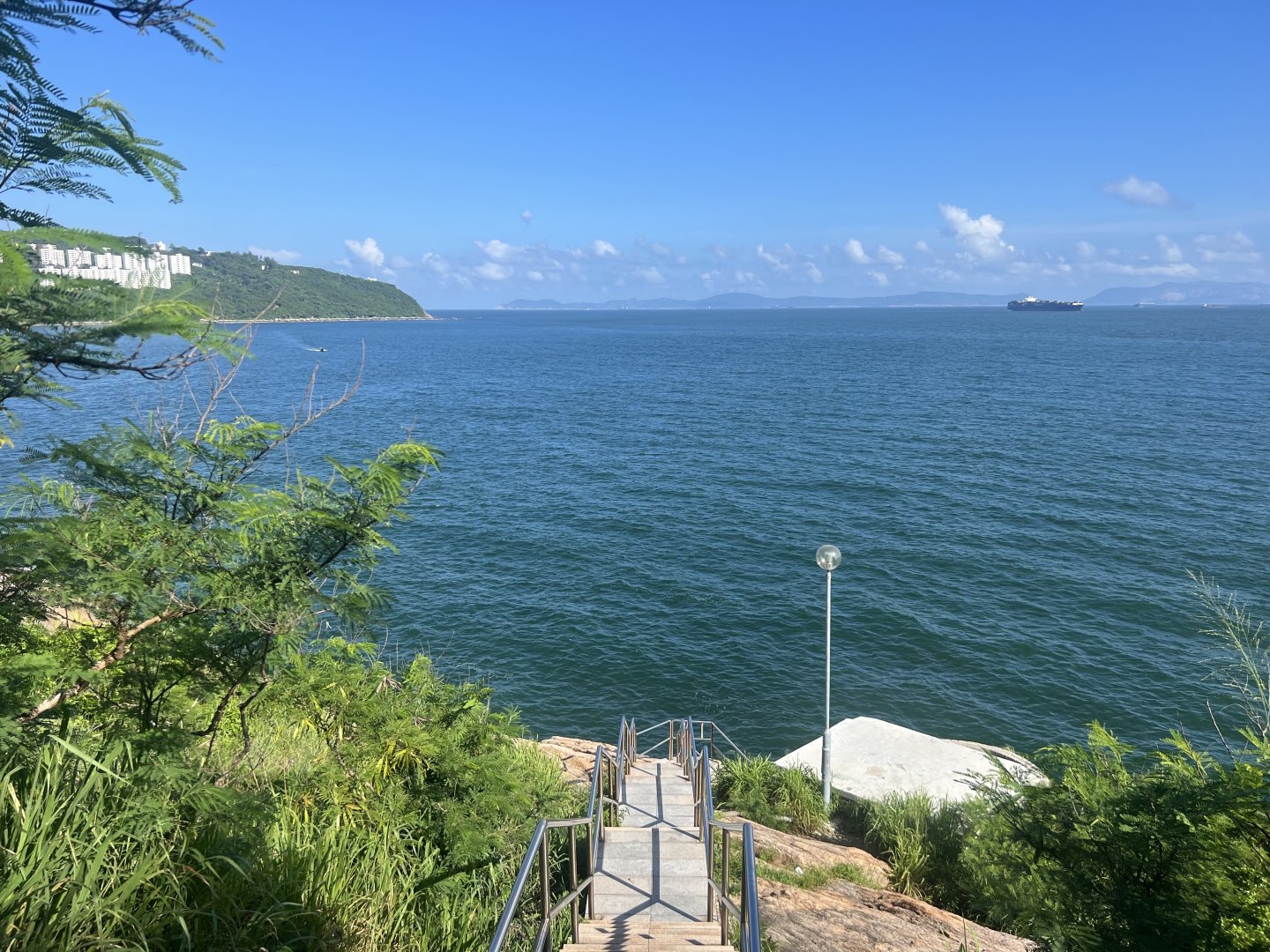
Chung Hom Kok Park has recreational facilities and barbecue areas. The Park faces the magnificent scenery of Chung Hom Wan, which attracts many visitors.
Chung Hom Kok Battery witnessed wartime history and holds rich historical value; however, looking around the Battery, the only signs posted by the LCSD are lacking historical information about the Battery. The Development Bureau proposed a conservation plan for wartime relics in June this year, stating that information boards would be gradually added to Chung Hom Kok Battery and other historic buildings to educate the public. The recent heavy rain, damage to the Battery and nearby slopes present an opportunity for comprehensive conservation work, including repairing the building structures, stabilising the slopes, and enhancing interpretive facilities to properly protect this cultural heritage.
From a conservation perspective, the grading mechanism for historic buildings provides a more objective standard for assessing the cultural value of architectural heritage. However, buildings that are not designated as Declared Monuments are not legally protected and some have been subject to demolition. Ungraded historic sites often cannot withstand urban development, for example, the arch and foundation stone of the Tung Wah Smallpox Hospital, located adjacent to the Sai Ning Street Bus Terminus in Kennedy Town, are soon to be relocated due to the government's sale of land for private housing development.
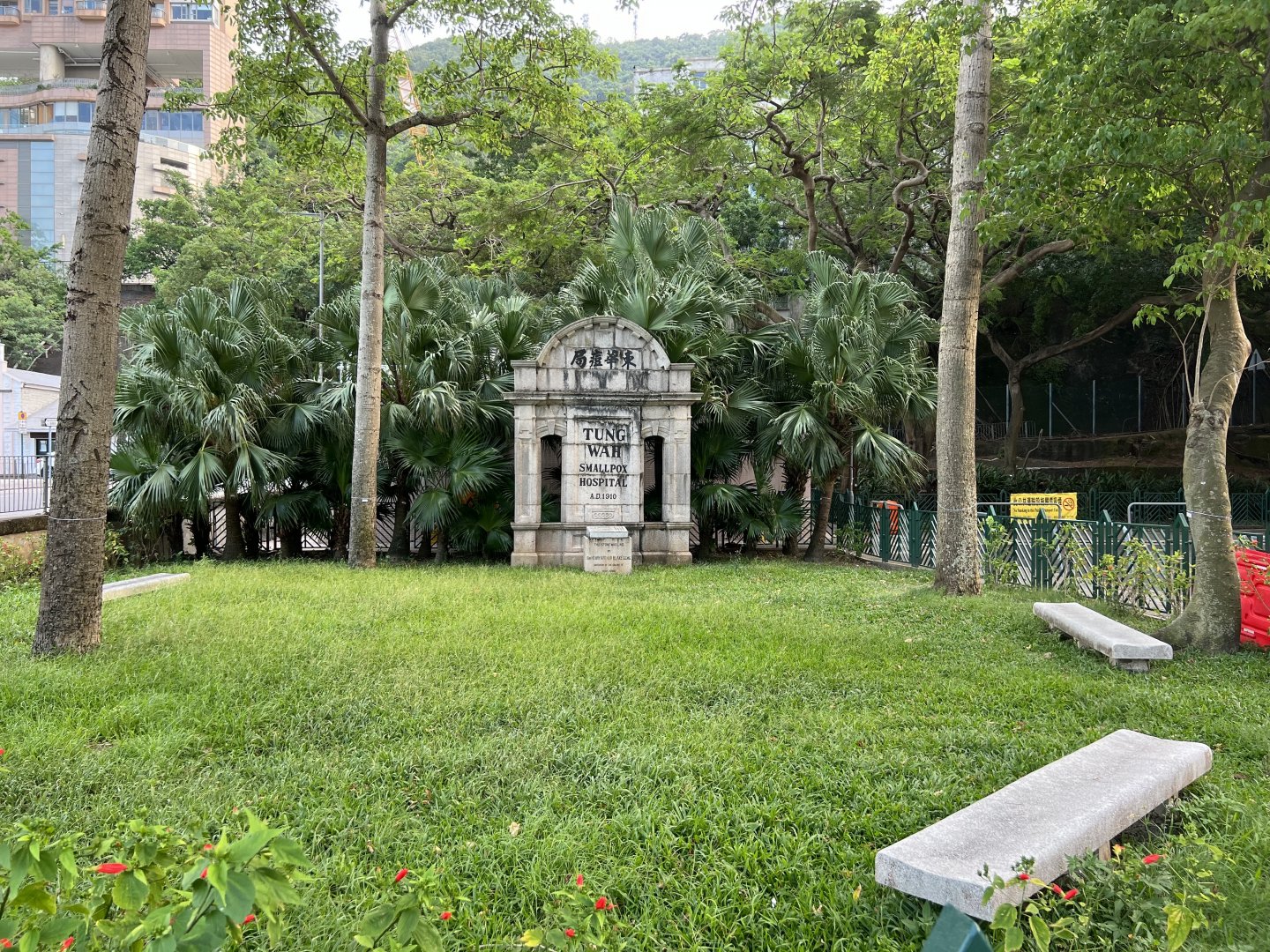
The words Tung Wah Smallpox Hospital in English and Traditional Chinese are inscribed on the arch, and the remains of the foundation stone are surrounded by a garden.
The Tung Wah Smallpox Hospital was established in 1910 and specialised in treating smallpox patients by combining Chinese and Western medical techniques. Although this century-old historic site bears witness to Hong Kong's history of combating infectious diseases, the main building of the hospital, originally located on Ka Wai Man Road was demolished after World War II. The arch and the foundation stone were subsequently moved to the current site, which has not been graded. Now, the arch and foundation stone face the possibility of being relocated once again.
Historic sites carry stories, but history fades away as time passes and is often gradually forgotten. In order to properly inherit historical heritage and promote architectural conservation, a longer-term and comprehensive planning vision from the government is indeed needed.
Reference:
《我家》地區報 – 東華痘局被遺忘 牌坊基石放巴士站,香港,2022年