This part of “The Backyard Trails Pilot Project” relied on a group of field research assistants who visited ten Backyard Trails during the past winter and summer to assist in the installation, inspection, and retrieval of pedestrian flow sensors, in order to obtain relevant research data. We interviewed two of the research assistants to find out the bittersweet experience of this “dream job”.
Jonathan is a retiree and a veteran trail runner. In recent years, he has developed a passion for hiking but mainly exploring famous mountains and trails. He said, "I rarely choose Backyard Trails. I visited Kam Shan and Woh Chai Shan for the first time because of the installation of the sensors. I never imagined there would be so many table tennis tables and residential facilities on the hill, and it is astonishing and certainly unlike a typical trail."
The research assistants went in pairs to the designated locations to install or retrieve the sensors for safety reasons. Jonathan pointed out that there were occasions when local residents approached them to inquire about their research work, but they never encountered anyone trying to stop them to install the sensors. However, one time they found that the equipment had been dismantled and disappeared when they retrieved a sensor. He believes that there are always people with different backgrounds in the mountains, and this project allowed him to interact and connect with different individuals in the countryside.
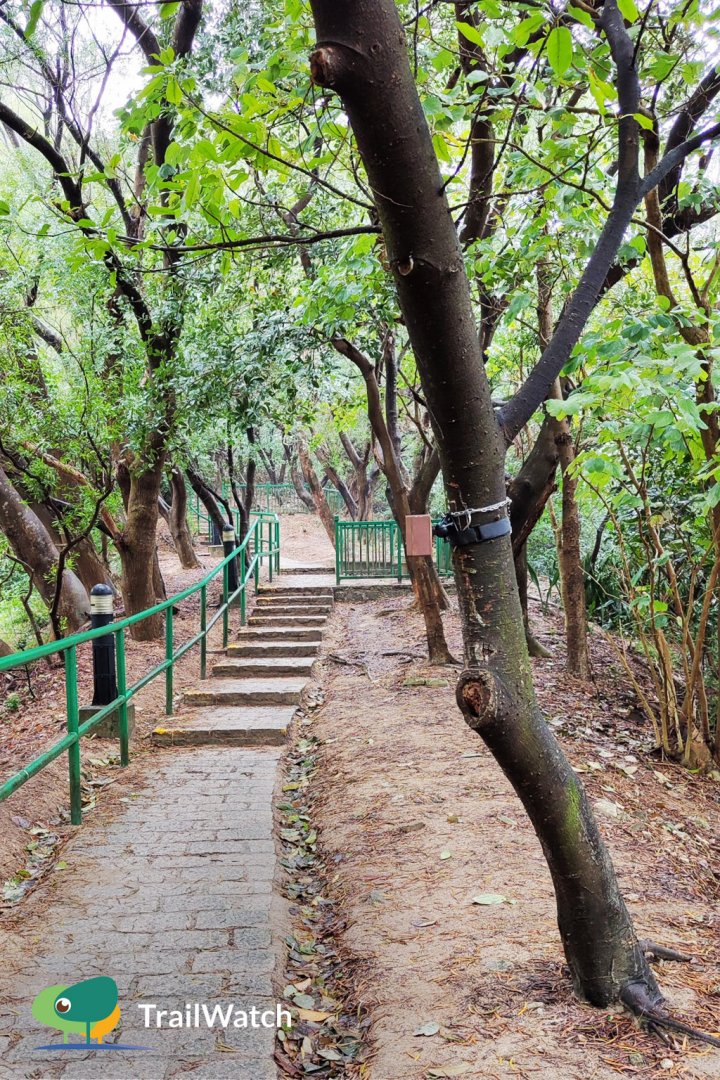
Pedestrian flow sensor installed on Shum Wan Shan.
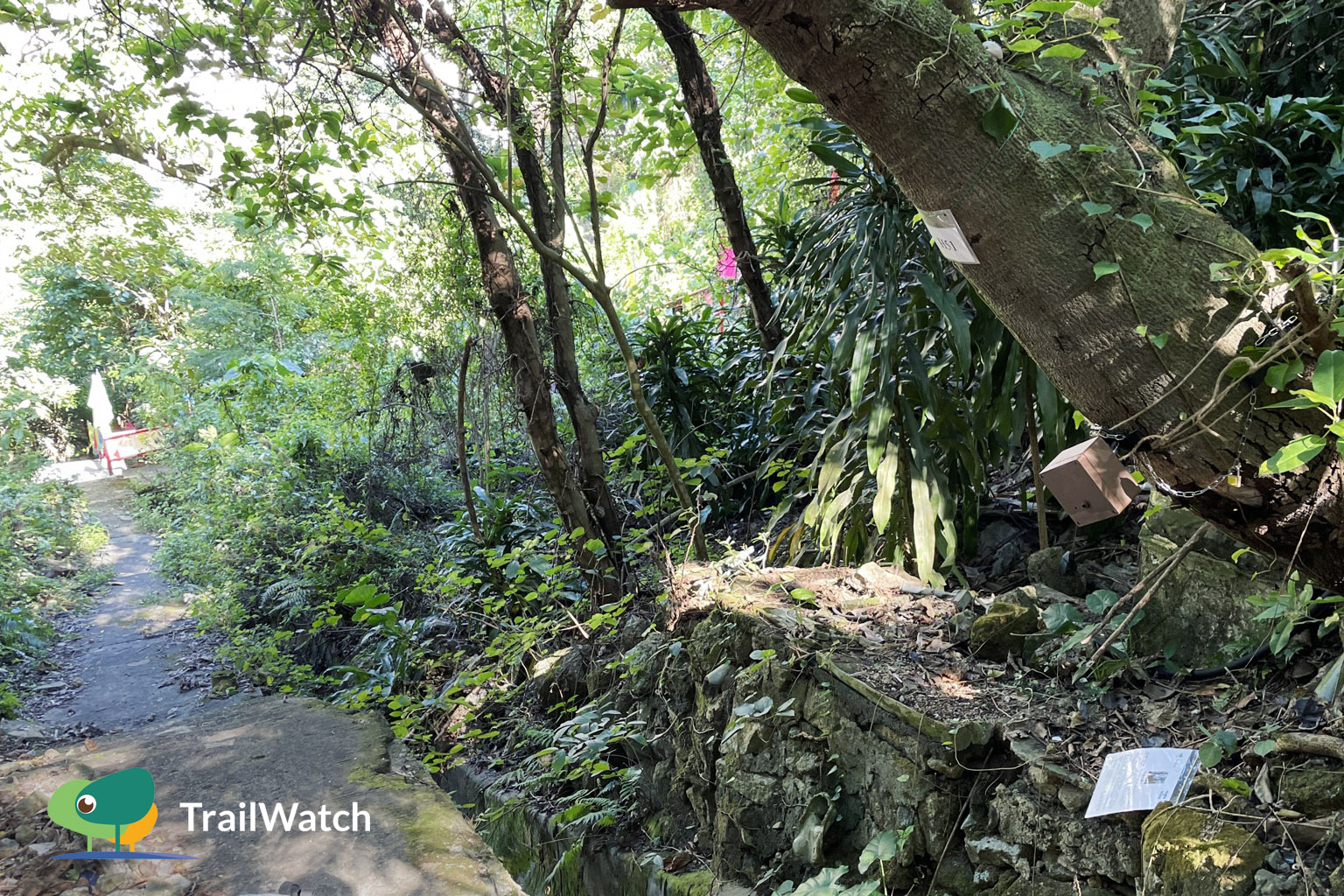
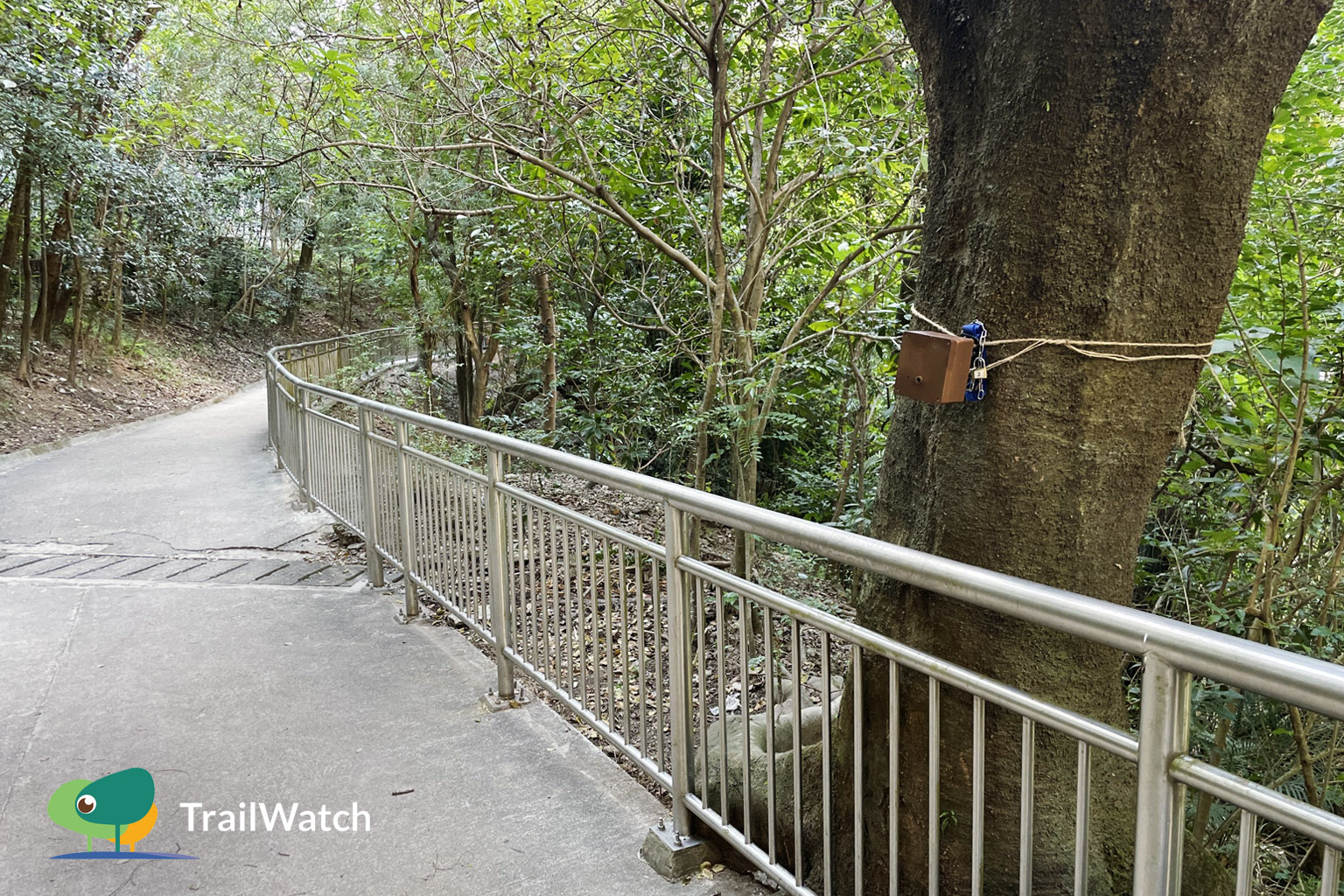
The sensors were installed on the trees that were situated at two different locations along Mount Parker’s trail.
Although the signage clearly states that the sensors are not cameras, and they only utilise infrared to detect human body heat, instead of taking photos or videos and collecting personal information, many visitors passing by still worry about their privacy being violated and deliberately avoiding them, some even using umbrellas to shield themselves. Wa Ka Cheong acknowledged that the sensors look like cameras and were hung on trees along the main paths, attracting attention from others easily.
It is ok to bypass it, but please do not damage it. He opined that they respect people’ s freedom for not participating in research but just hope that there is no destruction.
This academic research aims to understand the usage of trails and promote more detailed planning and conservation of Backyard Trails. We believe that the majority of Backyard Trails visitors cherish nature, and we hope that if anyone comes across similar research work in the countryside, no disturbance is already a form of support.