文字、相:Daniel-C
"Reaching the headwater and losing sight of water, time to sit down and watch the clouds arise." Being an enthusiastic stream trekker, these have always been my favourite lines in "Retreat in the Zhongnan Mountains", a poem by Wang Wei the "Poetry Buddha" of Tang Dynasty. What you see is determined by the state of your mind, obviously the poet was trying to say, and do not lose heart even in the most desperate situations, since the end of one hope is often the beginning of another. However, for a stream trekker, this is just a direct portrayal of reality : climb to the source of the stream, which is normally located at high ground, for the best views above the clouds. Do stream trekking enthusiasts always yearn for or even cling to reaching the headwaters? The answer is…not necessarily.
Stream trekking is considered a well-developed sport in Japan and Taiwan. However, with long watercourses and headwaters on high ground over 2000m above sea level, trekking to the source of streams often takes days and is not a manageable task for everyone. Stream trekking is less demanding technically and physically in Hong Kong, where streams are steep but much shorter, and there is no high mountain. Even if information about the headwater is available, the recommended trekking itineraries in guide books and online do not always end there. The mountain trails in Hong Kong extend in all directions, and popular streams are usually run across by some, making it convenient to retreat. The closer to the source, the less water you find, with no pool nor waterfall to enjoy but dense forests and thorns blocking the way, the journey to the headwaters can be rather unpleasant. What is more, exploring headwater often requires physical strength and experience, and is technically challenging.
Of course, due to various reasons, there are still people who are keen to explore headwaters. While getting to the top is the ultimate goal for mountaineers, reaching the source of the stream is for some stream trekkers. Others are looking for the sense of satisfaction after overcoming the challenging terrain at the headwaters, or the excitement of exploring the wilderness. There are also a few plant lovers like myself : to see those wild species that are only found in the upper reaches of the streams. In Hong Kong, most watercourses in the city have their downstream section modified into either concrete waterways or covered ditches, not to mention pollution, making them unsuitable to trek at all. Those which can still be fully traced are only found in remote areas such as Lantau Island, among them the outstanding "Ngong Shum Stream" which flows from Ngong Ping to Sham Wat Cove.
The list of "The Nine Great Streams of Hong Kong" has changed with the environment over the past few decades, but Ngong Shum Stream remains a member all the time, and has always been considered the hardest to trek among the others. The "Thousand-step Falls" in the upper reaches is second to none in the territory, and the "Mei-Ngong Fall" in the middle reaches certainly ranks among the top five. However, despite its fame among stream trekkers, comments like "once is enough" are often heard. For decades, this stream has also earned its "reputation" for the garbage floating in the watercourse and the extremely polluted water quality. "Once is enough", even for a stream trekking maniac like me.
My fascination with running water began almost from the early days of hiking. Headwaters exploring is a common pursuit of many stream trekkers, and I am no exception. My first visit to the upper reach of Ngong Shum Stream many years ago came just after completing the visits to the other eight of the Nine Great Streams. In order to complete the list, I had to bite the bullet and go. The usual itinerary begins with walking down Sham Wat Road to the catchwater located at the elevation of 120m above sea level. The watercourse is cut off by the catchwater in the middle reach therefore the downstream is dry almost all year round. I continued walking down to Shum Wat Cove for a complete end-to-end trekking. Only piles of boulders were left in the ravine downstream, not difficult to climb, but it still took a long time to reach the catchwater. One has nothing to lose by skipping this section of the stream.
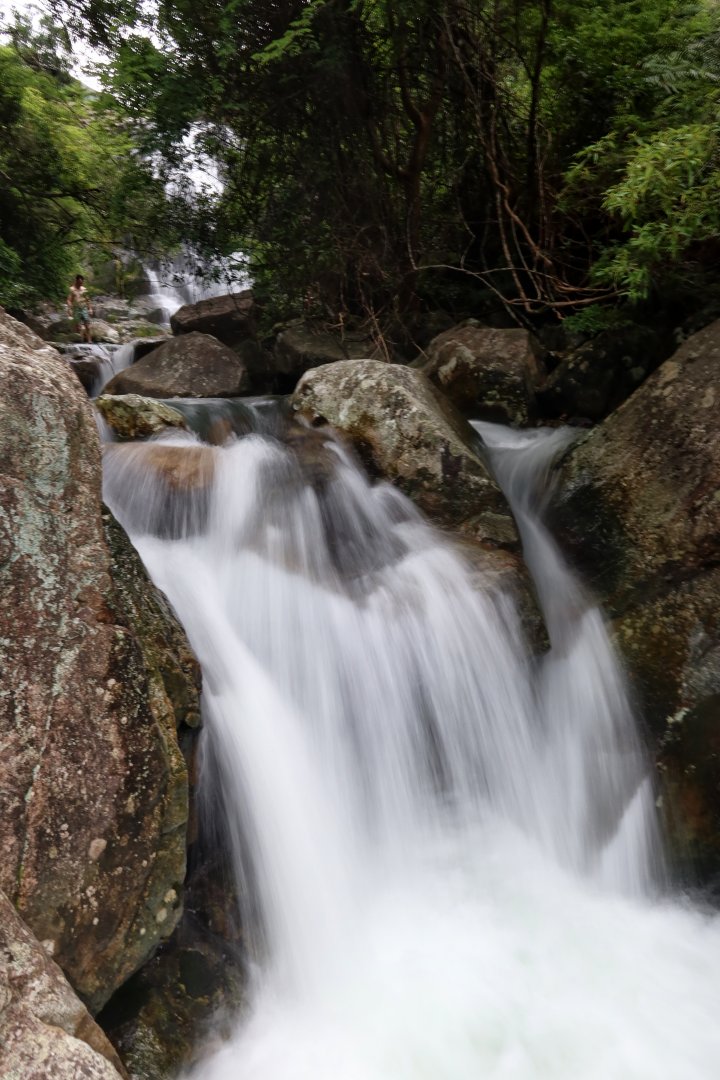
Cascade of water over huge boulders in the middle reaches of Ngong Shum Stream
A huge rock outcrop, called "West Lin Fa Tower", rises abruptly from the ridge on the left, below which the Left, Middle and Right Lin Shum Streams flow side by side. The trio are the tributaries of Ngong Shum Stream. The Right Lin Shum Stream joins the main stream just above the catchwater. Keep moving right in order to enter the middle reach of the Ngong Shum ravine. Stream water ran between the huge slippery boulders, making it difficult to climb. The water quality in the stream might not seem too bad, but definitely not clean, although pollutants from the mainstream had been largely diluted by another tributary, the crystal clear Mei Shum Stream. Though faintly, the smell of sewage was still all around, and I had to struggle all the way to avoid wading in polluted water. Approaching the altitude of 210m, a 20-meter-high waterfall appeared behind the trees, plunging into a deep pool with a rumbling sound. This is the "Nei Shum Fall". Not far away from the confluence of Ngong Shum with Nei Shum Streams, the powerful waterfall gathers water from two sources, hence the name. There is also a cave behind the waterfall, a gap on the waterfall wall, which can be climbed into and watched water plunging down from inside.
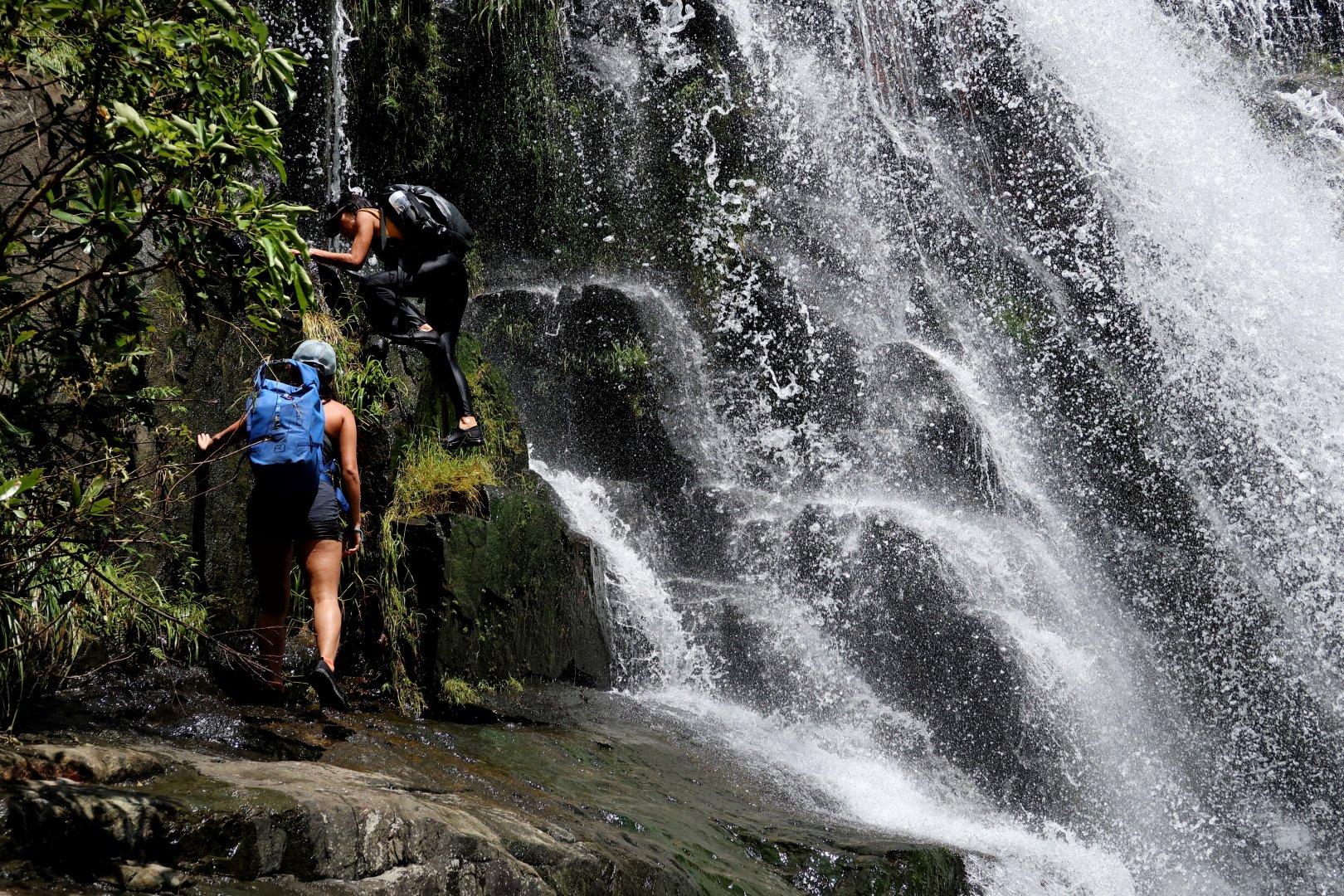
Waterfall climbing is fun in summer time, but certainly not so in polluted streams.
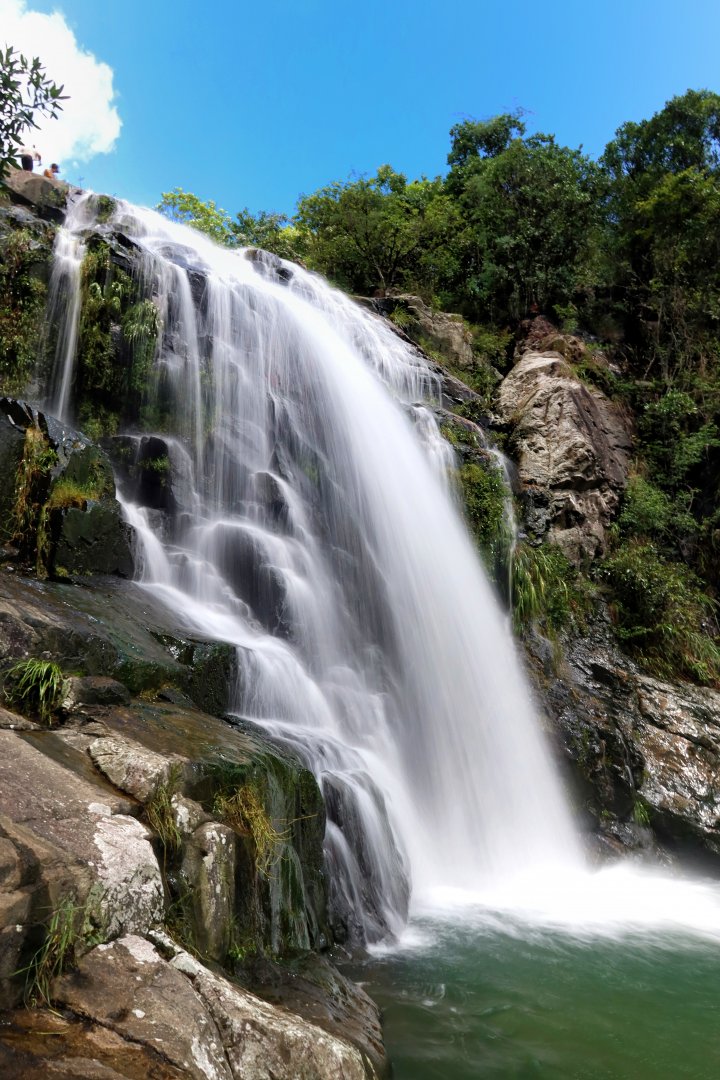
The spectacular Nei Ngong Fall
It is not entirely correct to say that I had visited Ngong Shum Stream only three times over the years. I had returned to the stream many times since then, aiming for the Nei Shum branch rather than the polluted Ngong Shum upper reach. I continued trekking to the right this time, heading for the headwater of Ngong Shum. Between the confluence and the Hoi Wui Columbarium, the horizontal distance was about 500m. With a vertical rise of 250m, one should expect to see steep cliffs ahead in the ravine. After climbing over the gloomy "Devil's Grotto Pool", a cliff nearly 100 meters tall appeared in front of me, with layers of falling water and pools. This is the Thousand-step Falls. Spectacular indeed, as long as you could turn a blind eye to the stinking stream water and the pools with foam and floating trash. The 100-meter-tall waterfall cascaded down in a series of about nine rock steps. I climbed up the steep slope of the pitcher plant on the left, and then crossed the stream carefully to the right between the seventh and eighth falls. The eighth step of the waterfall was the most difficult section. The cliff wall was a bit high, but there were still sufficient footholds. The most difficult part was trying to skip from the splashing from the waterfalls. Not only was the cliff surface slippery, but the splashing sewage was unavoidable. I could only hold my breath and climb as fast as possible. The climb was definitely not an enjoyable one.
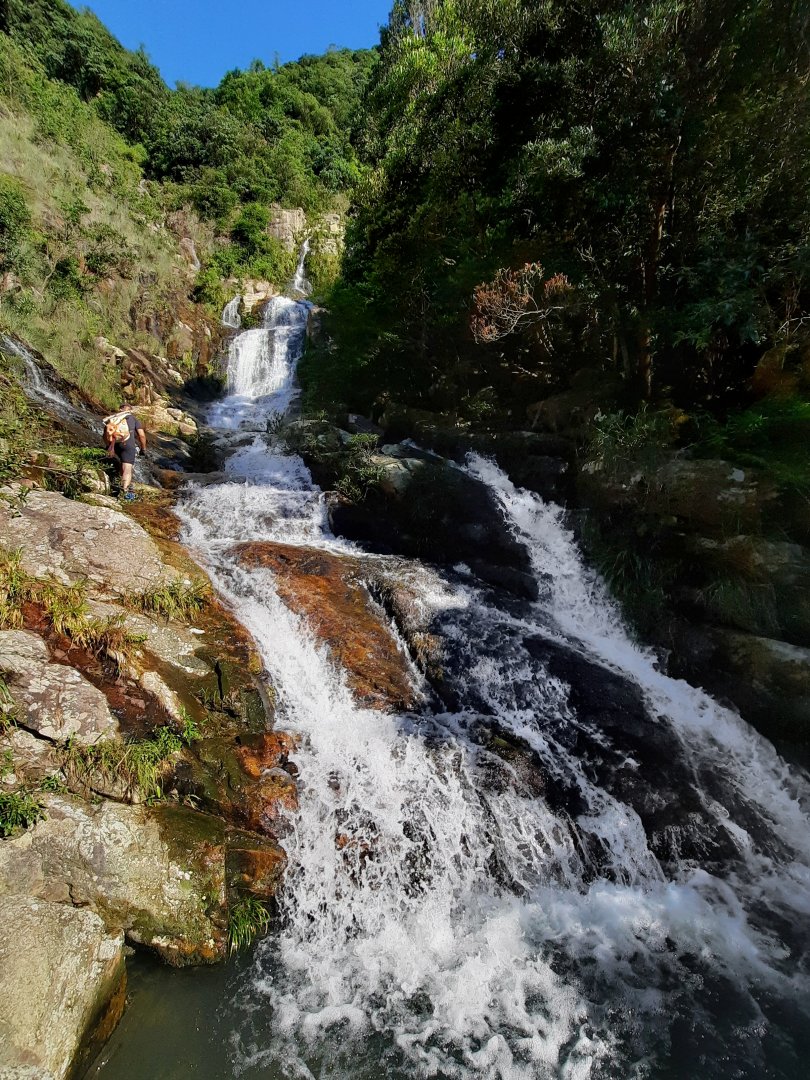
Looking up from the second step of the "Thousand-step Falls"
Above the Thousand-step Falls, there was another interesting waterfall called "Yick-Yim Fall". A tilted crack on the cliff wall formed a trough, in which the stream flowed down like a waterslide created by nature. The Hoi Wui Columbarium at Ngong Ping is the usual exit point for stream trekkers.The tourist facilities of "Ngong Ping Village" had not yet been built at the time. The flatten watercourse of the upper reach meandered through the village buildings and Buddhist monastery complexes, collecting domestic sewage and kitchen waste from the Buddhist kitchens. To stream trekkers, the impressive bird's eye view after reaching the headwater is certainly one of the rewards from a long trekking journey. It is rather ironic to see a polluted ditch instead, despite its name as a Zen temple. The ditch-like waterway (which has been cleaned up nowaday) extended along Po Ngong Road towards Po Lin Monastery. The Ngong Ping Plateau had been under development for decades, and the natural watercourse has long since disappeared. Even so, I still hoped to set foot on the true headwater. Although this stream is named "Ngong Shum", it actually begins on the southern slope of Nei Lak Shan. Walking towards the youth hostel, one can still see traces of a relatively natural watercourse, extending all the way up to the valley above the Nei Lak Shan Country Trail.
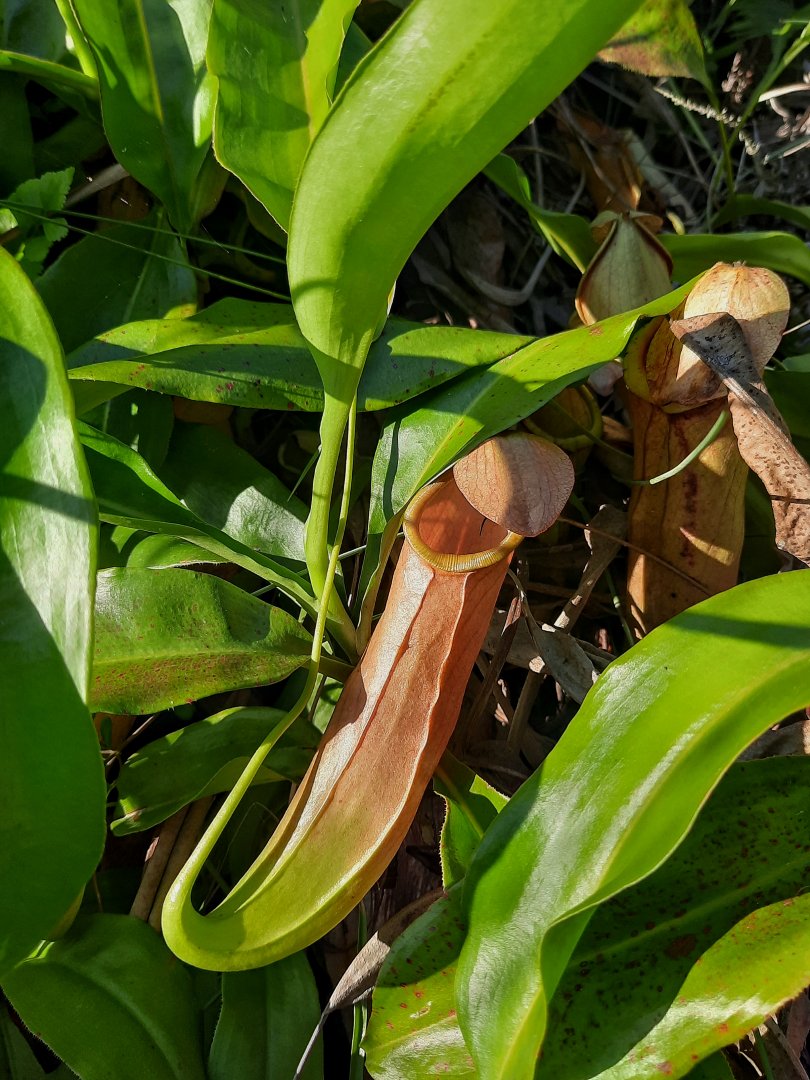
Ravine wall covered with pitcher plants
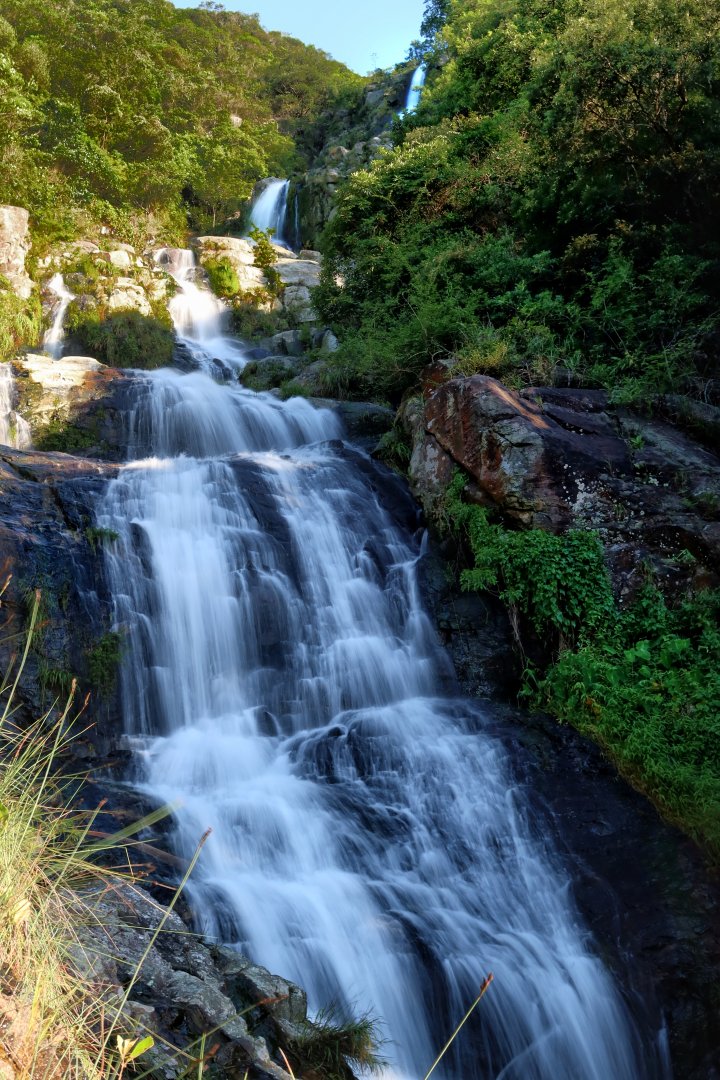
View of the Thousand-step Falls (the fourth to the ninth steps) from the slope
Although "once is enough", as a voluntary hiking leader of a local outdoor group, I did revisit the stream with the team member later, but of course deliberately chose the dry season and took the short route between the catchwater and the Hoi Wui Columbarium. The water quality of the stream has improved greatly in recent years, but it was until last year I finally made up my mind to visit the Thousand-step Falls again during the wet season. The water quality in the upper reaches had indeed improved, and the floating foam in the once stinking "Devil's Grotto Pool" had disappeared. The filth was gone, while the spectacular scenery remained, making me more willing to linger and appreciate the beauty of the flowing water, and hours passed without knowing it. Climbed up the slope to the left of the waterfall for a different viewing angle of the seventh and eighth falls from a horizontal position, which I had missed in the past. I simply had no more intention of climbing back to the ravine to complete the trek, but sat down and indulged in the beauty of nature until the sun set and the sky was filled with evening glow.
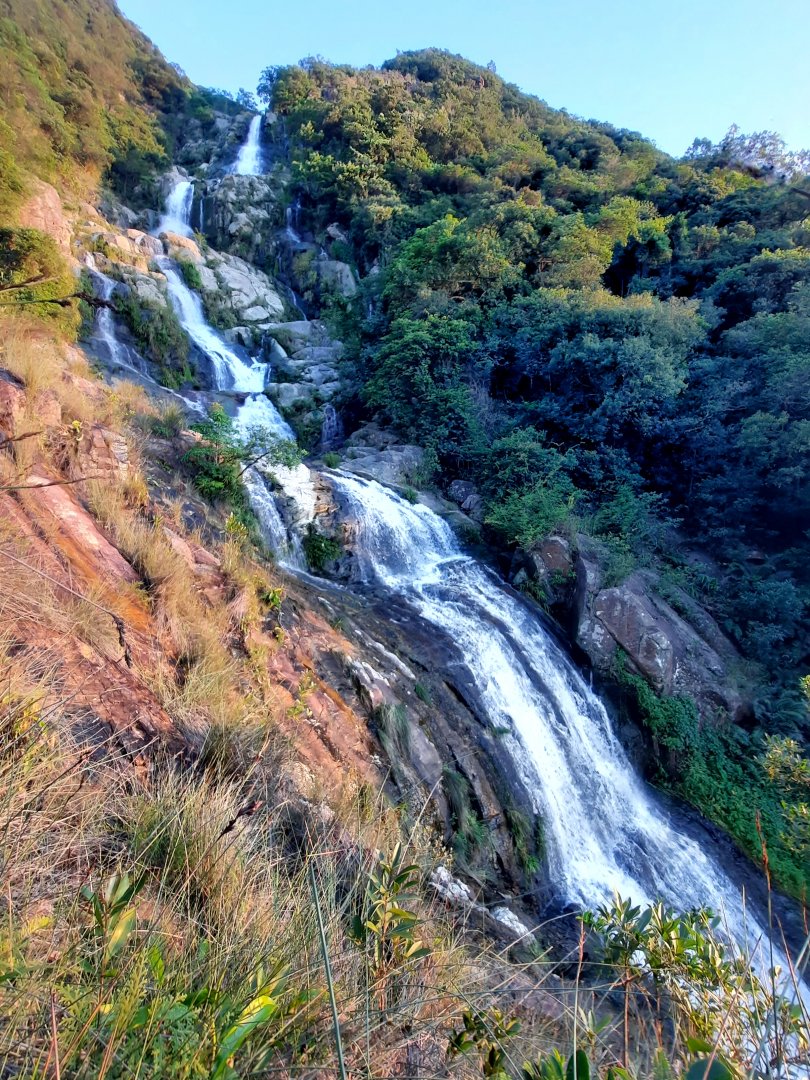
Thousand-step Falls illuminated by the setting sun
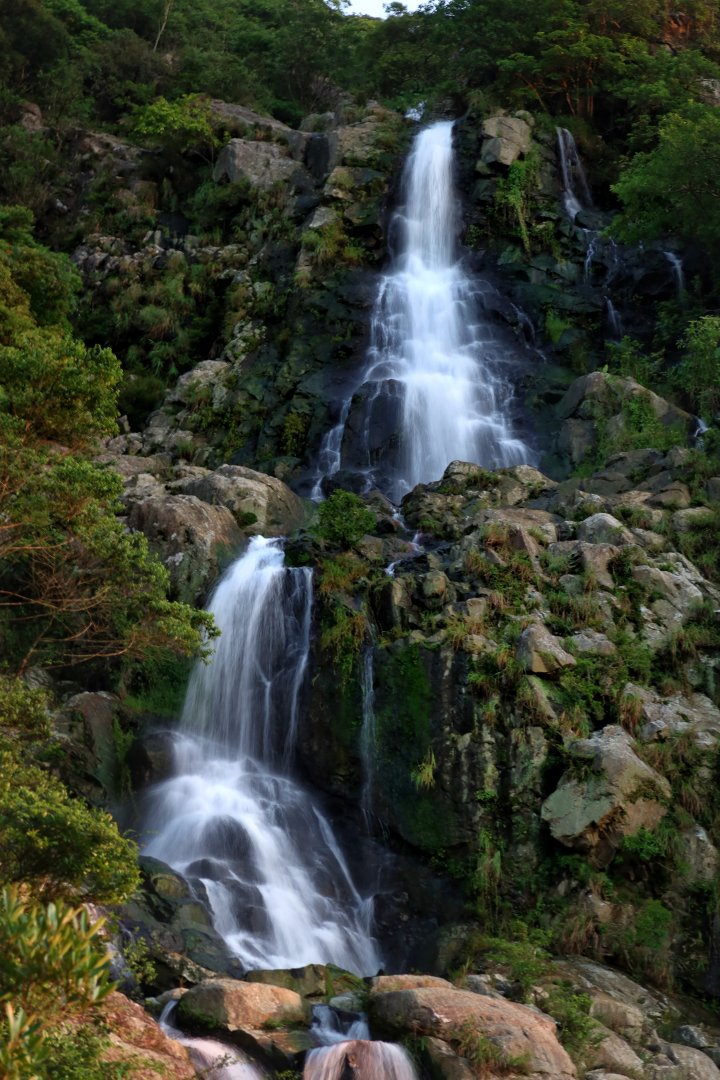
The topmost steps of the Thousand-step Falls
As I got older, I was no longer obsessed with the perfection of everything. Retreating halfway during a trip does not have to be something to be regretted. Let nature take its course and make the best of them. Before reaching the headwater, there is actually beautiful scenery halfway, and you do not have to reach the summit in order to watch the clouds rise. It is all about your state of mind.