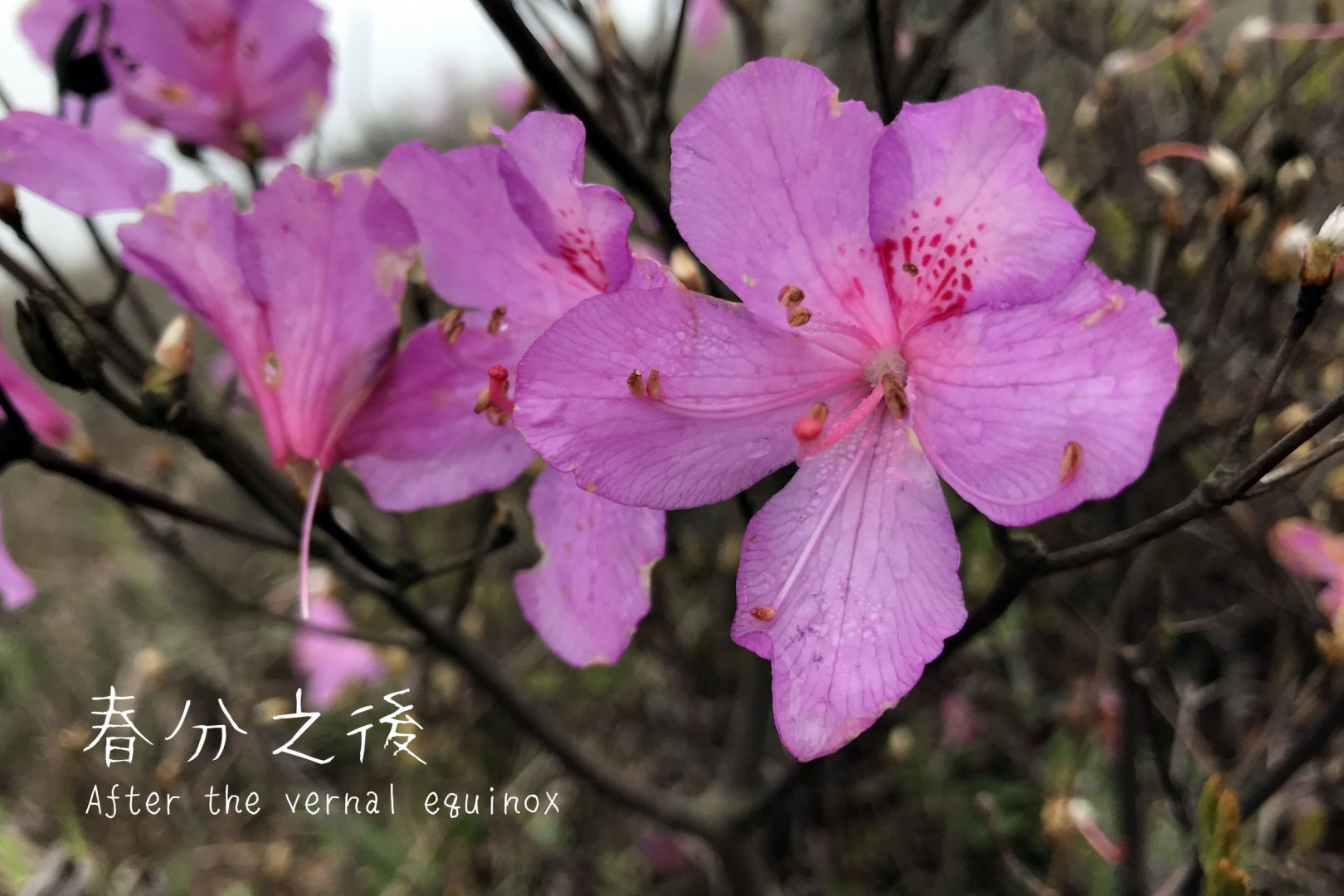
At the "vernal equinox" in March, day and night are the same length. It is the turning point between winter and summer. After "vernal equinox", the sun moves northwards, making the day long and the night short. The weather is warming up again and the flowers will soon be in full bloom. In addition to visiting the Flower Show, many hikers enjoy looking at flowers and exploring different kinds of plants on hillsides.
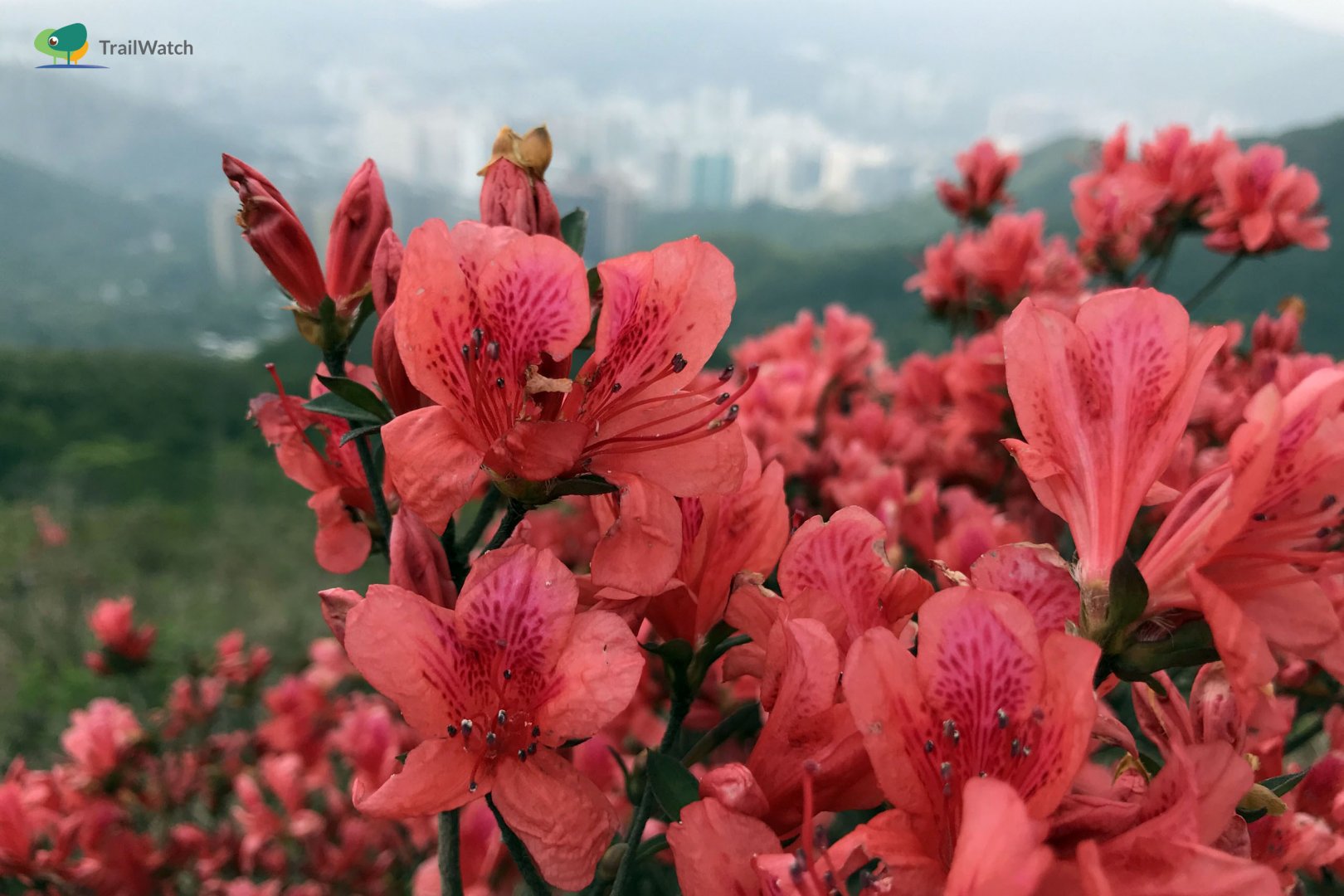
Ma On Shan : Rhododendron
Rhododendron is commonly known and comes in many species of different colours. Its Chinese name from ancient times means “blundering”. There is a kind of Rhododendron luteum, also named Rhododendron molle, which is toxic. When eaten by sheep, they become confused and blundered around aimlessly. That is how its Chinese name came about.
Route Details
:https://goo.gl/chHv1V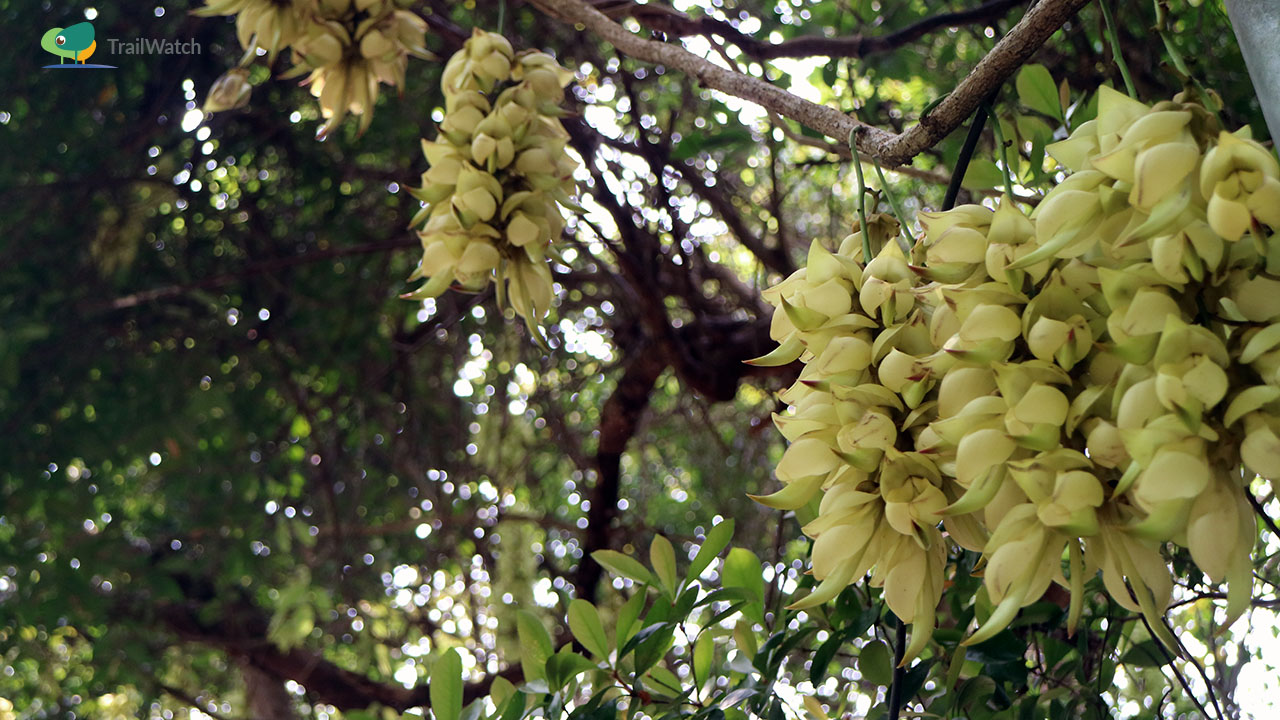
Wu Kau Tang : Birdwood's Mucuna / Mucuna birdwoodiana
If you hike in March and April, you will find Birdwood’s Mucuna easily. It is commonly found in country parks and you can see it in some urban parks too! A large native climber, its long inflorescence is crowded with flowers. The flower resembles a bird as the Chinese name indicates. The outermost petal seems like a bird’s head, the two petals on the side are the wings and the middle curled petals look like the tail! A cluster of flowers looks like a flock of rice birds packed together. It is for this reason the flowers are called "Rice Bird Flower" in Chinese.
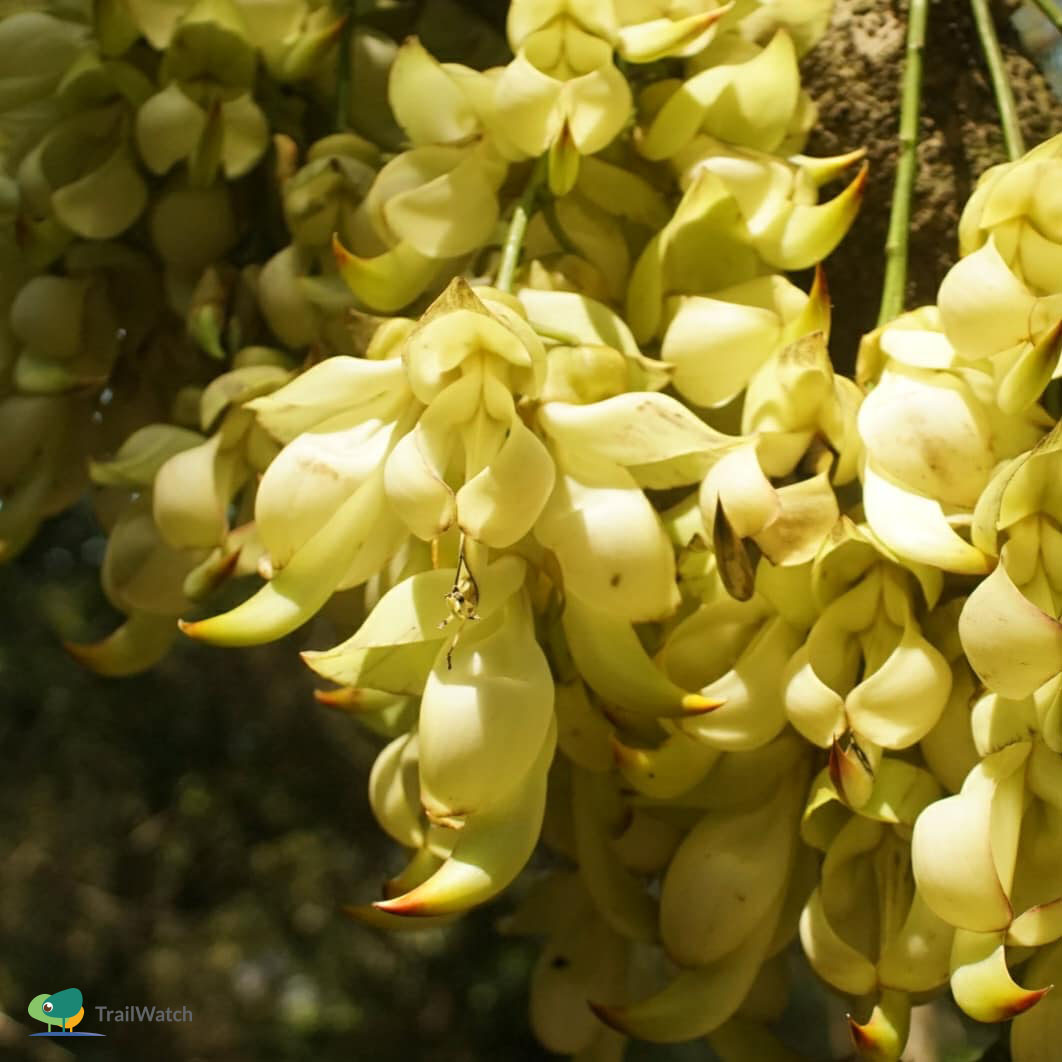
Birdwood’s Mucuna is a native plant and commonly seen in local woods. There is another similar flower named Hong Kong Mucuna/Mucuna championii which is rare in Hong Kong. The flowers of the two species look similar, though those of the Hong Kong Mucuna/Mucuna championii are purple and smaller.