Hong Kong people believe in many different Gods. Prince Charming (Anson Lo) from boy band Mirror may have attracted the most number of worshippers in recency, but Hong Kong has a long history of various temples and churches located in every corner. Many households or stores have hand-carved god statues placed at home or shops, and it is also not difficult to see “a hill of saints” in the countryside.
Community Beliefs are a Sign of Community Interaction
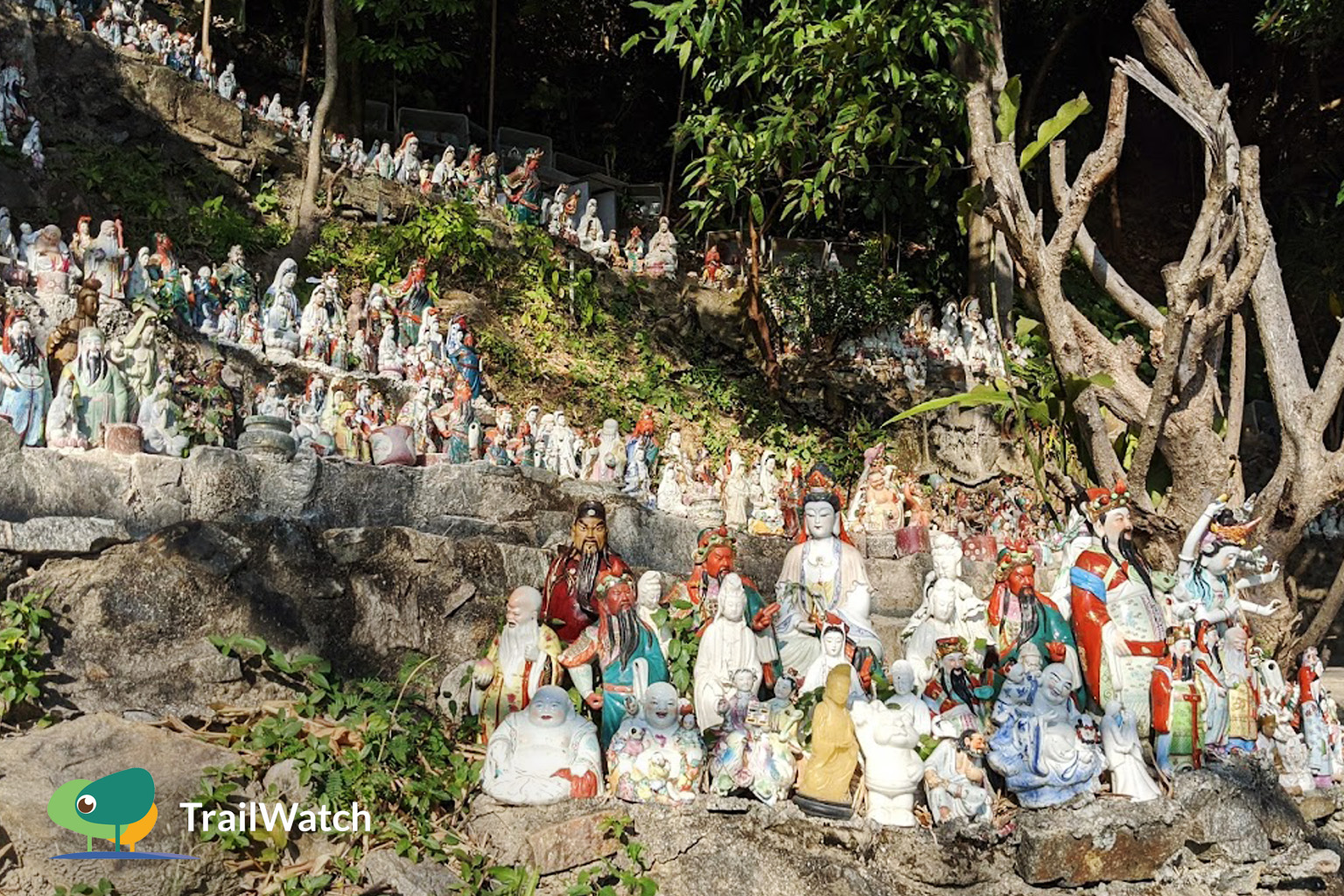
The majority of village entrances have a statue of Earth God (土地公) placed near the front to “guard” the land. At villages close to waterfronts, you might also notice a large-size Tin Hau (the goddess of the sea) close to the Tin Hau Temple. Some hikers visiting their nearby backyard trails may also bring along god statues and place them in a certain area where you will see a collection of them. These statues symbolise a comforting mind. In addition to these small-scale structures driven by the community, there are larger and more famous structures, such as the Big Buddha located in Ngong Ping, which is next to the second highest peak in Hong Kong – Lantau Peak. The most notable statue in recent years is the tall white statue of Guan Yin (Goddess of Mercy, also known as Kwun Yum) near the Plover Cove Reservoir.
These different symbols representing the different community beliefs face different destinies. One of the most known places is near Waterfall Bay, Wah Fu Estate in the Southern District. There are approximately 8,000 statues, including Buddha, Guan Yin, Emperor Guan (Guan Yu), Hindu gods, and even the Lucky Cat (Maneki-neko), all of them taken care of by the residents who live nearby.
Black Hill, located in Kowloon East, is adjacent to the residential areas of Lam Tin and Yau Tong. It was originally home to a group of statues that had been placed there by morning hikers over a span of 30 years, but it was cleared by the Lands Department in 2017, which caused many repercussions in the neighborhood. Some people consider the statues as collective memories of the nearby residents, and believe there is no need to dismantle the spaces that link up people and land since these spaces do not pose any threat. On the other hand, Mount Parker in Island East also has the famous “Child-giving Guan Yin” statue. The AFCD officials who manage the area regularly clean up such areas but not the statues in order to preserve the beliefs and customs of the community.
The Desolated Giant Rock and the Lost of Statues
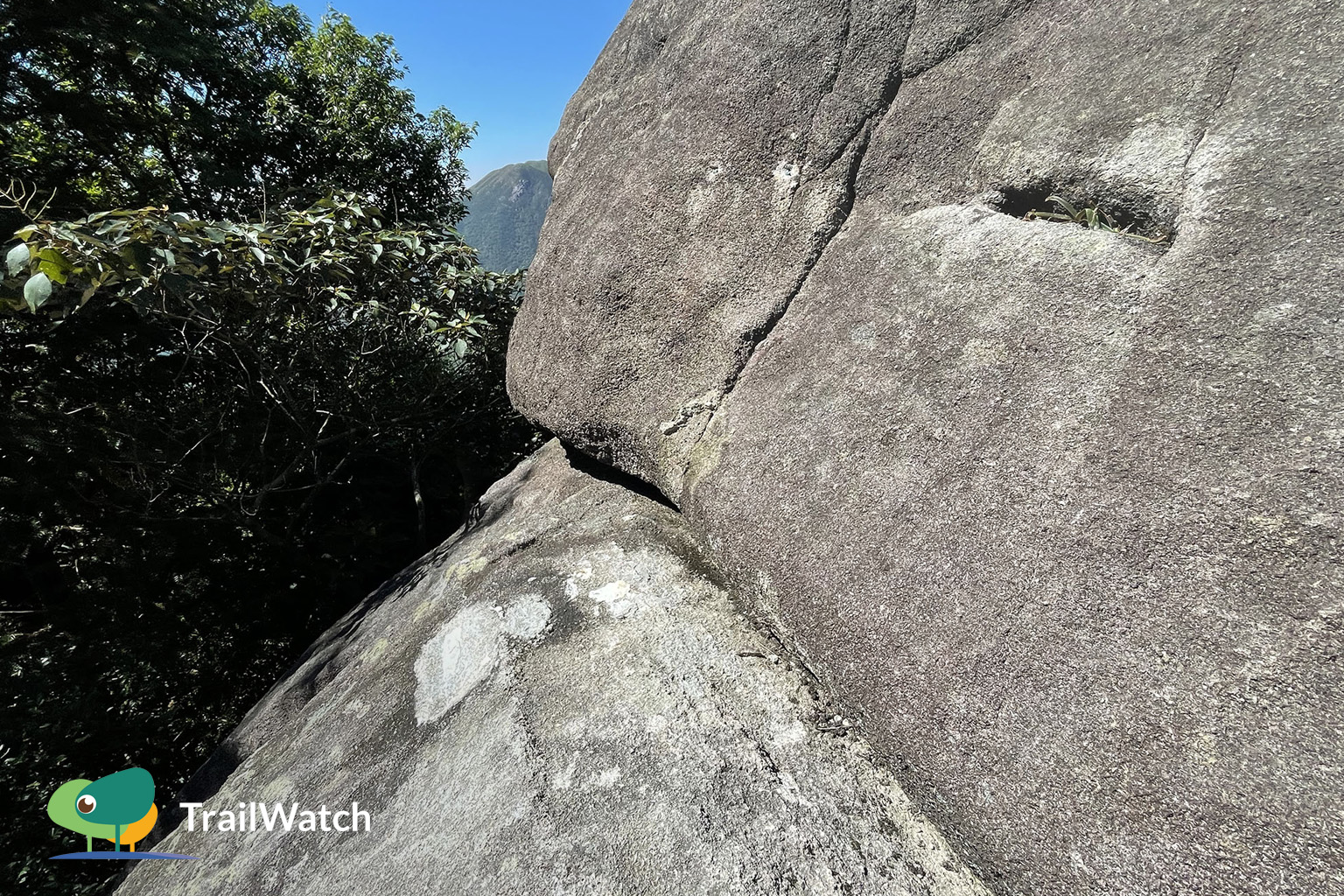
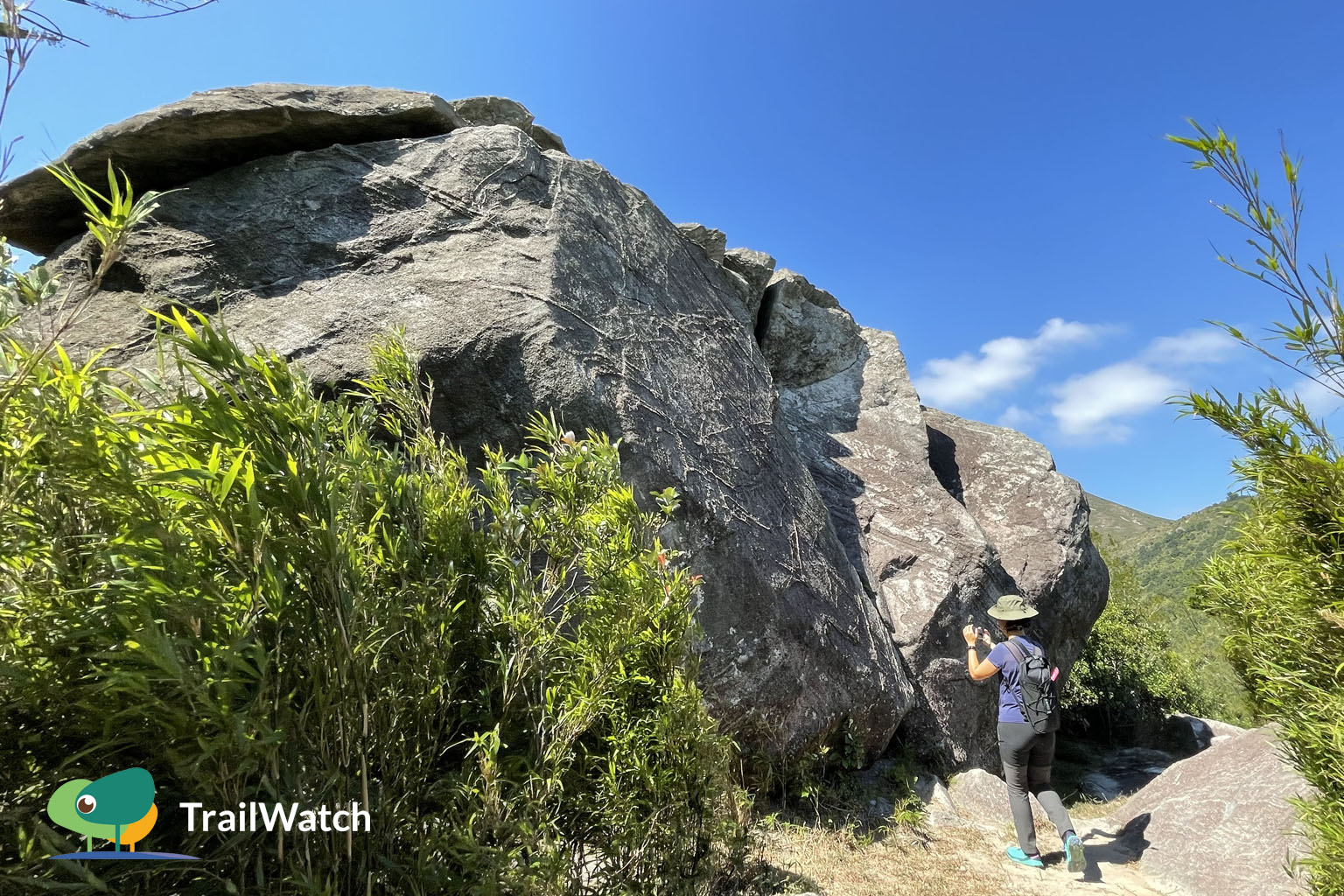
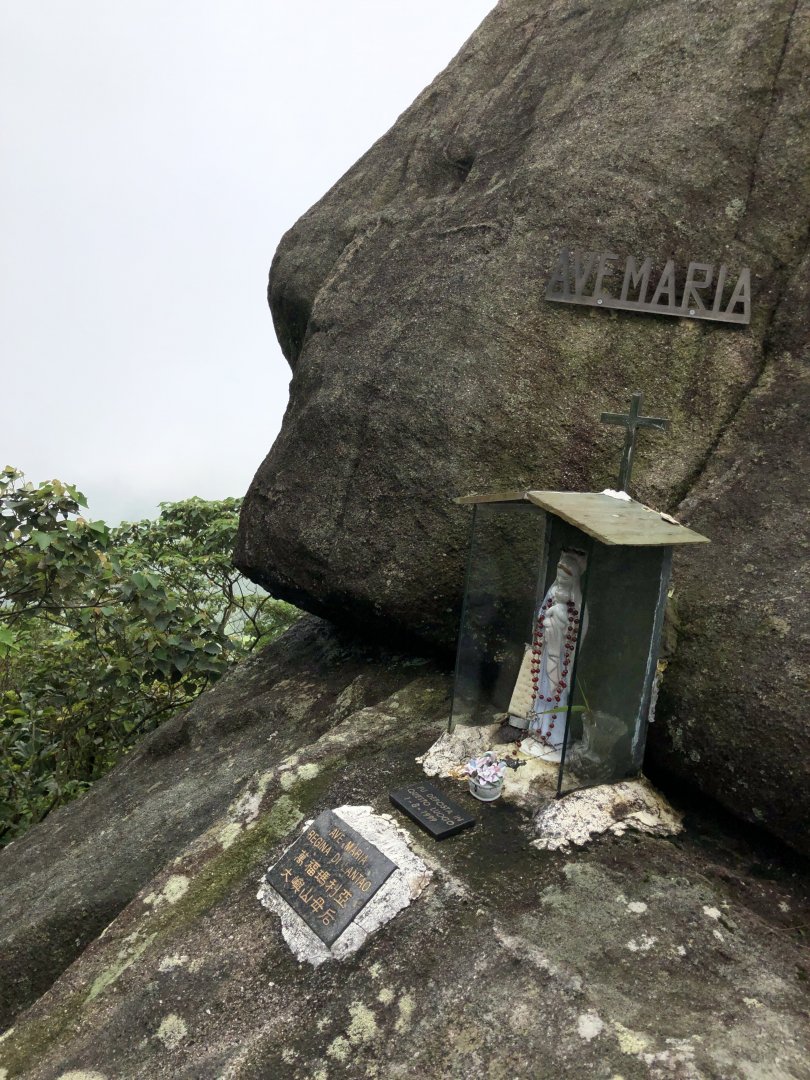
South of the spectacular Lantau Peak, there is a mysterious giant rock on the trail that is almost 3m tall. The pit marks on the rock look like scars, some are deep and some are shallow, some are long and some are short. The middle of the rock seems to have been cut through by a giant sword and stitched back up again. The rock is an artwork by nature and is known as the “Cheung Yan Rock” (長屻石). Although the rock is located near popular hiking trails, there are not many visitors. This place is famous for its statue of Mary the Blessed Virgin placed on one side, and the statue of Guan Yin placed on the other side. There is a stone monument written in Latin and Chinese, “AVE MARIA REGINA DI LANTAO 萬福瑪利亞 大嶼山母后” (which translates to Hail Mary, the Queen of Lantau in English).
(Photo credit: 山系凡人Mortal Hiker)
Throughout Hong Kong’s countryside, it is common to find Guan Yin statues, but not that of the Blessed Virgin. It is believed that the placement of the statue of the Blessed Virgin by Cheung Yan Rock is related to the relocation of Our Lady of Joy Abbey into Tai Shui Hang, Lantau in 1950. According to its official website, the former Our Lady of Joy Abbey was in Zhengding County, Hebei Province in North China. Due to the founding of New China, the monastery was built in the isolated Lantau after several escapes and other difficulties. Faced with impending changes around Lantau, we wonder, will the Queen of Lantau be driven away again?