These past few months, while everyone still goes out with a mask on, country parks have become one of the few places where we can take them off, and breathe deeply while reconnecting with nature. During these pleasant moments, unexpected occasions such as getting lost, a sudden change in weather, companions feeling unwell or being stung by insects can arise. Accidents are uninvited and difficult to predict; having the mindset at that very moment is critical. We analyse some recent scenarios so you can be better prepared to face different unforeseen situations.
Last month, Ms. Yeung decided to hike alone along one of the well-known but challenging trails around Plover Cove. She started at Wu Kau Tang to visit the famous sightseeing spot “Devil's Fist”. Ms. Yeung asked for some basic advice over the internet one day prior to her trip, during which some people tried to persuade her to cancel the hike due to the bad weather forecast. However, she insisted on going. On the day, some people started to get worried because no news was heard from Ms. Yeung for a long time — it turns out, Ms. Yeung needed to be rescued by the Government Flying Service. It was fortunate that she did not get injured and everyone was relieved, but her 28-hour incident instigated many discussions.
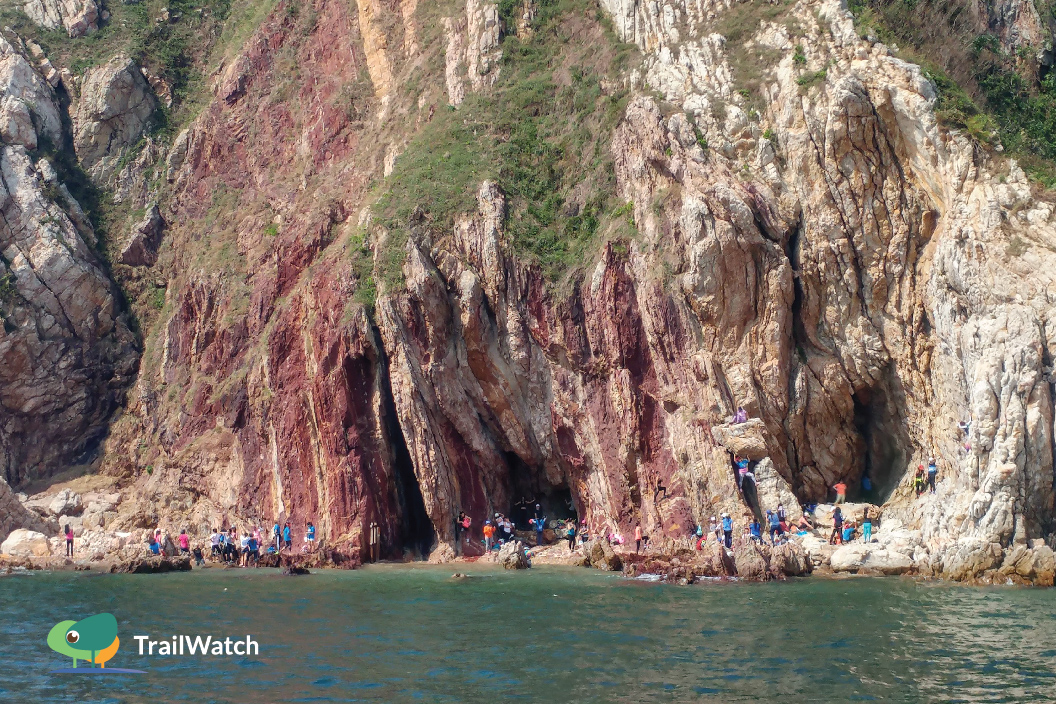
As the weather begins to cool down, FamJ, who does not exercise regularly, scheduled a hike with three friends, also going to Plover Cove. They chose an intermediate route going from Wu Kau Tang to Lai Chi Wo and back to Wu Kau Yang via Sam A Tsuen; however, it was the day before the arrival of a typhoon. Though it was a sunny day, the temperature was not too hot, but there was no breeze. When they reached the store in Sam A Tsuen, FamJ who suffers from asthma, experienced an attack and could not continue on the journey. Luckily, she had brought her medicine and her friends immediately sought help from the villagers to call a speed boat to pick them up. They even passed by “Devil’s Fist” on their way back and finally safely reached home.
1. Know Your Limit and Feel No Shame to Return
FamJ and her friends chose a relatively leisurely route to visit the Northeast, while Ms. Yeung decided to challenge the physically demanding long distance trail on her own. FamJ and friends knew that they do not exercise often so they planned a route that is suitable for their level and had multiple exit points which allowed them to look for help when FamJ had an asthma attack.
Pursuing a 30km route alone, Ms. Yeung might have perceived she had better physical strength than the FamJ group, but the long trail she picked does not have any exit point during the hike. By the time she had hiked half the length of the route, it was already 5pm, and hiking in the dark would not have been ideal. If she could have estimated that she would be unable to finish the entire route earlier in her hike, she would still have had the choice to go back without staying overnight in the wild, and unnecessarily worrying herself and others.
2. Pick the Right Day
An auspicious day is not only important for weddings but also for hiking. It was better for both FamJ and Ms. Yeung to wait for another time to hike. Although there was no rain, the muggy weather before the typhoon did not help FamJ’s predisposed asthma condition.
Ms. Yeung set off on a day when the Hong Kong Observatory has predicted unstable weather, which increases the challenges and risks of the itinerary. Additionally, she was unable to complete the entire route as planned, requiring her to spend the night in the mountains in order to continue the hike the next day. Fortunately, the weather became more stable at 11pm that night and Ms. Yeung was able to keep her clothes dry, so she showed no symptoms of hypothermia. However, it could have been fatal if the weather deteriorated and she was soaked for a long time.
We recommend to always check the weather forecast from the Hong Kong Observatory regularly, not only before the hike, but also during the hike. If the weather is not stable and you want to go on a hike, choose a route with more exit points so that you have options to leave the hike as necessary, and always prepare a backup plan.
Choosing a perfect day to complete a challenging route also needs time and energy to plan, like planning life events!

3. Be Prepared to the Max
In both cases, FamJ and Ms. Yeung did have some preparations for their trips. Ms. Yeung was able to cover herself with an umbrella to keep warm during the night, and she had enough water and food when the Flying Service team found her. FamJ and friends also had enough water, sun protection, medication, as well as cash to pay for the expensive boat rental fee. It is a good practice to bring enough water, food and personal medicine for hiking. An inexpensive and light space blanket could also be a lifesaver in Ms. Yeung’s situation, as it can help the body to stay warm at night.
4. Never Hike Alone and Keep in Touch
In FamJ’s case, a group of four can split up to search for assistance when an emergency occurs. Some can accompany the unwell friend while others can find villagers for help, which lowered the risks. Ms. Yeung hiked without a companion and her phone did not have enough battery for her to keep in contact with her family. Her family got worried because she did not return all night and they reached out to the emergency services.
When the Flying Service team found Ms. Yeung, she claimed that she was physically fit to continue on her hike. Nevertheless, her family made a correct decision to contact emergency services when her situation was unknown. This scenario shows that having incomplete information caused by the lost contact can create miscommunication, and the best way to avoid such situations is to hike with somebody.
In these two cases, having good physical fitness alone cannot prevent one from encountering accidents, having accurate judgement and adaptability are also very important. We hope you remember these four tips, set off safely in the coming hiking season and return home feeling satisfied after a positive hiking experience!