
People who are new to hiking often are not too familiar with the environment and sometimes misunderstand and underestimate it. For instance, the length of a route and its difficulty level may not necessarily be related. The weather in the mountains is not always predictable and accidents can suddenly occur; therefore it is vital to plan ahead with your hiking buddies and be well-prepared to minimise any potential risks of hiking.
Before we dive into the details, check out 【Plan Well Hike Safely Enjoy Nature's Beauty】- Episode 1:

Credit: 【Plan Well Hike Safely Enjoy Nature's Beauty】TV API – Episode 1, Agriculture, Fisheries and Conservation Department
Step 1: Prepare what you need
Everyone must have heard that a map, compass and sufficient drinking water are essential to carry in your hiking backpack. What else do you need?
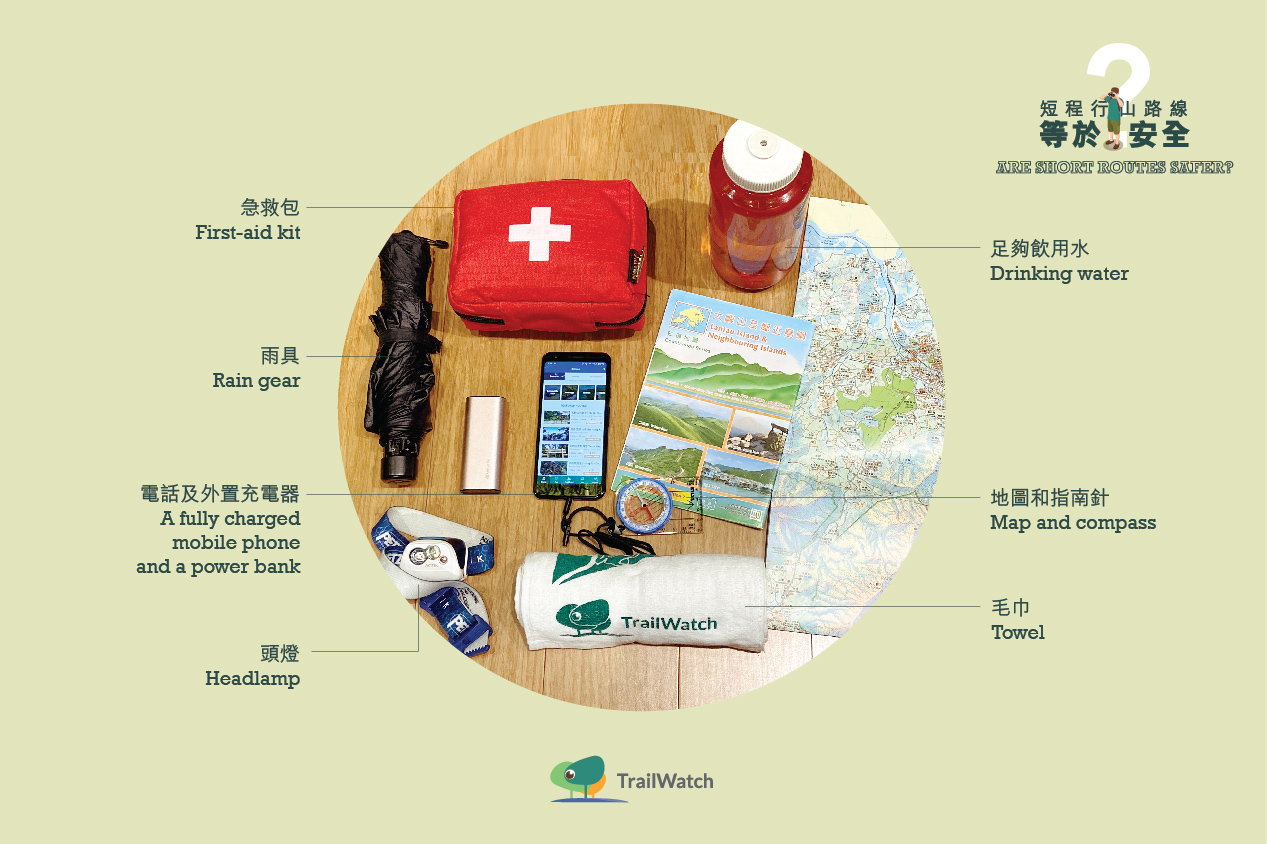
– Appropriate clothes (top, trousers and socks)
– A pair of snug-fitting hiking shoes
– A backpack for outdoor activities
– Towel
– Drinking water (bring extra for emergency use)
– Nutritious snacks
– Map and compass
– A fully charged mobile phone and a power bank
– Whistle
– First-aid kit
– Rain gear
– Headlamp (don’t forget to charge the battery!)
Step 2: Plan and know the route
The Featured Routes from TrailWatch or route information from Enjoy Hiking provide information that you need to know before hiking. Know your own (and your buddy’s!) physical condition to choose a suitable route, bookmark a route using the TrailWatch App and follow this route on your hiking day. Try the planning function of the app, and familiarize with the route to know where the start, end, rest points, supply points and emergency exits are. Visit the official trails. To minimise chances of getting lost or encountering accidents, avoid shortcuts and hiking at night.
Share your plan with family or friends before hiking, and track your route during the hike (which allows you to also keep a hiking journal). Be safe and don’t hike alone.

Credit: 【Plan Well Hike Safely Enjoy Nature's Beauty】TV API – Episode 2, Agriculture, Fisheries and Conservation Department
Step 3: Keep an eye on Weather Conditions

Credit: 【Plan Well Hike Safely Enjoy Nature's Beauty】TV API – Episode 3, Agriculture, Fisheries and Conservation Department
Be aware of the weather at ALL times, before and during the hike, including for days in advance. Heat illnesses may happen in summer while hypothermia can happen in winter; wear and pack clothes according to the weather.
Hong Kong Observatory collaborated with the Agriculture, Fisheries and Conservation Department and launched the Hong Kong Hiking Trail Weather Service, which provides weather information at hiking hot spots. Scanning the weather information QR code located at the information board of the country parks will show the latest weather forecast, including rainfall distribution in the next two hours and lightning situation in the next hour.
Hiking seems to be easy but the crisis may be hidden. You can’t control what nature will do, but you can control how prepared you are.
One final note: anytime you go hiking, take your litter home and leave no trace in the mountain!
Further Readings:
【Myths of Mountains】 When Hiking Meets Thunderstorms
【Myths of Mountains】How to Stay Chill?
Hiking in hot weather (Series 1)
Hiking in hot weather (Series 2)
Other Information:
Safe Mountaineering, Civil Aid Service