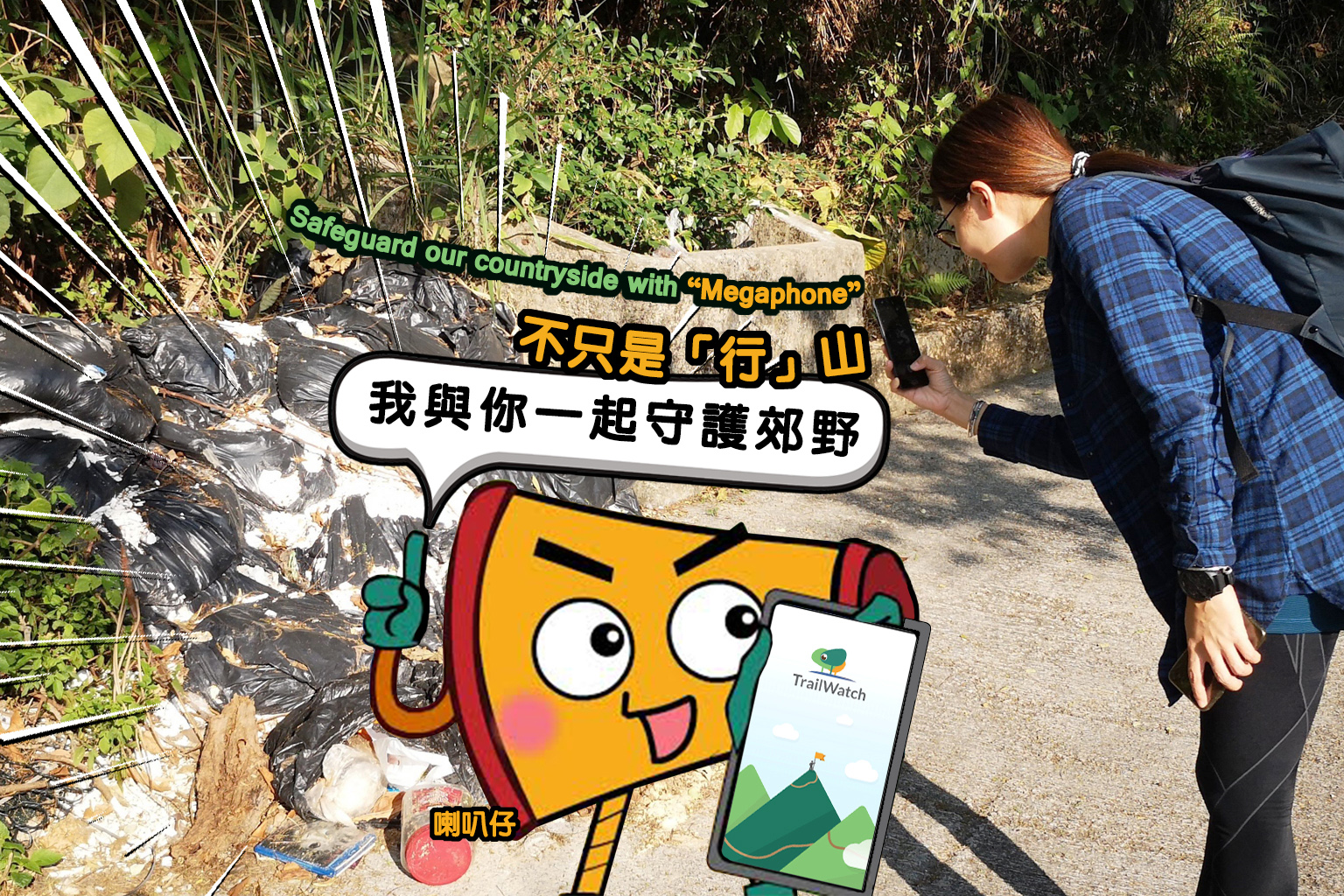
Safeguard our countryside with “Megaphone”
Some might like to put their phones aside while hiking, but what if snapping a few photos can protect and ameliorate the environment in countryside? Have you ever seen trash on the trail that is an absolute eyesore but you cannot clean it up yourself? Ever came across trees that are skeptically chopped off or devices that suspiciously look like animal traps and not know what to do? Besides recording your hiking journey, the TrailWatch App also offers an unique function for reporting incidents. The information will be passed on to relevant governmental agencies and organisations for follow-up actions in order to protect our environment. Due to the technological features of this function, reporting incidents via the TrailWatch app has allowed investigation and actions to be taken much more efficiently. However, this would not be made possible without the input of nature lovers like you who relentlessly unveil and report to us on-site problems that need to be addressed.
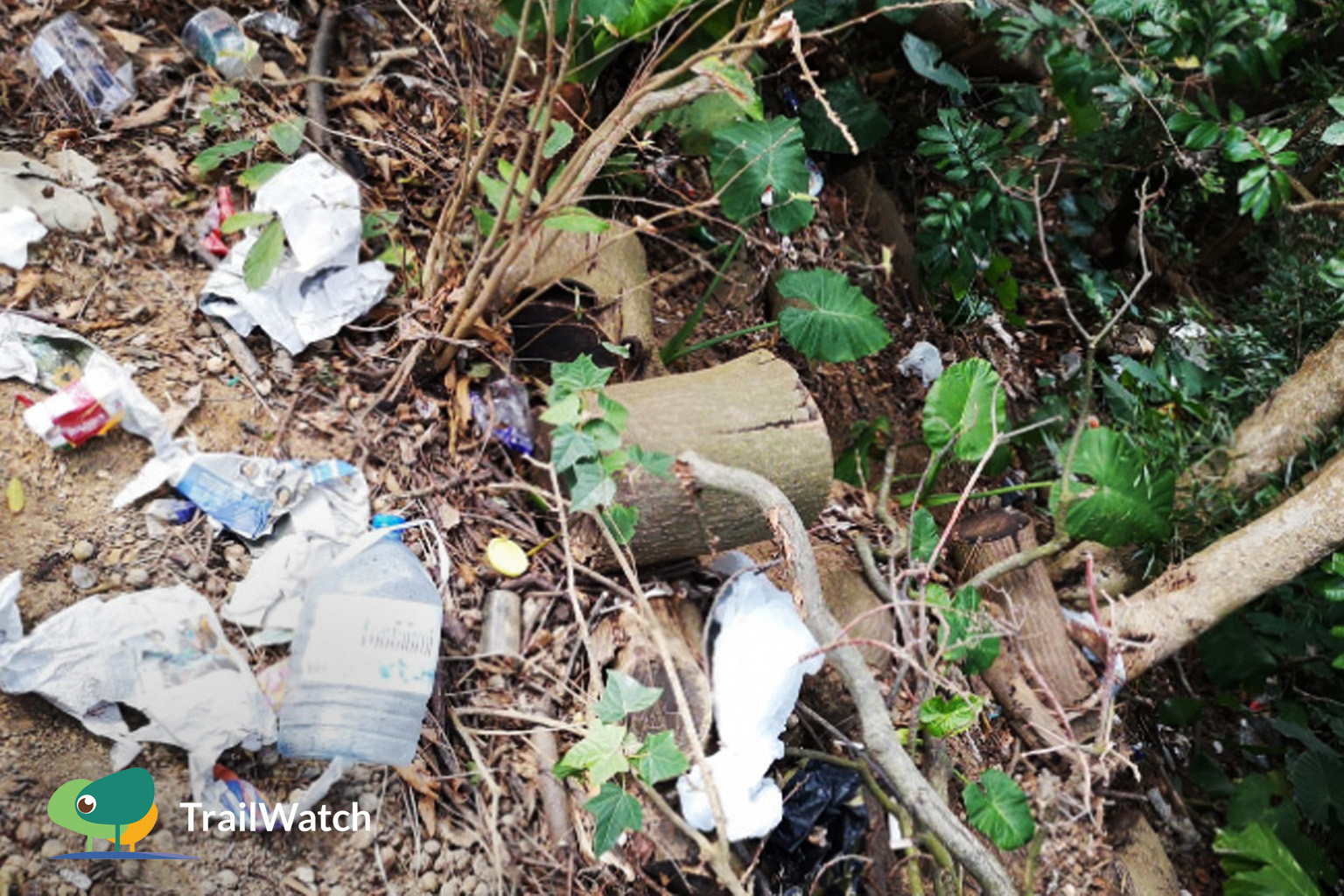
An incident of “waste dumping”
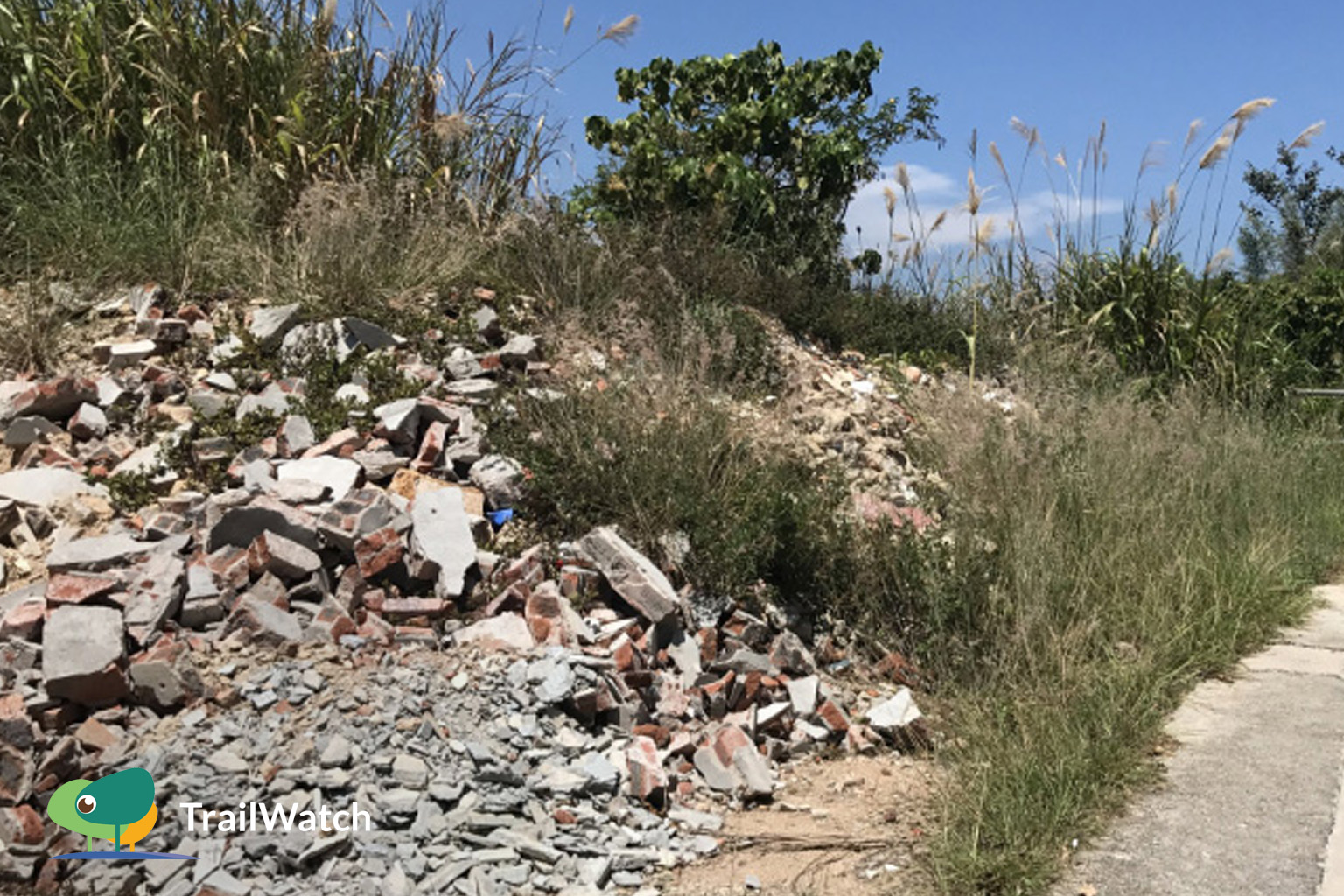
An incident of “fly-tipping”
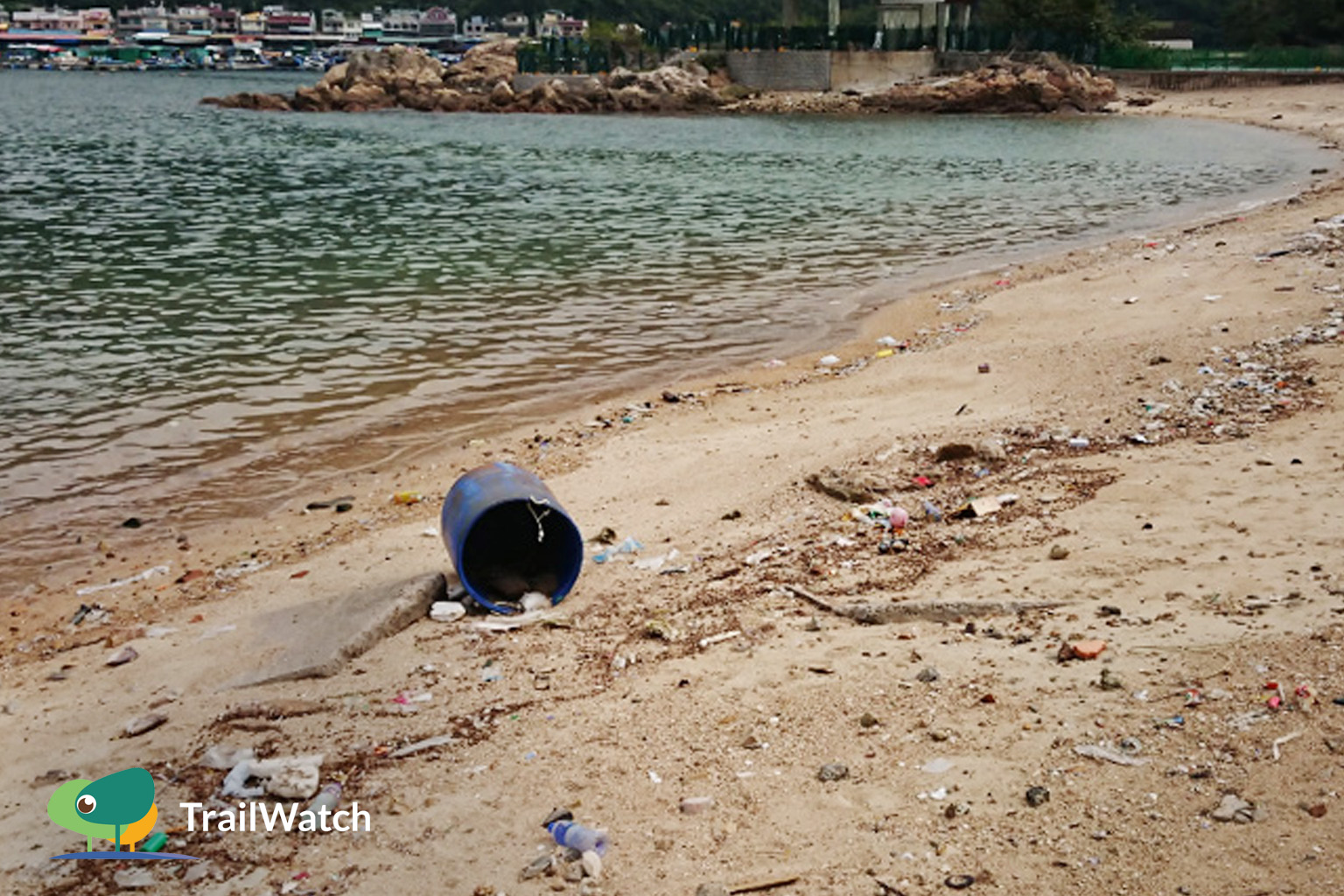
An incident of “marine litter”
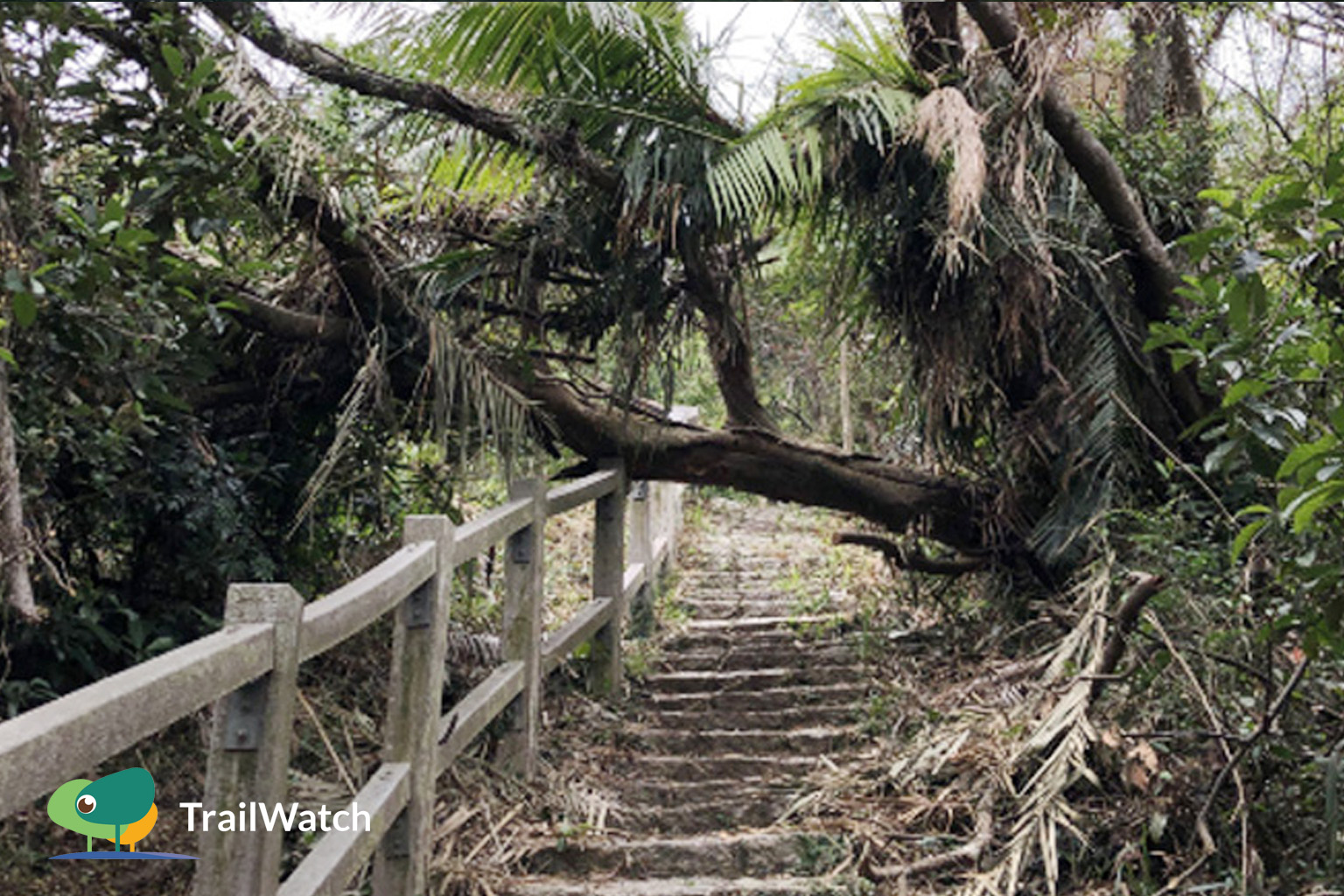
A sighting of a fallen tree, categorised as “danger”
Click on the “megaphone” icon to instantly report an incident
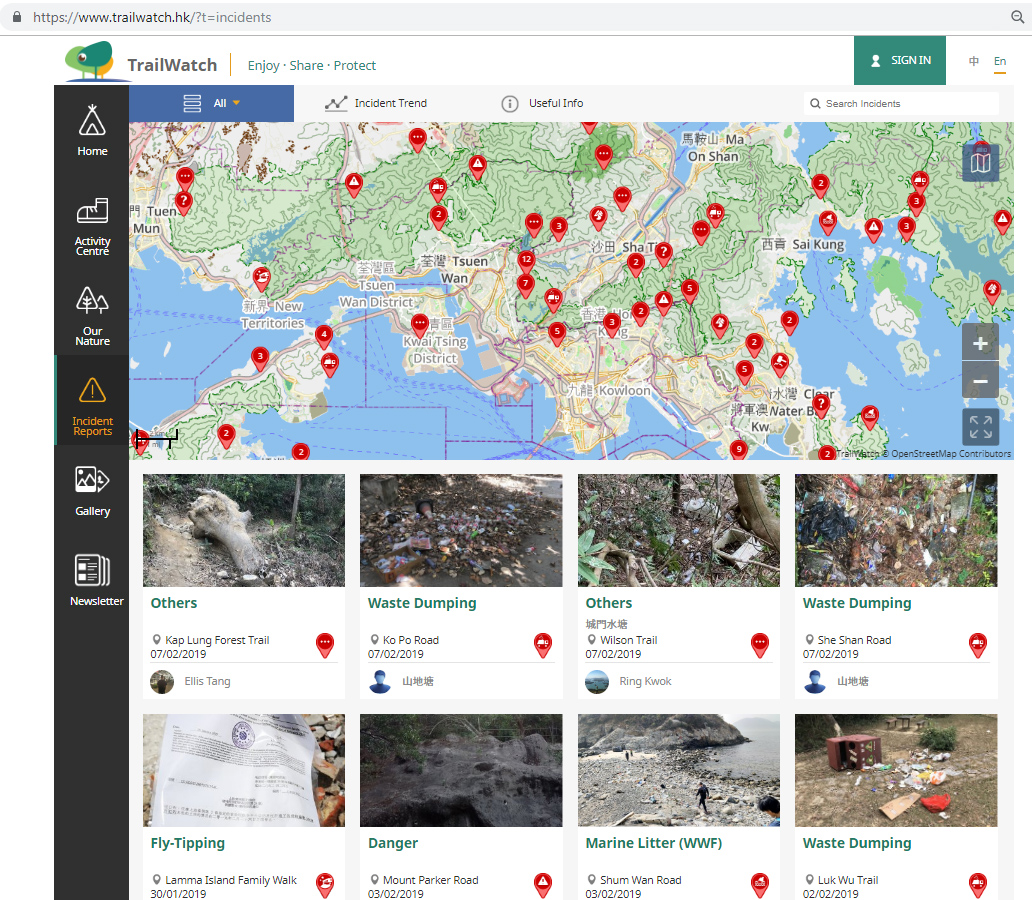
Our country parks span a massive area, thus it is not always easy to quickly describe the actual situation and pinpoint the exact location when one tries to report an incident or give feedbacks to certain agencies and authorities, thus causing delay in the handling process. As most people have smartphones in hands nowadays, reporting incidents cannot be made any easier. Through the TrailWatch App, the reporting function allows users to upload photos of the actual sighting at real-time while the GPS coordinates are being logged simultaneously, which enhances the precision and accuracy of the information. After sorting the reported incidents by districts and categories, the TrailWatch team will then pass on the cases to the responsible governmental authorities or agencies. This hugely reduces the administrative procedures required when cases are being transferred between departments, thus speeding up the handling process. Most of the trails might comprise of multiple sections that do not necessarily belong to the jurisdiction of Agriculture, Fisheries and Conservation Department (AFCD). In fact, many of the cases concerns area that should be handled by Food and Environmental Hygiene Department (FEHD) and Leisure and Cultural Services Department (LCSD) instead. “Reported Incidents” are made available on the TrailWatch website for the general public, who can view any recently reported incidents and follow their current status.
TrailWatch has given the original “megaphone” icon a new animated look that is more colourful and eye-catching. Through the app, users can also view the incidents they previously reported and check their latest status.

Immediately report any suspicious sightings in countryside by tapping on the megaphone icon (bottom right corner)
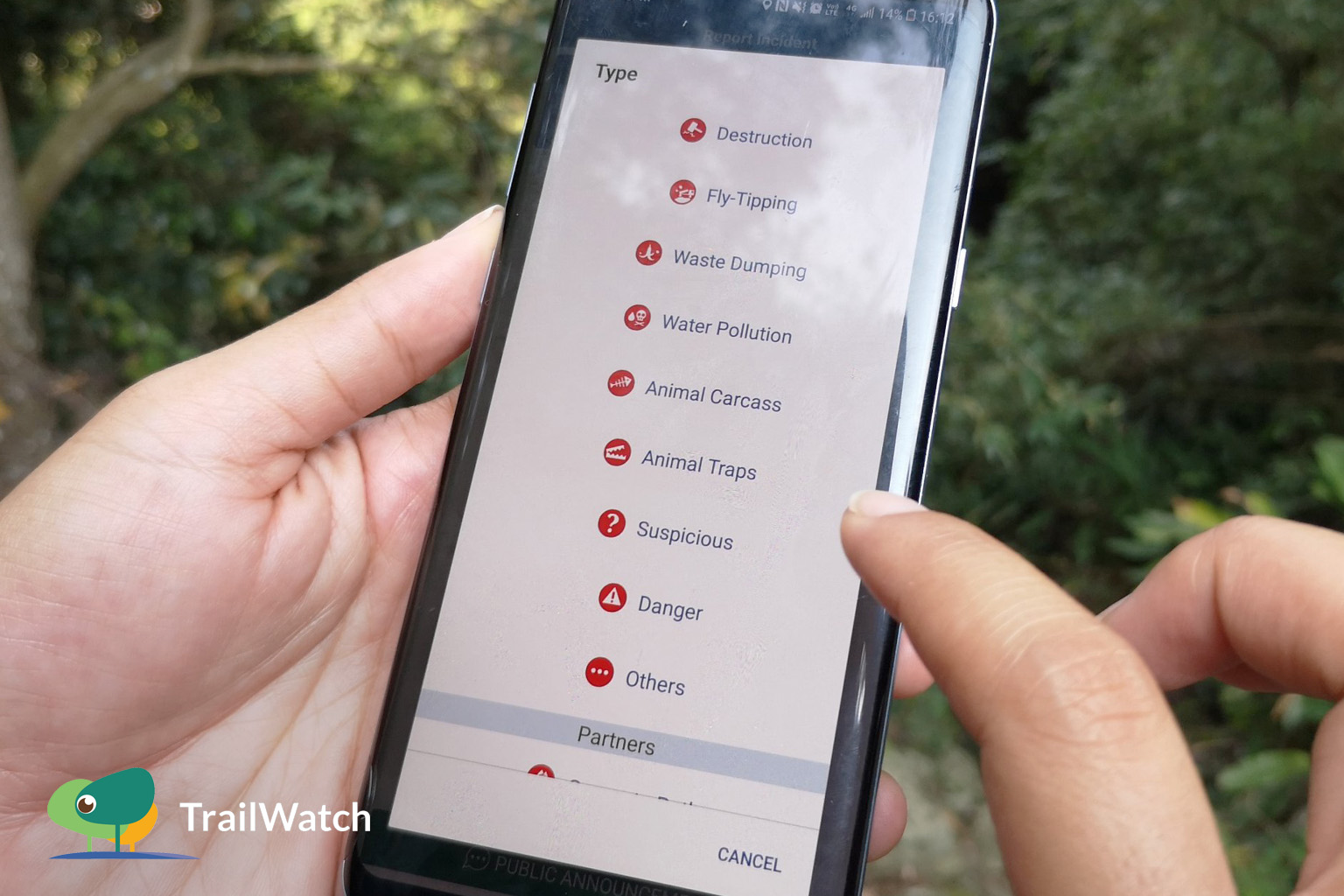
Select the categories of incidents when reporting it on the TrailWatch App
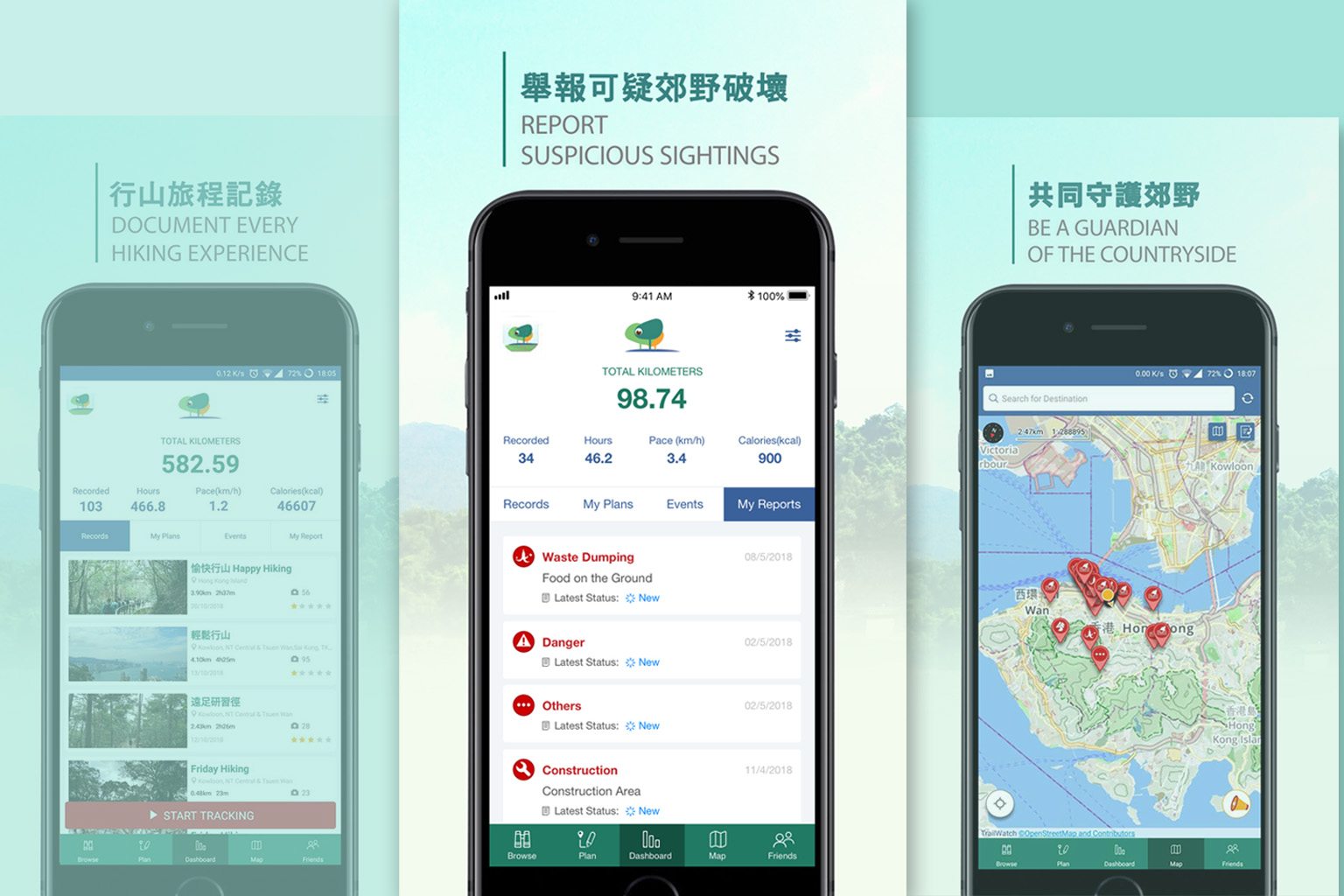
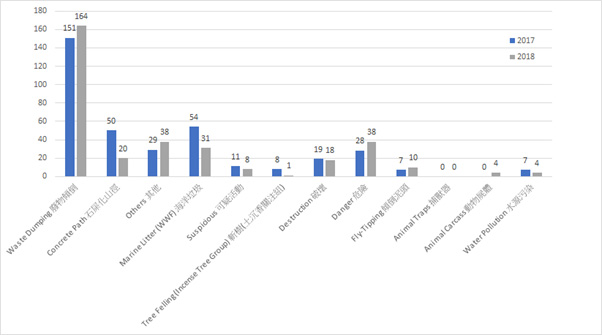
High number of reported incidents have been handled
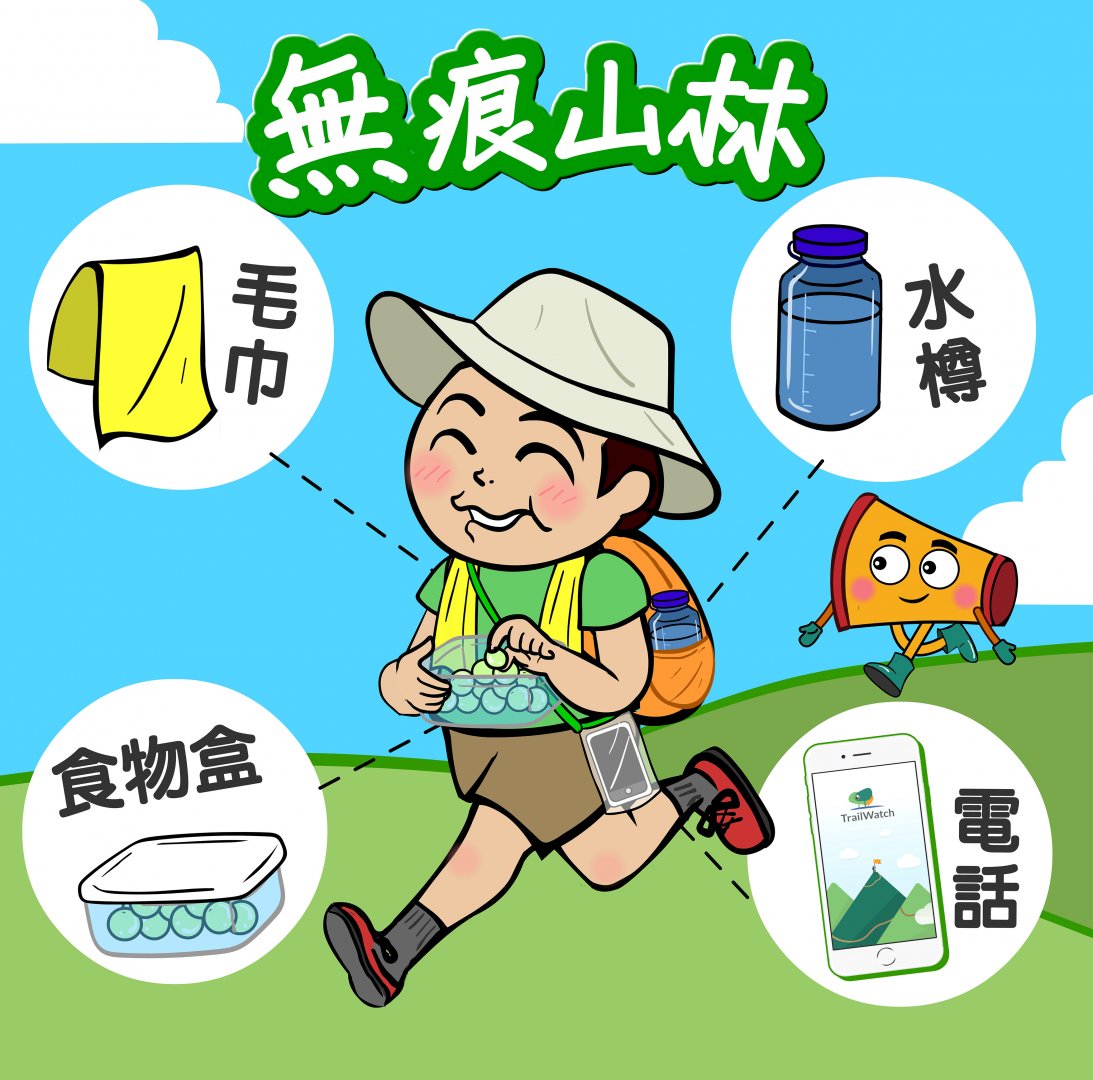
Practice “Leave No Trace” to reduce waste at source
A civic movement to monitor and protect our country parks
Extended reading:
- Browsing incidents reported by users:https://goo.gl/QDzC5Y
- Protecting ancestral incense trees with an app: https://goo.gl/jytb1h
- No more litter bins in country parks:https://www.trailwatch.hk/?t=blog&i=407
- Press release on the next phase of “Take Your Litter Home”:https://www.afcd.gov.hk/tc_chi/publications/publications_press/pr2092.html