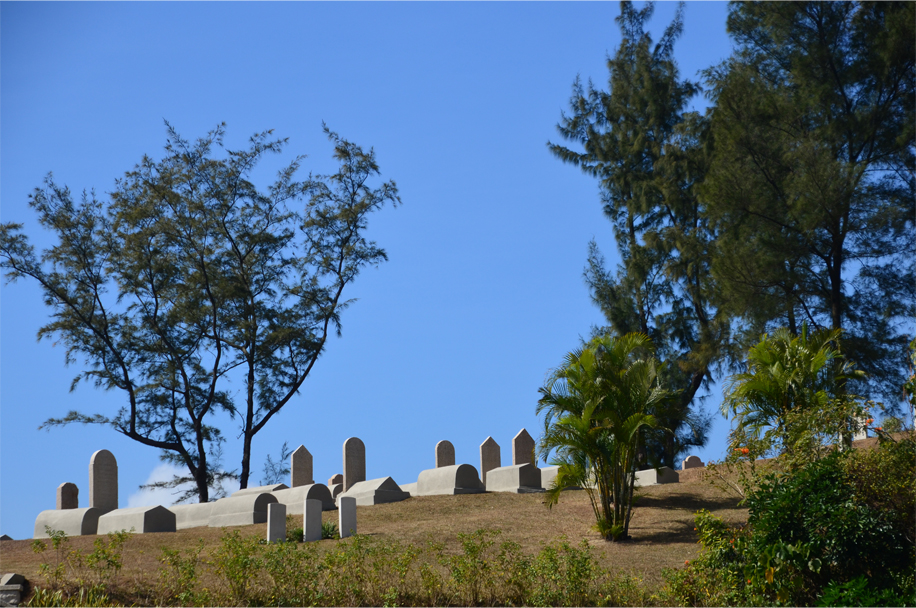
Stanley Military Cemetery
When family friends and relatives are in town, my father makes it a point to take them to Stanley. He goes not for its famous street market – where stacks of knickknacks and souvenirs can be found – but to soak up the town’s ambiance and history.
Stanley, or Chek Chue in Cantonese, straddles a narrow strip of land between two bays, with several beaches lying close by. Expats come for simple comforts like hot dog, pizza and cold beer, available at the many cafés and watering holes lining the sweeping boardwalk.
Literally ‘Red Pillar’, the town was named after an imposing cotton tree whose fiery blooms once graced the area. When the British annexed Hong Kong Island in 1842, Chek Chue was its largest existing settlement and temporary capital. The town was given its English name in honour of Lord Stanley, who was Colonial Secretary at the time.
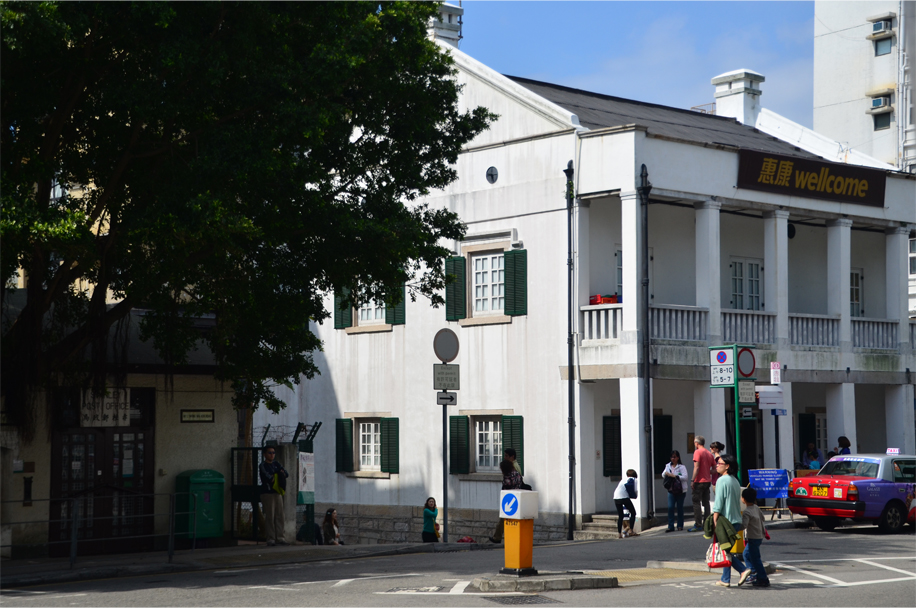
Old Stanley Police Station – now a supermarket
Today there are several physical reminders of those early days. Located right on the main road, Stanley’s old police station was built in 1859, but it has now been converted into a supermarket with shelves of merchandise amid the original tilework.
Two other monuments have been relocated from the city, including the cast iron structure of Blake Pier, which once stood on the busy Central waterfront. Visitors to Stanley can dine inside Murray House, the oldest colonial building in Hong Kong until it was dismantled in 1982, stone by stone, to make way for I.M. Pei’s Bank of China Tower. More than 3,000 granite blocks were carefully catalogued and stored in a warehouse, before being rebuilt almost 20 years later.
Under the Japanese occupation in World War II, the military police used the building as their command centre, where they tortured and killed prisoners with a cruelty repeated across much of occupied Asia.
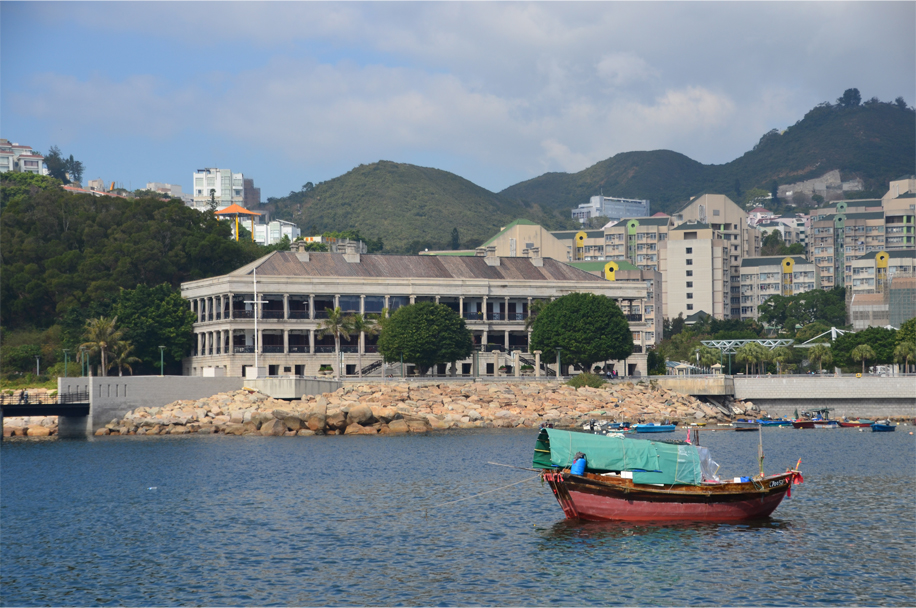
Murray House, relocated from Central
Stanley itself was where an international band of allied fighters – assembled from the Royal Rifles of Canada, the Middlesex Regiment and the Hong Kong Volunteer Defence Corps – made their last stand against the invading Japanese forces. The territory formally surrendered on Christmas Day, 1941, and most of the Western civilians who had not already left were held in an internment camp at Stanley.
Nearly 100 prisoners who died mostly of disease and malnutrition remain buried at the military cemetery next door, as are soldiers who fell defending Hong Kong from the Japanese onslaught. Their graves are a sobering reminder of an epoch that continues to cast its shadow over current East Asian geopolitics.
Original article and more photos are available at Plus Ultra