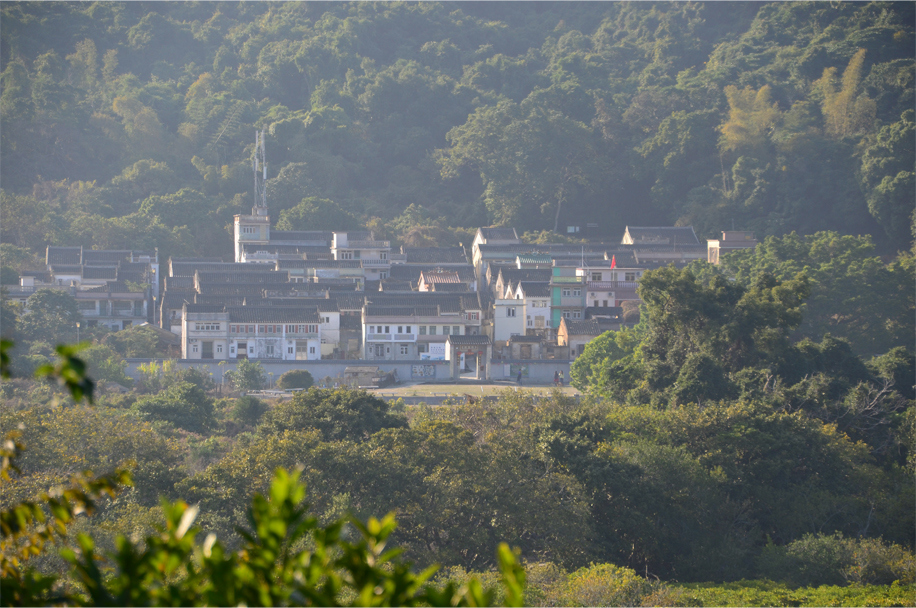
Lai Chi Wo from afar
Deep inside the northeastern New Territories, within sight of Mainland China, the Hakka village of Lai Chi Wo remains eerily quiet on the first day of Chinese New Year. Even on this day of celebration, the village exists in a semi-abandoned state, with the confetti-like remnants of firecrackers scattered at the threshold of several houses.
Bama, my father and I have hiked here from the main road two hours away, snaking along the bed of a valley on an eroded dirt path, past a recent landslide, bubbling brooks and mangrove swamps. This is not a trail anyone should tackle in wet season; the rock underfoot can be slippery and several signs warn us of flash floods.
Literally ‘Lychee Nest’, 400-year-old Lai Chi Wo no longer produces the succulent, red-skinned fruit that first gave the settlement its name. It rests in a tight cluster at the foot of a hill, backed by a feng shui wood planted to safeguard its wealth and prosperity.
At its height 1,000 residents made this their home, but Lai Chi Wo’s fortunes in recent decades have mirrored that of countless villages around the New Territories. The sole village school closed in 1980 as younger generations trickled away, departing for better opportunities in the growing city. Today Lai Chi Wo is more a realm of itinerant hikers and campers, a small, forgotten enclave surrounded by country park.
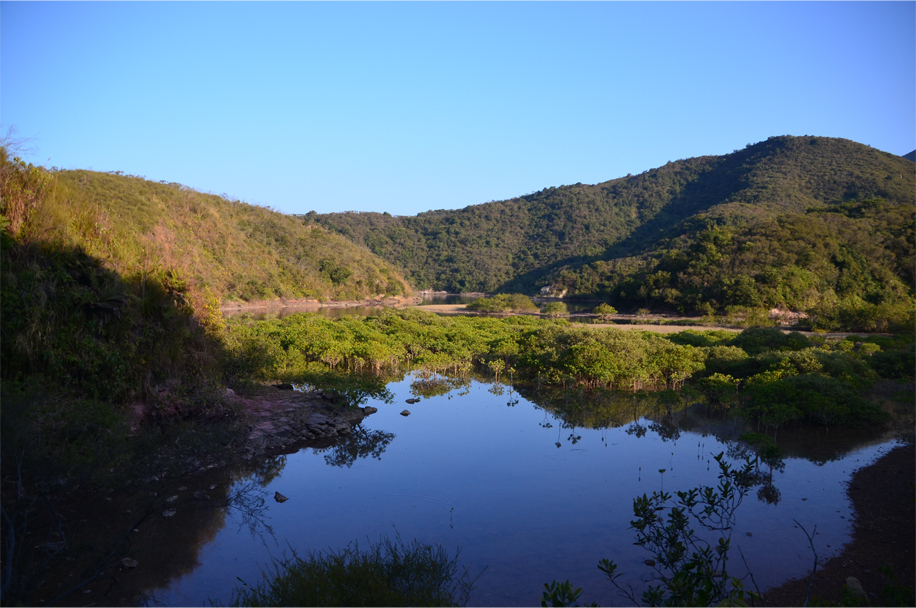
Mangrove swamps at high tide
Original article and more photos are available at Plus Ultra