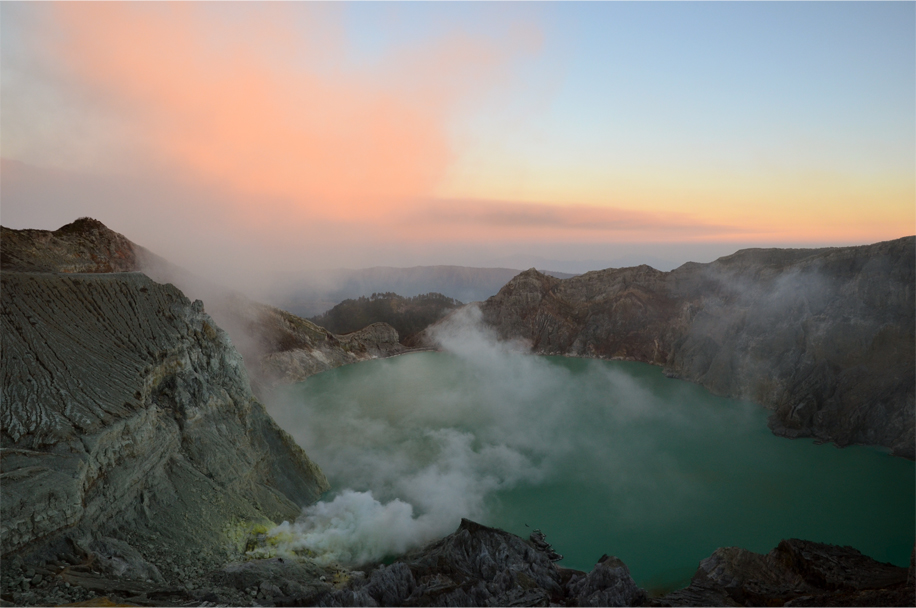
Kawah Ijen at sunrise
The hike to Kawah Ijen begins with a struggle. It is most likely the sulphurous fumes rising from the depths of the volcano, combined with the effects of little sleep. Bama tells me he doesn’t feel well – he is gripped by nausea. We limp along a trail of volcanic ash, taking refuge on the gnarled, low-slung branches and tree stumps beside the route.
All this time I am wondering if we should give up and turn back, but Bama refuses. When the trail mercifully levels out, I stop to fix my eyes upon the heavens, admiring the multitude of stars that fill the midnight sky. I recite several lines from a psalm and say a prayer for my companion.
On the crater rim, we bundle ourselves against the cold and wait for the sunrise. From our perch I can make out the darkened mass of Kawah Ijen’s highly acidic lake – the largest in the world – and surreal wisps of blue flame far below. Many of our fellow hikers venture down into the crater for a closer look, but it is a risk that Bama and I are not willing to take.
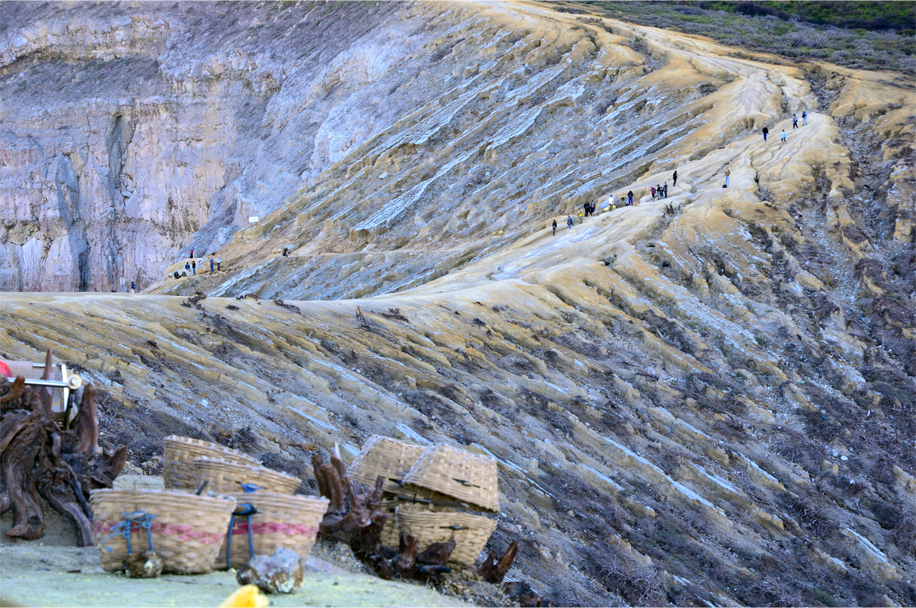
Walking the crater rim
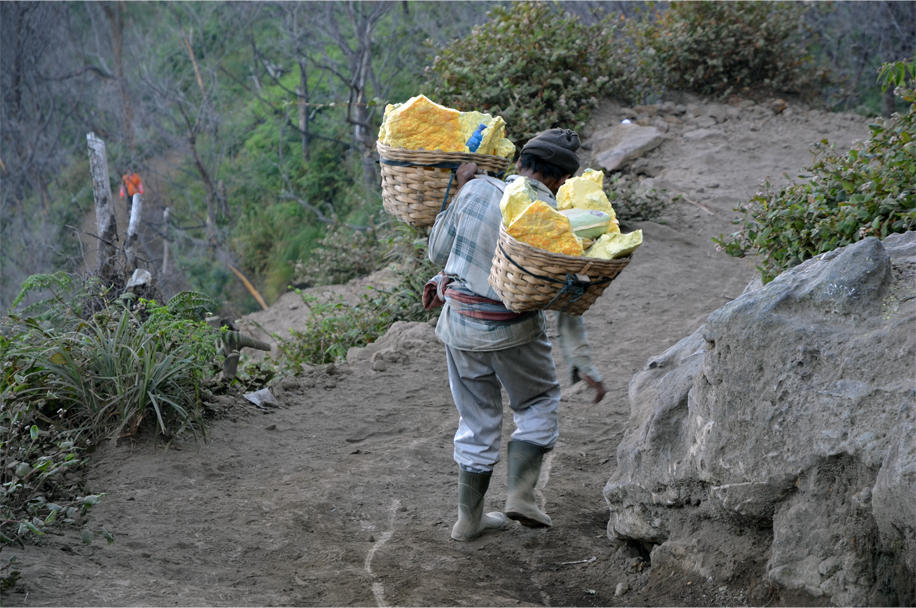
A miner typically carries loads of 70-90 kilos over his shoulders
Kawah Ijen has gained some notoriety as a hazardous workplace for nearly 300 local men. With wet scarves as their only protection against the clouds of caustic gas, they harvest the crater’s precious sulphur both day and night. In its molten form, the material pours out from a series of pipes connected to an active vent above the lake. Once the sulphur cools and hardens it is then broken into chunks, loaded into baskets and carried down the mountain to a factory.
The sulphur miners come twice a day, slinging 70-90 kilos across their shoulders on each trip for a pittance – every 10 kilos will get them 10,000 rupiah (74 cents US) at the factory, where the sulphur is melted again. For extra income, some miners pour the liquid sulphur into moulds, creating pale yellow turtles and other souvenirs for the stream of tourists who come to the crater.
It is a sobering thought – that we are here by choice while the local miners eke out a living. We are on holiday; they endure backbreaking work that will shorten their lifespan and possibly kill them. The world, as one fellow blogger recently put it, is both a beautiful and terrible place.
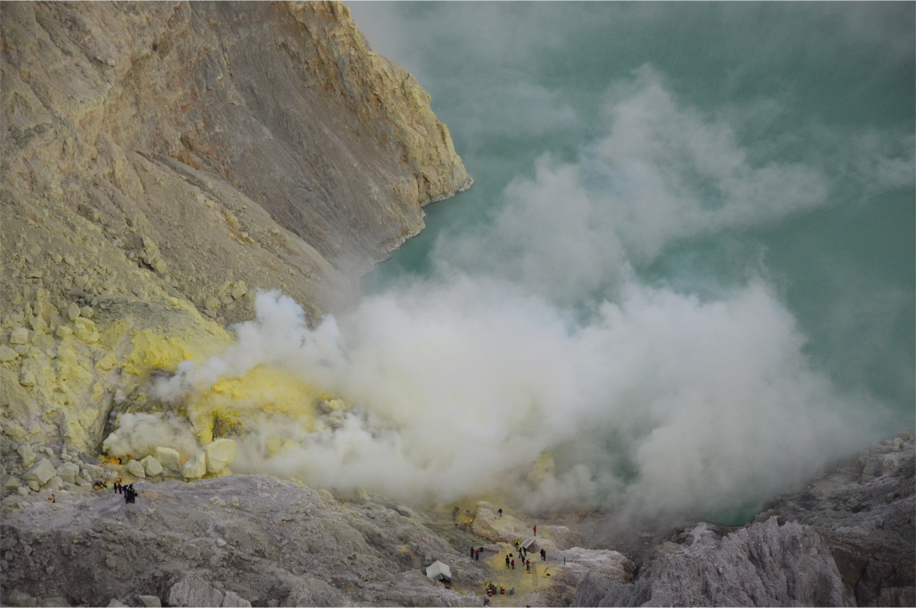
Ijen’s sulphur mine – just above the acidic crater lake
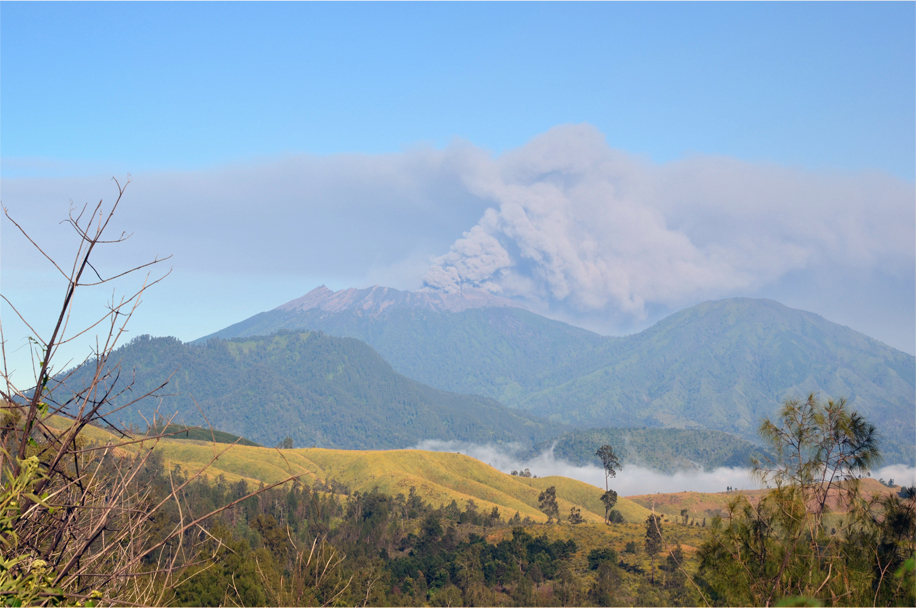
Ijen’s neighbour Mt. Raung in action
Original article and more photos are available at Plus Ultra