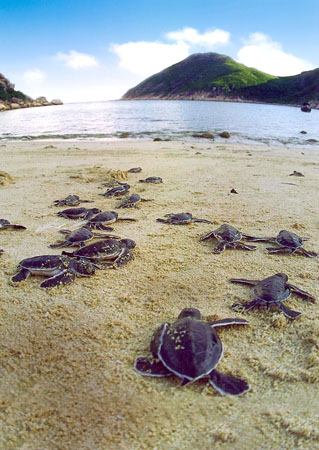
(Photo: EPD,Hong Kong)
Tonnes of plastic, bottles, medical waste, maritime waste/trash, palm oil balls.
This unique beach on South Lamma is the only "regular" nesting site for the CITES category 1 listed and endangered Green Sea Turtle.
Since 1999 this beach has been protected and access is restricted from 1st June to 31st Oct of each year to allow these endangered animals to peacefully mate and lay eggs.
With this much trash on the beach and so many boats and people in the bay I doubt it will be happening.
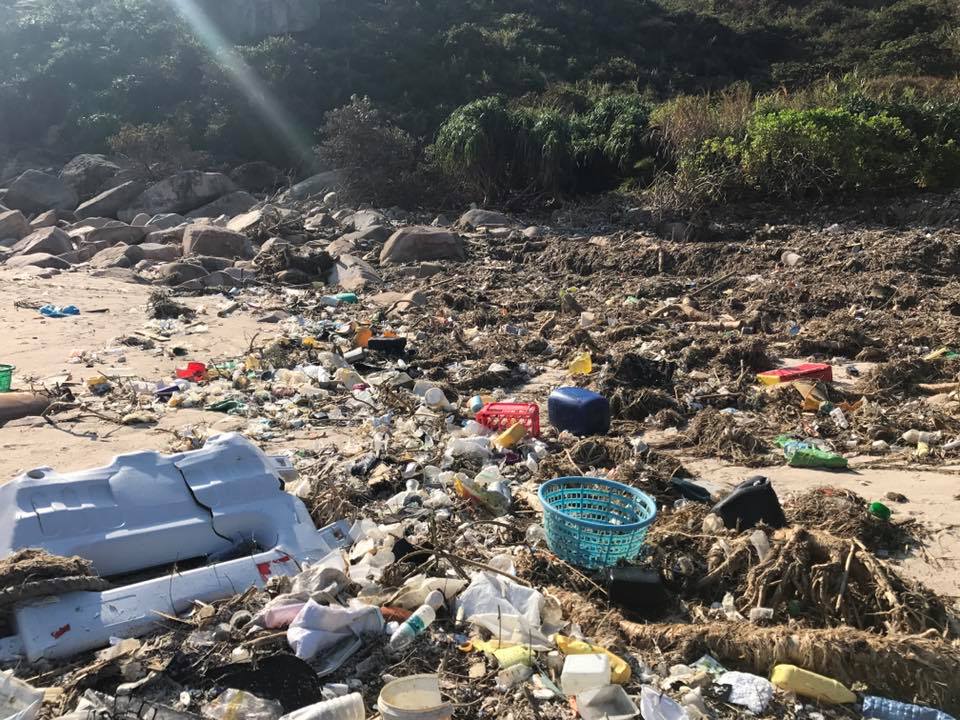
(Photo : Robert Lockyer)
It was only May 30th of this year when over 420 people cleaned this beach in preparation for the nesting season. Then two weeks ago AFCD/EPD cleaned and removed 280+ bags of palm oil, and now this.
And people wonder WHY the Green Sea Turtles aren't nesting here, and why they are an endangered species.
ANSWER – Humans.
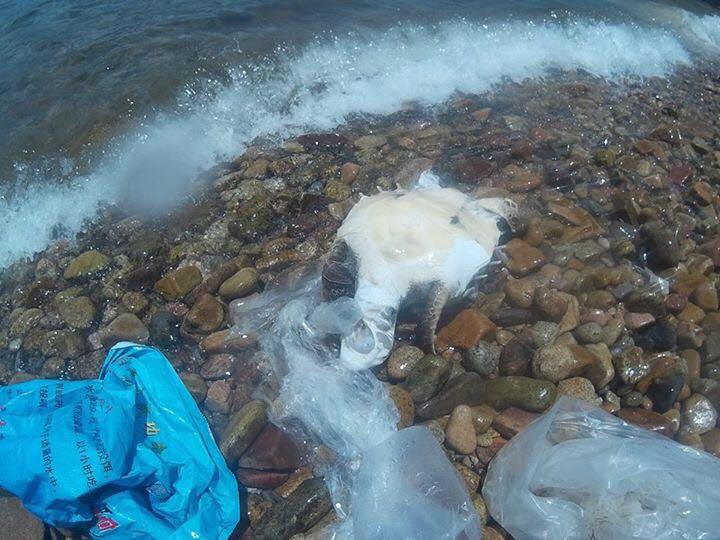
Many people cite the limited sighting of Green Sea Turtles (GSTs) or that there has been no recent documented nesting and egg laying by GSTs as a reason to abandon the WAPO protected zone at Sham Wan, Lamma Island, however here are a few points that might be worth considering:
1. The WAPO for Sham Wan was only introduced 18 years ago (1999) due to a very large number of GST eggs and nests in that beach in 1998.
2. GSTs take 20-50 years to become sexually mature and START laying eggs.
3. Once sexually mature GSTs only lay eggs every 2-5 years.
4. GSTs cannot retract their head into their carapace (shell) so their head and neck is very susceptible to fatal impact and propeller damage.
5. Adult GSTs are herbivore and ear mostly algae and sea grass, the latter of which has been heavily destroyed in Hong Kong due to trawling, and if which is only just starting to regrow to a semi-acceptable level in someplace, but if which is still very scant around Shan Wan.
6. A GST will rarely return to land other than for nesting and egg laying, so sightings on land are scarce.
7. The male GST will arrive a few weeks prior to the female and wait offshore to mate with the arriving female. Gestation can take several weeks. During this time the GSTs normally wait and feed on plant blooms in the shallow waters and rocky areas around island.
8. In 2016, 35 GSTs were "saved" from a floating pontoon close to Sham Wan.
9. In 2016, a few reports of GST nests and eggs have been noted in and around HK.
10. In both 2016 and 2017 GST have been found dead on the water and the beaches of Lamma Island.
11. The current level of protection at Sham Wan is for ONLY
THE DRY SANDY BEACH BETWEEN THE HWM (High Water Mark) AND THE 7m CONTOUR LINE. This does not include the sandy beach below the HWM, the shallow areas of the rocky feeding grounds.
12. Sham Wan is not a closed bay (or beach) but ONLY a speed restriction of is applied to the bay. So boats and fast craft can still use (and anchor) in the bay.
13. A large amount of the rocky areas and the shallow waters in Sham Wan are covered in abandoned ghosts nets.
14. The beach is "infrequently" patrolled and in the 18 years of it being a protected area NOT ONE SINGLE INFRACTION TICKET OR PERSON HAS EVER BEEN CHARGED OR "CAUGHT" ON THE BEACH by AFCD. But documented campers, hikers, swimmers and even a game of football has been recorded on this beach whilst it is "closed"
15. A large pack of wild dogs has been allowed, by AFCD, to take up residence on this beach.
16. MarDep, MarPol and AFCD officers are rarely seen at this beach/bay, on weekends, when it is heavily populated with 6-12 party boats each with 6 to 20 people onboard.
So whilst it is understandable we haven't had any "documented" nesting and egg laying on Sham Wan, it is also understandable that NOW is an important year for rectifying some of these issues.
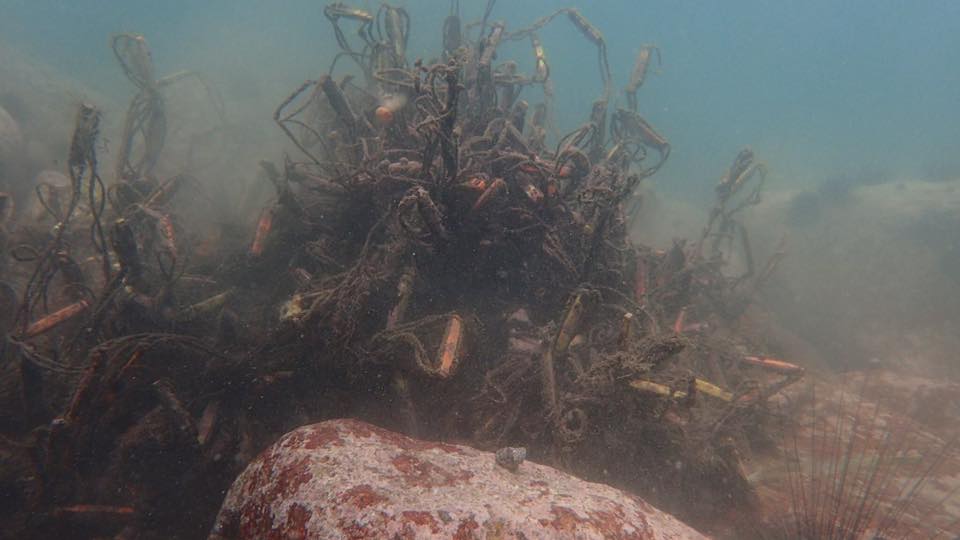
Video link – https://www.facebook.com/thefirstpenguins/videos/341533889630200/
** Note – This beach is closed to the public until 1st November. Access only granted by application for endorsement from AFCD. Therefore this is NOT a beach that can be cleaned up by volunteers.
(Please share and repost this post, it is only by public awareness that we can rectify this issue – thank you.)